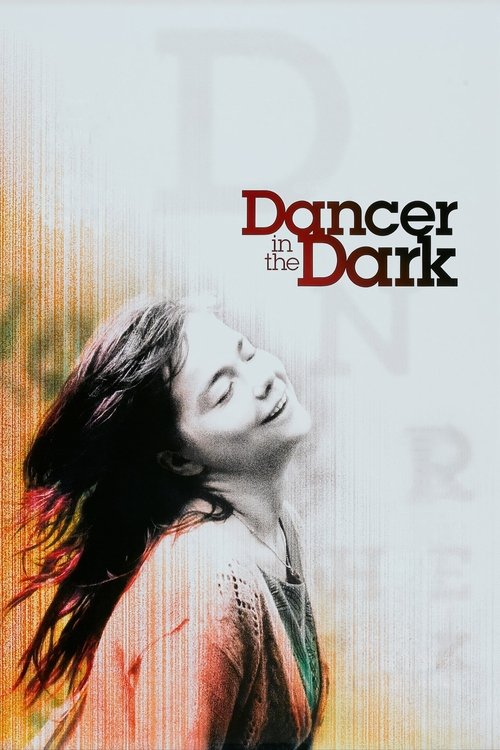
Dancer in the Dark (2000)
Directed by Lars von Trier
No — Dancer in the Dark is not especially woke, scoring 27 out of 100 on our wokeness meter.
Dancer in the Dark arrives as a solemn artifact from 2000, a musical tragedy assembled by Lars von Trier with the patience of a man building a gallows.
Consciousness Markers
Strong critique of American poverty, healthcare costs, bank foreclosure, police corruption, and the death penalty, though not framed as explicit Marxist rhetoric.
The courtroom and execution sequences carry a clear message about American injustice and capital punishment, though the film delivers it through melodrama rather than direct sermonizing.
Centers a woman and a strong female friendship, but frames Selma's story around maternal sacrifice rather than an explicit feminist critique.
The cast is almost entirely white European and American; the film has a female lead and an immigrant protagonist, but no meaningful diversity casting.
No LGBTQ+ characters or themes are present.
Race is not a focus; the characters are white, and the immigrant experience is framed through class and disability rather than racial consciousness.
No environmental or climate themes.
No body-positivity themes; blindness is treated as tragedy rather than as a body-diversity issue.
Selma's daydreams and blindness are not framed as neurodivergence.
Set in 1964 but not engaged in historical revisionism.
Why it received this score
Dancer in the Dark arrives as a solemn artifact from 2000, a musical tragedy assembled by Lars von Trier with the patience of a man building a gallows. Selma, a Czech immigrant and factory worker in Washington State, is losing her sight while saving for an operation that will spare her son the same fate. Björk's performance remains a raw nerve. The film is not interested in the modern identity checklist. Its cast is almost entirely white European and American. It gives us a female protagonist and a genuine friendship between Selma and Kathy, but the emotional architecture is maternal sacrifice, not a feminist argument. Race is invisible. LGBTQ lives are absent. Climate concerns never surface. Blindness is treated as catastrophe, not as a body-diversity issue. Neurodivergence is not a frame here, despite the daydreams and the musical escapes.
Where the film does generate heat is economics. Selma's America is a place of factory labor, trailer parks, medical bills, bank foreclosure, and police officers who steal from the poor. Bill's betrayal and Selma's desperate violence lead to a courtroom and a death sentence. The target is clear: a system that commodifies health care and punishes the vulnerable. This is not subtle. The prosecutor sneers about Communist sympathies and fraudulent blindness. The execution sequence is designed to leave bruises. The message lands through melodrama, not through a lecture, but it lands all the same. Call it a sermon delivered in tears and show tunes.
The 1964 setting offers no revisionist history. The immigrant story is filtered through class and disability, not racial consciousness. There is no climate crusade, no body-positivity thread, no LGBTQ subtext waiting to be excavated. What remains is a narrow but forceful piece of social criticism, focused on poverty, capital punishment, and a mother's terrible bargain. Von Trier manipulates without apology. The result is exhausting, sincere, and difficult to dismiss. A modest progressive footprint, concentrated almost entirely in the wallet and the grave.
Analysis generated by our Consciousness Algorithm


Synopsis
Selma, a Czech immigrant on the verge of blindness, struggles to make ends meet for herself and her young son, who has inherited the same genetic disorder and will suffer the same fate without an expensive operation. When life becomes increasingly difficult, Selma learns to cope through her love of musicals, dreaming up little numbers to the rhythmic beats of her surroundings.
Questions about Dancer in the Dark
Is Dancer in the Dark woke?
No — Dancer in the Dark is not especially woke, scoring 27 out of 100 on our wokeness meter. That earns it a verdict of Based.
Does Dancer in the Dark have any woke elements?
2 of the 10 markers register at 30 or above, led by Eat the Rich (55) and Lecture Energy (30). On Eat the Rich: Strong critique of American poverty, healthcare costs, bank foreclosure, police corruption, and the death penalty, though not framed as explicit Marxist rhetoric.
How does Dancer in the Dark compare to other 2000 movies?
It ranks #19 of the 125 films from 2000 we've scored; their average is 13. The wokest is But I'm a Cheerleader (72).
How is the Woke Score calculated?
An AI-assisted process researches the film and its reception, scores it 0–100 on ten markers, then combines those into one 0–100 Woke Score. It measures a specific set of 2020s cultural themes, not film quality.