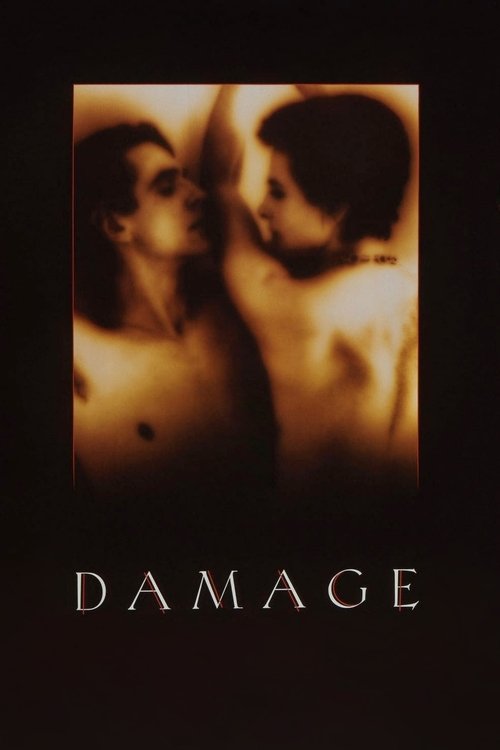
Damage (1992)
Directed by Louis Malle
No — Damage is not woke, scoring 0 out of 100 on our wokeness meter.
Louis Malle's Damage arrives from 1992, a year in which a British film could still devote itself entirely to the ruin of an elegant man without pausing to apologize for the guest list.
Consciousness Markers
The cast is almost entirely white British and French performers; no meaningful diverse or color-conscious casting is present.
No LGBTQ+ characters, themes, or subtext appear anywhere in the film.
The film is a study of male obsession and a femme fatale; the aggrieved wife is a victim of the affair rather than a vehicle for feminist critique.
No engagement with race, racism, or racial identity; the story is confined to white upper-class London society.
No environmental or climate themes whatsoever.
The film concerns personal obsession and scandal among the political elite, with no critique of capitalism or class economics.
No body-positivity themes; the eroticism is framed around conventional desirability.
No neurodivergent characters or themes are present.
A fictional adaptation of a contemporary novel; no historical revisionism involved.
The film dramatizes its themes through narrative and performance rather than explicit moral instruction or messaging.
Why it received this score
Louis Malle's Damage arrives from 1992, a year in which a British film could still devote itself entirely to the ruin of an elegant man without pausing to apologize for the guest list. Jeremy Irons plays Stephen Fleming, a physician turned minister of the crown, who meets his son's girlfriend at a reception and proceeds to dismantle his life with the patience of a man filing paperwork. David Hare's screenplay, drawn from Josephine Hart's novel, keeps the book's narrow, airless focus: London townhouses, Brussels conference hotels, Paris doorways, a flat rented across the street for the purposes of surveillance. The cast is white. The concerns are personal. The politics on screen amount to ambition and reputation, and nobody is taught a lesson at the end.
Miranda Richardson, as the wife, delivers the performance the awards bodies noticed, and she does it without being conscripted into an argument. Her Ingrid is wounded, sharp, and finally furious, but she is a person inside a marriage, not a position inside a debate. Juliette Binoche's Anna is a femme fatale in the classical mode, her damage explained by a dead brother and a confession of incest, and the film frames her desirability in strictly conventional terms. The camera lingers. The bodies are beautiful. The moral accounting is left to us.
What remains is a cold and beautifully mounted chamber piece about male obsession, and its ledger of contemporary social concerns is blank. That is not a failing. It is a fact of the vintage, and the film earns its restraint by refusing to explain itself twice. We are left with Irons clutching his dead son on a staircase, and with a final line that offers no comfort at all.
Analysis generated by our Consciousness Algorithm

Synopsis
The life of a respected British politician at the height of his career crumbles when he becomes obsessed with his son's lover.
Questions about Damage
Is Damage woke?
No — Damage is not woke, scoring 0 out of 100 on our wokeness meter. That earns it a verdict of Ultra Based.
Does Damage have any woke elements?
No. All 10 markers score zero.
How does Damage compare to other 1992 movies?
It ranks #65 of the 74 films from 1992 we've scored; their average is 12. The wokest is The Crying Game (62).
How is the Woke Score calculated?
An AI-assisted process researches the film and its reception, scores it 0–100 on ten markers, then combines those into one 0–100 Woke Score. It measures a specific set of 2020s cultural themes, not film quality.