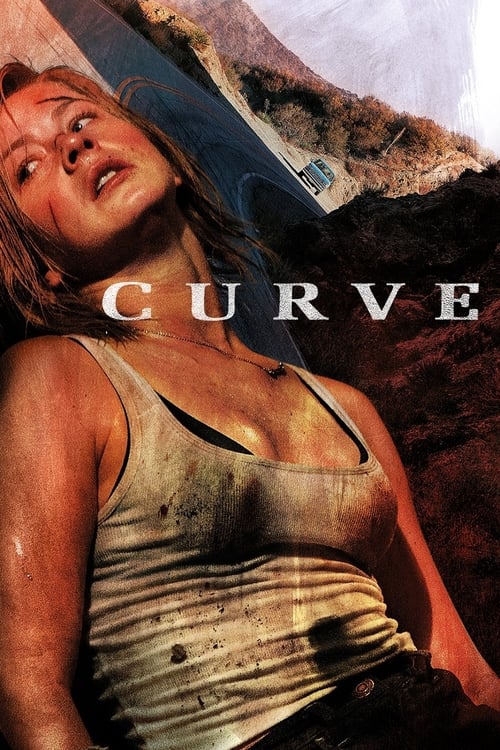
Curve (2015)
Directed by Iain Softley
No — Curve is not woke, scoring 6 out of 100 on our wokeness meter.
Curve arrives from the Blumhouse assembly line with the tidy economy of a film that knows exactly how long it needs to hold an audience.
Consciousness Markers
The film features a female protagonist who fights back against a male predator, but this is the standard 'final girl' survival-horror convention rather than a deliberate feminist statement.
The cast is uniformly white, with no deliberate diverse or inclusive casting choices evident in the production.
There are no LGBTQ+ characters, relationships, or themes anywhere in the film.
No racial themes, commentary, or consciousness are present; the story is a race-neutral survival thriller.
There is no environmental or climate-related content in the film.
The film contains no economic critique or anti-capitalist messaging.
Body image, size, or self-acceptance themes are entirely absent.
No neurodivergent characters or themes are depicted or addressed.
The film does not engage with or revise any historical narrative.
The film is a lean genre exercise with no preachy messaging or moralizing monologues directed at the audience.
Why it received this score
Curve arrives from the Blumhouse assembly line with the tidy economy of a film that knows exactly how long it needs to hold an audience. A bride-to-be named Mallory drives toward Denver, doubts her engagement, picks up a charming hitchhiker, and within twenty minutes is upside down in a wrecked car with her leg pinned and a knife-wielding stranger discussing fate. Iain Softley keeps the camera close and the geography simple. The highway is empty. The cell service is gone. The premise does the heavy lifting, and the film never asks for more than that.
Julianne Hough spends most of the runtime in a confined space, negotiating rats, rainwater, and her own urine, and she commits to the indignity without complaint. Teddy Sears plays the predator with a pleasant, unremarkable menace. The screenplay offers no thesis, no broader commentary, no moment where a character turns to the audience and explains what any of this means. It is a machine for generating tension, and it runs.
The one point of interest, culturally speaking, is the inversion of the standard chase: the woman is not pursued through the woods but pinned in place, and she survives by refusing to be a victim. That is the survival-horror template working as designed, nothing more. There is no racial dimension, no economic argument, no environmental subtext, no revision of any historical record. The cast is uniformly white and the concerns are uniformly personal. A lean and competent exercise in genre, and one that resists the temptation to sermonize. It earns its ninety minutes and asks nothing of us afterward, which is either a limitation or a mercy, depending on the evening.
Analysis generated by our Consciousness Algorithm
Part of


Synopsis
A soon-to-be bride on her way to a wedding rehearsal is having second thoughts and decides to take a detour. Her car breaks down and a hitch-hiker offers help. Could it be fate?
Questions about Curve
Is Curve woke?
No — Curve is not woke, scoring 6 out of 100 on our wokeness meter. That earns it a verdict of Ultra Based.
Does Curve have any woke elements?
Very few. None of the 10 markers reaches 30, the level where a marker counts as present; the highest is Feminist Agenda at 10.
How does Curve compare to other 2015 movies?
It ranks #200 of the 289 films from 2015 we've scored; their average is 15. The wokest is Chi-Raq (78).
How is the Woke Score calculated?
An AI-assisted process researches the film and its reception, scores it 0–100 on ten markers, then combines those into one 0–100 Woke Score. It measures a specific set of 2020s cultural themes, not film quality.