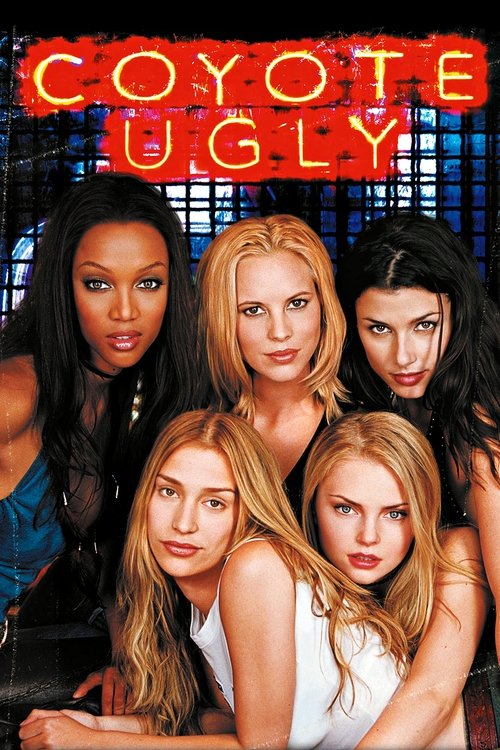
Coyote Ugly (2000)
Directed by David McNally
No — Coyote Ugly is not woke, scoring 11 out of 100 on our wokeness meter.
Two decades and change have passed since Violet Sanford left New Jersey with a demo tape and a dream, and the film that carried her to the Bowery Ballroom remains exactly what it was on arrival: a Jerry Bruckheimer product about attractive women pouring water on themselves for a paying crowd.
Consciousness Markers
The film wears a thin veneer of female empowerment—a woman chasing her songwriting dream with a sisterhood of bartenders—but critics including Rolling Stone derided it as soft-core titillation for male viewers.
The cast includes Tyra Banks and Izabella Miko in prominent supporting roles, but their presence is unremarked and serves the bar's ensemble rather than any equity-driven intent.
Tyra Banks plays a Coyote, but race is never a subject of the narrative or commentary; diversity is incidental to the casting.
The film is frothy crowd-pleasing fluff with no preachy messaging or moralizing monologues.
No LGBTQ+ characters, relationships, or themes appear anywhere in the film.
No environmental or climate themes are present in this New York barroom story.
The film celebrates the music-industry hustle and the profitability of the Coyote Ugly brand with no critique of wealth, class, or capitalism.
The entire premise revolves around conventionally 'hot' women dancing on bars in wet clothing, the antithesis of body positivity.
Violet's stage fright is a plot device tied to her late mother, not a depiction of neurodivergence.
No historical revisionism; the film is a contemporary, loosely fictionalized tale of a real bar.
Why it received this score
Two decades and change have passed since Violet Sanford left New Jersey with a demo tape and a dream, and the film that carried her to the Bowery Ballroom remains exactly what it was on arrival: a Jerry Bruckheimer product about attractive women pouring water on themselves for a paying crowd. The picture gestures toward female ambition. A young woman writes songs, a sisterhood of bartenders closes ranks around her, and a record deal arrives on schedule. Critics at the time were unmoved. The empowerment on offer was described in the trade press as soft-core material for boys and their fathers, which is a fair summary of the transaction.
On representation, the film casts Tyra Banks and Izabella Miko among the Coyotes and never asks the audience to think about it. Their presence is decorative, absorbed into the ensemble, and race goes unmentioned from first frame to last. Queer life does not exist in this New York. Neither does any environmental concern, nor any discomfort with the economics of a brand that sells women's bodies and calls it a career. Body positivity is not merely absent here; the premise is its inverse. The camera reserves its enthusiasm for a very specific physical ideal, and the film knows it.
Where the film might have sermonized, it mostly declines. Violet's stage fright is a plot mechanism tied to her late mother, not a study of a mind, and the script resolves it with a pep talk and a spotlight. The nearest thing to a message is the gentle suggestion that daughters should avoid their mothers' compromises, delivered in a hospital corridor and then abandoned. The residue is a jukebox, a wet T-shirt, and LeAnn Rimes duetting with her own dubbed voice. As cultural documents go, this one is a souvenir of a year that believed in itself for no good reason.
Analysis generated by our Consciousness Algorithm


Synopsis
Graced with a velvet voice, 21-year-old Violet Sanford heads to New York to pursue her dream of becoming a songwriter only to find her aspirations sidelined by the accolades and notoriety she receives at her "day" job as a barmaid at Coyote Ugly. The "Coyotes" as they are affectionately called tantalize customers and the media alike with their outrageous antics, making Coyote Ugly the watering hole for guys on the prowl.
Questions about Coyote Ugly
Is Coyote Ugly woke?
No — Coyote Ugly is not woke, scoring 11 out of 100 on our wokeness meter. That earns it a verdict of Ultra Based.
Does Coyote Ugly have any woke elements?
1 of the 10 markers register at 30 or above, led by Feminist Agenda (32). On Feminist Agenda: The film wears a thin veneer of female empowerment—a woman chasing her songwriting dream with a sisterhood of bartenders—but critics including Rolling Stone derided it as soft-core titillation for male viewers.
How does Coyote Ugly compare to other 2000 movies?
It ranks #52 of the 125 films from 2000 we've scored; their average is 13. The wokest is But I'm a Cheerleader (72).
How is the Woke Score calculated?
An AI-assisted process researches the film and its reception, scores it 0–100 on ten markers, then combines those into one 0–100 Woke Score. It measures a specific set of 2020s cultural themes, not film quality.