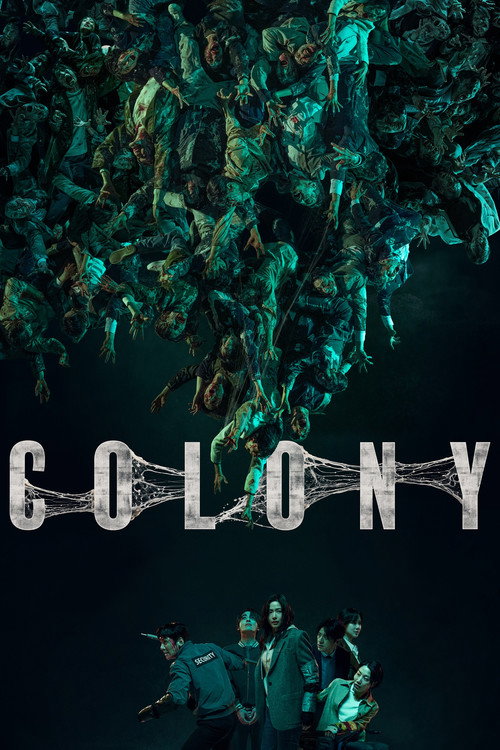
Colony (2026)
Directed by Yeon Sang-ho
Yeon Sang-ho, the director who once turned a commuter train into a meditation on class and the undead, has returned with Colony, a film in which a biotech conference goes badly wrong in ways that will surprise no one who has ever attended a biotech conference.
Consciousness Markers
The outbreak originates at a corporate biotech demonstration, and the film explicitly indicts corporate greed, administrative negligence, and the recklessness of unchecked technological capitalism as the conditions that made the catastrophe possible.
Professor Se-jeong is explicitly established as a woman who lost her career after exposing a male dean's corrupt behavior, and the film frames male institutional structures as complicit in the disaster. This is a purposeful narrative choice, not incidental characterization.
The film is led by a woman whose professional marginalization by male institutional power is a plot driver, not mere background detail. As a Korean film made entirely within the Korean industry, however, this reflects domestic storytelling norms rather than a Hollywood-style diversity mandate.
The hive-mind infected carry a clear allegory about AI, algorithmic conformity, and the erosion of individual thought, but critics at Cannes noted that the spectacle largely consumes the sermon. The messaging is present but not belabored.
No LGBTQ+ characters, themes, or subtext are present in any available materials. The score is 0.
The film operates entirely within a Korean cultural context with no engagement with racial identity politics in the contemporary Western sense. The score is 0.
The outbreak is biotech-driven with no environmental or climate change framing. The score is 0.
No body positivity themes are present. Bodies in this film are primarily sites of horrific viral transformation, which is arguably the opposite of affirmation. The score is 0.
No neurodivergence themes or characters are present in any available materials. The score is 0.
The film is a near-future science fiction horror scenario with no engagement with historical revisionism. The score is 0.
Why it received this score
Yeon Sang-ho, the director who once turned a commuter train into a meditation on class and the undead, has returned with Colony, a film in which a biotech conference goes badly wrong in ways that will surprise no one who has ever attended a biotech conference. Professor Se-jeong, a woman professionally destroyed for the crime of reporting a corrupt superior, finds herself trapped in a sealed facility with a mold-based hive-mind spreading through the building's population. The director has confirmed in interviews that the collective infected represent AI, social media algorithms, and the terrifying possibility that people might one day agree with each other. This is a rich metaphor. We are asked to sit with it for approximately forty-five seconds before someone's jaw detaches.
The film's progressive architecture is real but efficiently buried. Se-jeong's backstory, a whistleblower punished by male institutional power, does genuine narrative work: her distrust of authority is earned, her survival instincts are credible, and the film does not pretend that the system failed merely because of a virus. The anti-corporate critique is similarly grounded, placing the outbreak at the feet of a company that treated biological risk as a product demonstration. These are pointed observations delivered inside a genre machine that is, by design, too loud and too fast to let them fully land. Yeon has always been more interested in infrastructure than ideology, and Colony is no exception.
What the film is not is a lecture. The allegory about herd mentality and collective digital consciousness is visible, in the way a watermark is visible: present, legible, and unlikely to stop you from watching the film. Korean cinema continues its reliable tradition of encoding social critique inside entertainment so kinetic that the critique becomes optional. Western critics at Cannes found this either admirable or evasive, depending on their appetite for subtlety. Both readings are defensible. The mold does not care.
Analysis generated by our Consciousness Algorithm
Synopsis
Professor Se-jeong is thrust into a bloody nightmare when a rapidly mutating virus is released during a biotech conference causing authorities to seal the facility. Trapped inside with no escape, Se-jeong along with a small group of survivors must fight to stay alive while the infected undergo horrific transformations.