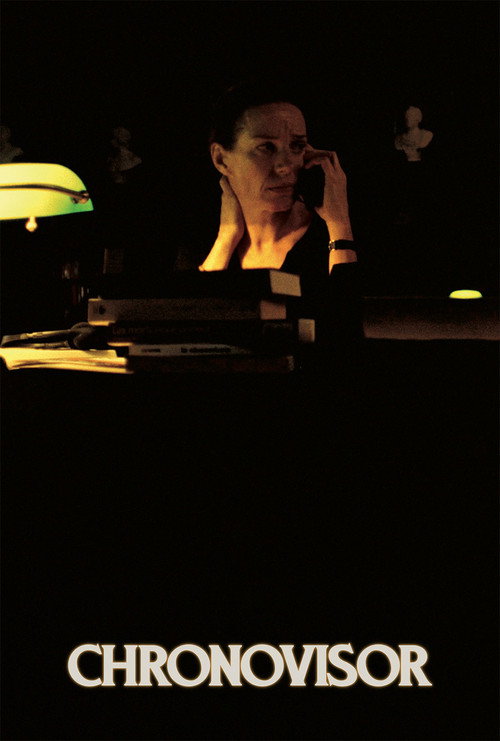
Chronovisor (2026)
Directed by Kevin Walker
Chronovisor arrives draped in the musty, consecrated atmosphere of a research library at closing time, which is either its greatest achievement or its most efficient audience-filtering mechanism, depending on your tolerance for close-ups of translated ecclesiastical documents.
Consciousness Markers
The lead is a woman in an intellectual, authoritative role, and the ensemble cast draws from multiple nationalities, reflecting the film's European production context. This appears to be a natural consequence of the story's setting rather than a programmatic casting agenda.
The protagonist is a female academic navigating a world of suppressed knowledge historically controlled by male religious institutions. The film does not appear to frame this as a feminist thesis, but the dynamic is present in the architecture of the plot.
The film engages with suppressed and clandestine histories, suggesting that the official record is incomplete or deliberately obscured. This is closer to conspiracy-thriller territory than progressive revisionism, but the premise does treat received history with suspicion.
The film's implicit critique of digital information ecosystems and its elegiac treatment of physical libraries and the humanities carries a faint skepticism toward the tech-commercial complex, though this is cultural rather than economic in its orientation.
Critical coverage notes the film functions as a de facto PSA for physical libraries and the humanities, which edges toward sermonizing. The message is embedded in atmosphere rather than dialogue, keeping the energy low but not entirely absent.
No LGBTQ+ themes, characters, or commentary have been identified in the film or its surrounding discourse.
No racial consciousness themes, discourse, or commentary have been identified in the film.
There is no climate or environmental messaging of any kind in this film about medieval monks and time-capturing cameras.
No body positivity themes or commentary have been identified.
No neurodivergence themes or framing have been identified.
Why it received this score
Chronovisor arrives draped in the musty, consecrated atmosphere of a research library at closing time, which is either its greatest achievement or its most efficient audience-filtering mechanism, depending on your tolerance for close-ups of translated ecclesiastical documents. The film concerns a Columbia behavioral scientist's obsession with a device allegedly constructed by Benedictine monks to photograph the past, and it treats this premise with the solemn procedural gravity of a forensic accountant. It is, in the best possible sense, a film about reading.
On the progressive sensibility spectrum, Chronovisor registers about as loudly as a card catalog. Its female lead occupies a position of intellectual authority, and the film is quietly skeptical of digital culture's tendency to pave over inconvenient histories, but neither of these constitutes an agenda so much as a setting. The casting is multinational in the way that European co-productions tend to be, which is to say organically rather than demonstrably. There are no speeches. There are no lessons. There is, instead, a great deal of archival footage and a monk who may or may not have photographed the Crucifixion, and the film seems to feel that this is sufficient, which it is.
What makes Chronovisor a genuinely unusual specimen in our current taxonomy is its complete indifference to the cultural conversation happening outside its own walls. In 2026, a film set in the world of suppressed ecclesiastical knowledge that manages to generate no discourse whatsoever about identity, representation, or systemic anything is, itself, a kind of achievement. The film invokes Borges and Eco, two writers who understood that the most subversive thing a text can do is refuse to be about what everyone expects it to be about. Cosmic Salon Films appears to have absorbed this lesson completely. The score reflects accordingly.
Analysis generated by our Consciousness Algorithm
Synopsis
A French academic is seduced into a world of untold histories in her scholarly quest to uncover the mystery of a history-capturing camera-like machine created by clandestine Benedictine monks. An academic-noir, armchair mystery in the lineage of Jorge Luis Borges and Umberto Eco.