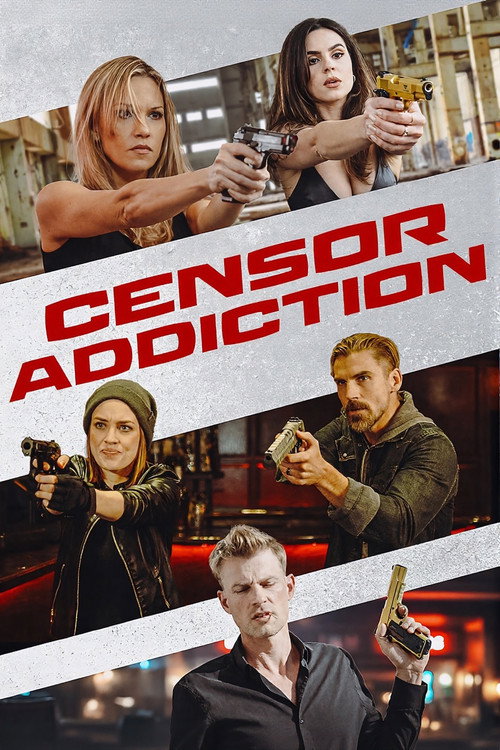
Censor Addiction (2026)
Directed by Michael Matteo Rossi
There is a certain economy of ambition in Censor Addiction that the seasoned cultural taxonomist must respect.
Consciousness Markers
The entire premise is built around a predatory pharmaceutical megacorporation engineering societal harm for profit, a recognizable anti-corporate critique that constitutes the film's primary ideological content.
The cast includes women in prominent roles, including a female lead, but there is no evidence this is presented as a deliberate representational statement or foregrounded by the film or its marketing.
Rachel Pizzolato leads the resistance ensemble in an action-oriented role, a mild genre-level nod to female capability that falls well short of a feminist agenda.
The Big Pharma villain premise carries a faint sermonizing undertone, but available reviews suggest the film prioritizes action-thriller mechanics over any sustained moralizing.
No LGBTQ+ characters, themes, or subtext are documented anywhere in available coverage of this film.
No racial consciousness, commentary on systemic racism, or identity-based framing is present in any available description or review of the film.
The film's near-future corporate dystopia has no documented environmental or climate-change dimension.
No body positivity themes or messaging are evident in any available material about the film.
No neurodivergence representation or themes are documented in the film's plot, characters, or reception.
Set in a near-future 2030, the film has no historical setting and therefore no opportunity for revisionist historical framing.
Why it received this score
There is a certain economy of ambition in Censor Addiction that the seasoned cultural taxonomist must respect. Director Michael Matteo Rossi has delivered a near-future sci-fi action thriller in which a pharmaceutical corporation manufactures crime for profit, and a band of plucky former employees decides this is, on balance, unacceptable. The villain is a corporation. The heroes are the people the corporation wronged. The message, such as it is, fits on a bumper sticker and stays there, which is more restraint than many films manage.
The anti-corporate throughline is the film's lone flicker of social consciousness, and even that flicker is of the pre-ideological variety: the kind of "big company bad" sentiment that has powered action films since at least the Reagan administration and requires no particular progressive alignment to produce. Big Pharma as a cinematic antagonist is, at this point, approximately as radical as a villain who twirls a mustache. The film offers no commentary on race, gender, climate, or any of the other coordinates by which we now triangulate a production's cultural positioning. It simply wants the corporation to be defeated. We can all agree on that much.
With a TMDB popularity score hovering just below two and a vote count of exactly two, Censor Addiction occupies a rarefied tier of cultural invisibility. It has not generated discourse. It has not provoked think-pieces. It has not been praised or condemned by anyone with a platform. In the current landscape, that is, quietly, a kind of achievement.
Analysis generated by our Consciousness Algorithm


Synopsis
In 2030, a group of former employees band together to take down a corrupt medical giant determined to increase the levels of crime throughout the country.