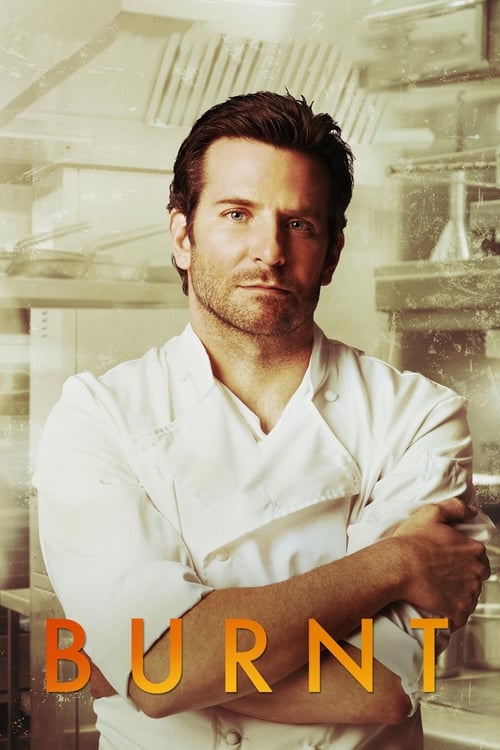
Burnt (2015)
Directed by John Wells
No — Burnt is not woke, scoring 14 out of 100 on our wokeness meter.
There is a moment in Burnt when a man yells about a scallop, and we understand that we are in for two hours of a very specific kind of suffering.
Consciousness Markers
The ensemble is notably international—Omar Sy as Michel, Daniel Brühl, Riccardo Scamarcio, Alicia Vikander—giving a diverse cast, though their presence is natural to the story and never framed as a statement.
Helene is a capable single-mother sous-chef who becomes co-lead and ultimately earns credit for the kitchen's success, but she is still largely defined through Adam's redemption arc and romance.
Omar Sy plays a substantial role, but race is never addressed or given thematic weight; diversity is incidental rather than conscious.
Themes of teamwork and redemption are present but delivered through character drama rather than preachy messaging.
No LGBTQ+ characters, relationships, or themes appear anywhere in the film.
No environmental or climate themes are present in this restaurant drama.
The film celebrates fine dining, Michelin stars, and high-end restaurant culture rather than critiquing wealth or capital.
No body-positivity themes or commentary on body image appear.
Adam's perfectionism and addiction are framed as character flaws and recovery, not as neurodivergence.
The story is fictional and makes no attempt to reinterpret historical events.
Why it received this score
There is a moment in Burnt when a man yells about a scallop, and we understand that we are in for two hours of a very specific kind of suffering. Bradley Cooper plays Adam Jones, a chef who torched his own career with cocaine and tantrums, then shucked a million oysters in New Orleans to earn the right to be insufferable in London instead. The film wants to be about redemption. Mostly it is about plating. John Wells directs with the grim efficiency of a line cook who has stopped asking why.
The ensemble is quietly international, which is to its credit. Omar Sy, Daniel Bruhl, Riccardo Scamarcio, and Alicia Vikander fill out the kitchen and the margins, and none of them are asked to announce themselves as anything. Sy's Michel carries real weight in the plot, though the film never once considers race a subject worth raising. Sienna Miller's Helene arrives as a single mother with genuine talent, gets publicly humiliated, quits, is bought back with a doubled salary, and eventually receives credit for the kitchen's triumph. She is competent and she is also a device for a man's growth, which is the oldest recipe in the book.
What the film does believe in, sincerely and at length, is teamwork. The final act converts Adam from tyrant to facilitator, and the third Michelin star arrives as a reward for listening to one's colleagues. It is a lovely sentiment delivered without much nagging, more shrug than sermon. There is no climate anxiety here, no appetite for eating the rich, no commentary on bodies, and no interest in neurodivergence, only the familiar conflation of genius with poor impulse control. The restaurants are temples of capital and the film genuflects accordingly. A modest, well-cast, faintly exhausted film about a man learning to share credit. We have seen it before, and we will see it again, probably with a better sauce.
Analysis generated by our Consciousness Algorithm


Synopsis
Adam Jones is a Chef who destroyed his career with drugs and diva behavior. He cleans up and returns to London, determined to redeem himself by spearheading a top restaurant that can gain three Michelin stars.
Questions about Burnt
Is Burnt woke?
No — Burnt is not woke, scoring 14 out of 100 on our wokeness meter. That earns it a verdict of Ultra Based.
Does Burnt have any woke elements?
Very few. None of the 10 markers reaches 30, the level where a marker counts as present; the highest is Representation Casting at 28.
How does Burnt compare to other 2015 movies?
It ranks #112 of the 289 films from 2015 we've scored; their average is 15. The wokest is Chi-Raq (78).
How is the Woke Score calculated?
An AI-assisted process researches the film and its reception, scores it 0–100 on ten markers, then combines those into one 0–100 Woke Score. It measures a specific set of 2020s cultural themes, not film quality.