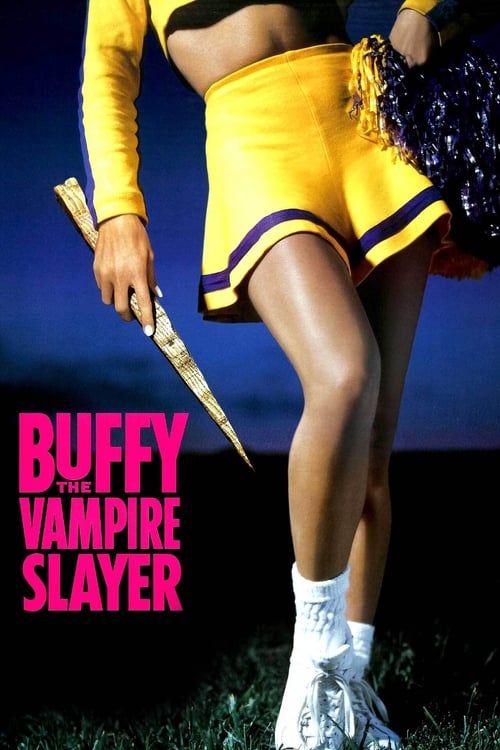
Buffy the Vampire Slayer (1992)
Directed by Fran Rubel Kuzui
No — Buffy the Vampire Slayer is not woke, scoring 12 out of 100 on our wokeness meter.
Buffy the Vampire Slayer arrives from 1992 as a light comedy about a Valley Girl cheerleader who learns she is fated to kill vampires.
Consciousness Markers
The film centers on a female protagonist who subverts the blonde cheerleader victim trope and becomes an action hero, and it was directed by a woman, but it lacks explicit feminist messaging or gender politics.
The cast is entirely white, with no meaningful racial or ethnic diversity; the film's only notable representation is a female director, which is not casting.
No LGBTQ+ characters, themes, or subtext.
No engagement with race, racism, or racial identity.
No environmental or climate themes.
While it lightly mocks Buffy's shallow, wealthy friends and mall culture, there is no anti-capitalist critique or eat-the-rich message.
No body positivity themes or diverse body representation.
No neurodivergent characters or themes.
No historical revisionism; it is a contemporary fantasy comedy.
The film is a light comedy and does not lecture the audience on social or political issues.
Why it received this score
Buffy the Vampire Slayer arrives from 1992 as a light comedy about a Valley Girl cheerleader who learns she is fated to kill vampires. Fran Rubel Kuzui directs, and Kristy Swanson's Buffy does subvert the blonde victim template by becoming an action hero. That is a genuine inversion of a familiar horror trope. It is also the film's only progressive gesture of any substance. There is no explicit feminist argument, no gender politics beyond the premise, and no attempt to turn the slayer's burden into a lesson about patriarchy. The movie wants jokes, stakes, and a motorbike exit.
The broader cultural inventory is barren. Its Los Angeles is white, straight, and unconcerned with race or sexuality. The mall settings and Buffy's shallow rich friends are mocked, but the mockery never becomes an economic critique. There is no environmental anxiety, no body politics, no neurodivergent interiority, no revisionist history, and no sermon. Lecture energy is absent. This is not a film that stops the plot to address the audience. It is a B-movie with vampires, hairspray, and a broken chair leg.
The legacy is more complicated than the object. Joss Whedon disowned the result and later built a television series with heavier thematic ambitions. The 1992 film remains a time capsule of studio comedy, female direction, and a heroine who punches above her weight. Its social consciousness is thin, real in one respect and negligible elsewhere. We can grant the modest inversion and nothing more. A sommelier of such vintages would note the faintest feminist tannin, then set the glass down. The bottle is mostly aerosol and teen angst.
Analysis generated by our Consciousness Algorithm


Synopsis
Blonde, bouncy Buffy is your typical high school cheerleader. But all that changes when a strange man informs her she's been chosen by fate to kill vampires.
Questions about Buffy the Vampire Slayer
Is Buffy the Vampire Slayer woke?
No — Buffy the Vampire Slayer is not woke, scoring 12 out of 100 on our wokeness meter. That earns it a verdict of Ultra Based.
Does Buffy the Vampire Slayer have any woke elements?
Very few. None of the 10 markers reaches 30, the level where a marker counts as present; the highest is Feminist Agenda at 20.
How does Buffy the Vampire Slayer compare to other 1992 movies?
It ranks #23 of the 74 films from 1992 we've scored; their average is 12. The wokest is The Crying Game (62).
How is the Woke Score calculated?
An AI-assisted process researches the film and its reception, scores it 0–100 on ten markers, then combines those into one 0–100 Woke Score. It measures a specific set of 2020s cultural themes, not film quality.