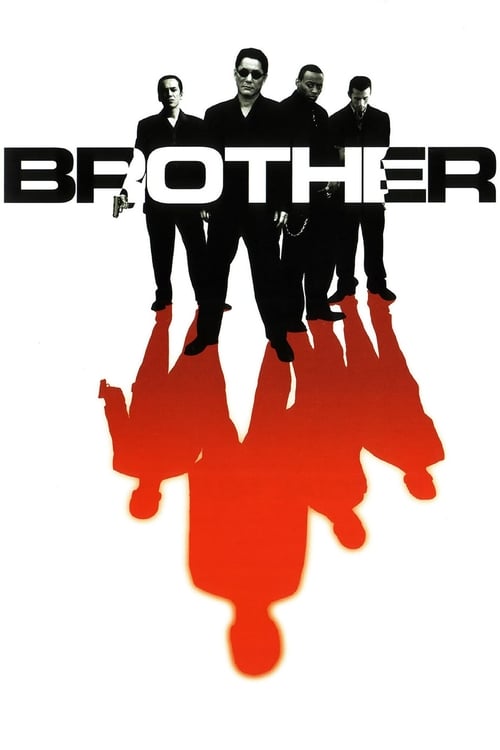
Brother (2000)
Directed by Takeshi Kitano
No — Brother is not woke, scoring 15 out of 100 on our wokeness meter.
Takeshi Kitano’s Brother presents a stylized collision of Japanese honor and Los Angeles grit.
Consciousness Markers
Features a prominently multicultural cast—Japanese, African-American, Latino—and a cross-cultural narrative, though the diversity is not framed as a progressive casting statement.
Depicts interactions among Japanese, Black, Mexican, and Italian criminal groups, but race is largely a backdrop to gang conflict rather than a subject of social critique.
No LGBTQ+ characters, themes, or subtext.
Women appear only marginally as a girlfriend and a femme fatale; no feminist critique or agency-driven narrative.
No environmental or climate themes.
The film's violence stems from gangster turf and honor, not a critique of capitalism or wealth inequality.
No body positivity themes or representations.
No neurodivergent characters or themes.
Fictional crime drama with no revisionist historical claims.
Kitano's direction is cool and observational, with no didactic social messaging.
Why it received this score
Takeshi Kitano’s Brother presents a stylized collision of Japanese honor and Los Angeles grit. We are presented with a narrative of violent loyalty where the central conflict resides entirely within the criminal underworld. The film operates on a purely observational plane, prioritizing elegant compositions and controlled brutality over any overt social commentary. It is a masterclass in aesthetic violence, certainly, but it demonstrates little regard for the contemporary cultural conversation. The story functions as a self-contained drama of turf and brotherhood, eschewing any modern thematic preoccupations.
While the cast exhibits a pleasing multicultural breadth, featuring actors of Japanese, African-American, and Mexican descent, this diversity remains strictly functional. These groups occupy specific roles within the hierarchy of the crime narrative. Race serves as a backdrop for gang conflict rather than a subject for social critique. The film is decidedly uninterested in the progressive sensibilities of the current era. It does not explore feminist themes, nor does it offer any consideration of climate urgency or economic critique. The protagonist’s journey is defined by the ancient codes of the yakuza and the pursuit of respect.
This is a piece of cinema that prioritizes atmosphere and kinetic action above all else. It is a film concerned with the grim mechanics of power and the weight of traditional codes. It lacks the necessary cultural awareness to engage with progressive sensibilities, which is perhaps its greatest cultural limitation. We are left with a slick, brutal, and ultimately traditional gangster story that has successfully avoided the heavy-handed sermonizing common in modern social dramas.
Analysis generated by our Consciousness Algorithm


Synopsis
A Japanese Yakuza gangster's deadly existence in his homeland gets him exiled to Los Angeles, where he is taken in by his little brother and his brother's gang.
Questions about Brother
Is Brother woke?
No — Brother is not woke, scoring 15 out of 100 on our wokeness meter. That earns it a verdict of Ultra Based.
Does Brother have any woke elements?
1 of the 10 markers register at 30 or above, led by Representation Casting (50). On Representation Casting: Features a prominently multicultural cast—Japanese, African-American, Latino—and a cross-cultural narrative, though the diversity is not framed as a progressive casting statement.
How does Brother compare to other 2000 movies?
It ranks #35 of the 125 films from 2000 we've scored; their average is 13. The wokest is But I'm a Cheerleader (72).
How is the Woke Score calculated?
An AI-assisted process researches the film and its reception, scores it 0–100 on ten markers, then combines those into one 0–100 Woke Score. It measures a specific set of 2020s cultural themes, not film quality.