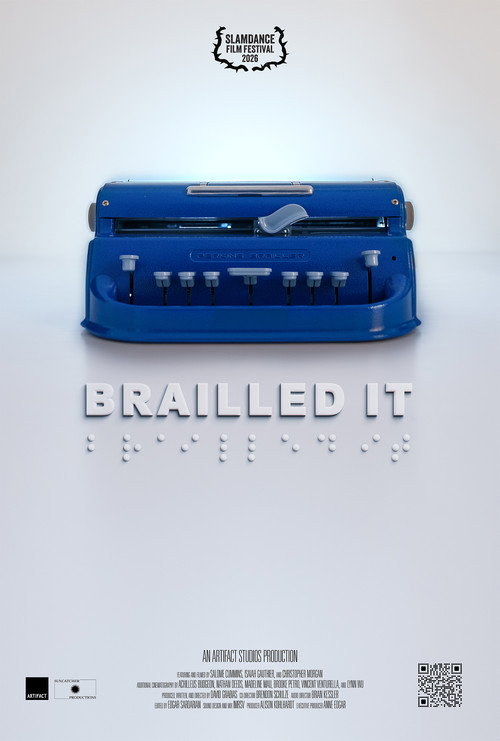
Brailled It (2026)
Directed by Salome Cummins
Brailled It arrives with a 100% Rotten Tomatoes score, the endorsement of disability rights luminaries, and a structural gimmick so conceptually airtight that critics have been left with very little to do except nod respectfully.
Consciousness Markers
The film's entire structural conceit is built around centering blind and low-vision youth as the authorial voices of their own story, with explicit critical framing around avoiding 'pity-driven' disability tropes. This is representation as methodology, not merely casting.
Critical discourse around the film carries a mild sermonizing quality, particularly in the framing of audio description as a tool to educate sighted audiences. The film itself appears more observational than preachy, but the promotional apparatus leans toward advocacy messaging.
No LGBTQ+ themes, characters, or framing appear in any available documentation of the film's content.
No feminist framing or gender-politics agenda is present in the film or its surrounding discourse.
While the three youth co-directors are demographically diverse, no racial consciousness framing, commentary, or intersectional discourse is applied in the film's critical reception or content.
Climate themes are entirely absent from this documentary about a Braille literacy competition.
No anti-capitalist or wealth-critique framing is present in the film's content or reception.
Body positivity in the modern movement sense is not a theme here; the film concerns disability identity and literacy culture, which is a distinct register.
Neurodivergence is not a theme in this film. The subject matter is visual disability, which is a separate category and is not framed through a neurodivergent lens.
The film is a contemporary documentary with no historical revisionism or counter-narrative framing of past events.
Why it received this score
Brailled It arrives with a 100% Rotten Tomatoes score, the endorsement of disability rights luminaries, and a structural gimmick so conceptually airtight that critics have been left with very little to do except nod respectfully. The documentary hands GoPro cameras to three blind and low-vision teenagers competing at the annual Braille Challenge, thereby solving the representation problem by eliminating the representative entirely. It is, by any reasonable measure, a genuinely clever piece of filmmaking. We note this with the slightly deflated air of someone who came prepared to argue.
The film's most legible progressive credential is its insistence on disability identity as culture rather than condition. Braille is presented not as a workaround for a broken visual system but as a literary tradition with its own community, its own hierarchy of excellence, and its own social gravity. The incorporated audio description and binaural sound are baked into the film's architecture from the start, which critics have dutifully interpreted as a corrective for sighted audiences who have spent their lives at the center of cinema's optical contract. The promotional apparatus, featuring Q&As with disability rights activists and partnerships with the Braille Institute, carries the familiar warmth of institutional advocacy. The film itself, however, seems largely content to observe three teenagers being nervous and competitive and occasionally funny, which is a more subversive act than it sounds.
On the woke spectrum, Brailled It scores modestly. Its representation credentials are structural and sincere, its lecture energy is present mainly in the press materials rather than the runtime, and the remaining eight markers register nothing at all. This is, in the taxonomy of contemporary documentary filmmaking, a relatively clean specimen: a film that earns its progressive goodwill through craft and access rather than through the more familiar mechanism of telling the audience what to think. The Braille Challenge, it turns out, is a competition. The film, to its credit, mostly lets it be one.
Analysis generated by our Consciousness Algorithm
Synopsis
Blind and low-vision kids take control of the cameras and capture their own experiences at the annual Braille Challenge — a weekend of high-pressure competition and raw coming-of-age moments.