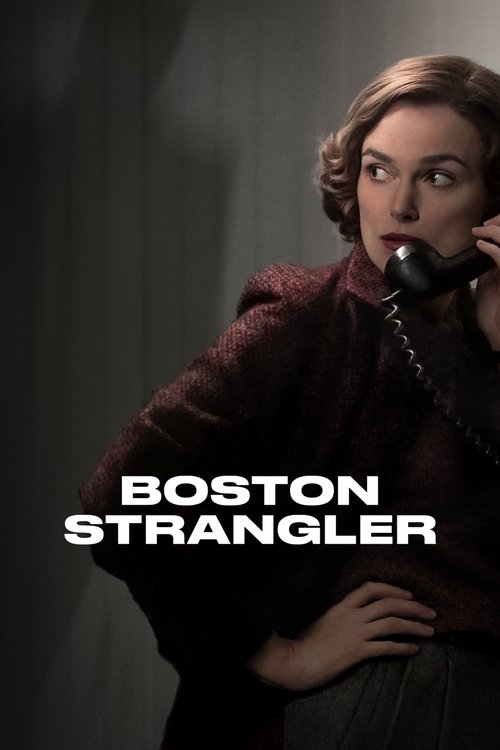
Boston Strangler (2023)
Directed by Matt Ruskin
No — Boston Strangler is not especially woke, scoring 30 out of 100 on our wokeness meter.
Boston Strangler arrives as a study in restraint, which is a polite way of saying it declines to grab anyone by the collar.
Consciousness Markers
The central engine of the film is two women journalists enduring and overcoming rampant workplace and societal sexism in 1960s Boston, with their bylines, careers, and personal sacrifices framed as a fight against a male-dominated establishment.
The film is led by two women (Keira Knightley and Carrie Coon) in a genre historically dominated by male leads, but the supporting cast is otherwise overwhelmingly white and the diversity is essentially gender-based rather than racial or ethnic.
The film periodically gestures at the era's sexism (e.g., women's photos added to bylines to boost sales), but critics noted these touches are mild and kept 'on the right side of contemporary taste' rather than delivered as a sermon.
The film advances a contested theory that multiple killers, not just Albert DeSalvo, were responsible for the murders, challenging the official single-killer narrative — though this is a genuine historical debate rather than a modern ideological reframing.
The plot gestures at money motives corrupting justice — DeSalvo's coached confession for a reward and book deal, Nassar's pursuit of cash — but it critiques individual greed and media sensationalism rather than mounting a systemic anti-capitalist argument.
There are no LGBTQ+ characters, relationships, or themes anywhere in the narrative.
The film is set in a predominantly white 1960s Boston milieu and engages no racial themes, characters, or commentary.
There is no environmental or climate-related content in the film.
No body-positivity themes or messaging are present.
The film does not engage with neurodivergence as a theme or identity.
Why it received this score
Boston Strangler arrives as a study in restraint, which is a polite way of saying it declines to grab anyone by the collar. Matt Ruskin's film follows Loretta McLaughlin and Jean Cole as they chase a serial killer through the newsroom of the Boston Record American, and it understands that the more interesting crime scene is the office. The picture's engine is not the strangler at all. It is two women being told, repeatedly and without ceremony, that their work matters less than the men who supervise it. Keira Knightley and Carrie Coon carry the load with a clipped, weary competence, and the film earns its standing on that front alone. The supporting cast is white to a man, a fact of the 1960s Boston setting and also a fact of the casting.
Where the film reaches for something larger, it does so with gloved hands. The third act advances the theory that Albert DeSalvo confessed to crimes he did not commit so that George Nassar could collect reward money, with a book deal dangled as bait. This is a genuine historical argument, not an invention, and the film treats it as such. The critique of greed here aims at individuals, at lawyers and hucksters and newspapers selling copies, not at any system. The film has no interest in the machinery beneath the men.
On the question of sermonizing, the film is cautious to a fault. Reviewers noted the gentle jabs at period sexism, editors adding the women's photographs to their bylines to move papers, and observed that the whole affair stays on the right side of contemporary taste. That is a compliment and a criticism in the same breath. There is no lecture here, only a raised eyebrow. The result is a competent, slightly airless procedural that honors two journalists without ever raising its voice. A sommelier might call it correct. A drinker would call it thin.
Analysis generated by our Consciousness Algorithm
Part of

Synopsis
Reporters Loretta McLaughlin and Jean Cole bravely pursue the story of the Boston Strangler at great personal risk, putting their own lives on the line in their quest to uncover the truth.
Questions about Boston Strangler
Is Boston Strangler woke?
No — Boston Strangler is not especially woke, scoring 30 out of 100 on our wokeness meter. That earns it a verdict of Based.
Does Boston Strangler have any woke elements?
2 of the 10 markers register at 30 or above, led by Feminist Agenda (70) and Representation Casting (32). On Feminist Agenda: The central engine of the film is two women journalists enduring and overcoming rampant workplace and societal sexism in 1960s Boston, with their bylines, careers, and personal sacrifices framed as a fight against a male-dominated establishment.
How does Boston Strangler compare to other 2023 movies?
It ranks #54 of the 200 films from 2023 we've scored; their average is 24. The wokest is Origin (84).
How is the Woke Score calculated?
An AI-assisted process researches the film and its reception, scores it 0–100 on ten markers, then combines those into one 0–100 Woke Score. It measures a specific set of 2020s cultural themes, not film quality.