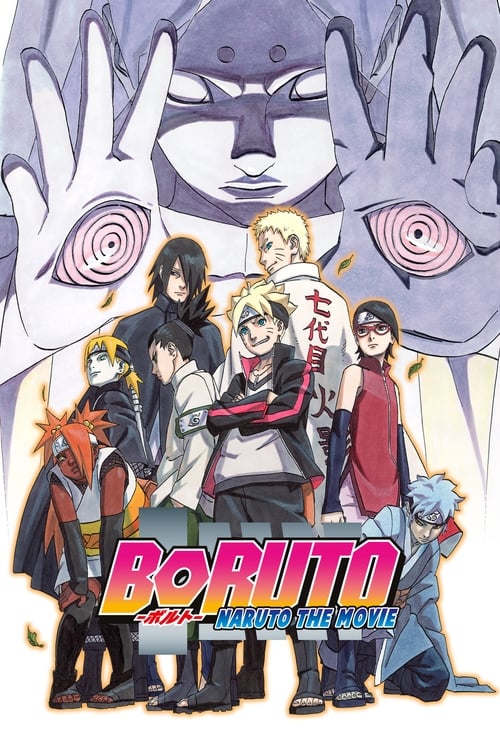
Boruto: Naruto the Movie (2015)
Directed by Hiroyuki Yamashita
No — Boruto: Naruto the Movie is not woke, scoring 6 out of 100 on our wokeness meter.
Boruto: Naruto the Movie arrives as the seventh theatrical outing for a franchise that has spent two decades teaching children to throw shuriken at their problems.
Consciousness Markers
The film carries a modest moral about earning strength honestly rather than cheating with the Scientific Ninja Tool, and about a father's duty to family, but it delivers these through action rather than sermon.
Sarada Uchiha aspires to become Hokage, a mildly notable female ambition, but it is treated as standard shounen aspiration rather than a feminist statement.
A faint thread criticizes the commercialization of ninja tools and Katasuke's publicity-driven scheming, but it is a minor plot device, not an eat-the-rich thesis.
A Japanese-produced anime with a Japanese voice cast; no diversity-casting agenda or commentary on representation is present.
No LGBTQ+ characters, themes, or subtext appear anywhere in the story.
No engagement with racial identity or racial justice themes; the cast is uniformly Japanese and the story is unconcerned with such matters.
No environmental or climate themes whatsoever.
No body-positivity themes or messaging present.
No neurodivergence themes or characters framed through that lens.
No revisionist or reframed historical narrative; the film is entirely fictional franchise continuity.
Why it received this score
Boruto: Naruto the Movie arrives as the seventh theatrical outing for a franchise that has spent two decades teaching children to throw shuriken at their problems. Directed by Hiroyuki Yamashita in his debut, the film concerns a boy who resents his father's job, which is a fair complaint when the job is running an entire village. The narrative engine is a domestic grievance dressed in ninja clothing. We have seen this before. We will see it again.
The cultural ledger here is remarkably clean. The cast is uniformly Japanese, the concerns are uniformly familial, and the film has no interest in the various social projects that occupy the Western release calendar. One character, Sarada Uchiha, announces an ambition to lead the village, a detail the film treats as ordinary shounen business. It is a female aspiration, noted and then filed away. A subplot concerning a scientist who wishes to mass-market ninja tools gestures at the cheapening of tradition through commerce, but the objection is to cheating, not to capital. The villains want immortality. They do not want quarterly earnings.
The film's actual sermon, delivered through fists and a giant spiraling sphere of energy, concerns honesty and the obligations of a father. Boruto cheats in an exam, is caught, and learns that borrowed power is hollow. This is moral instruction of the oldest kind, and the movie is content to let a fight scene carry it. There is no lecturing, no glossary of terms, no character pausing the climax to explain the audience's complicity in systemic injustice. It is a cartoon about a sad boy and his busy dad. On the scale of modern cultural instruction, it is nearly inert, and it seems perfectly happy there.
Analysis generated by our Consciousness Algorithm
Part of


Synopsis
The spirited Boruto Uzumaki, son of Seventh Hokage Naruto, is a skilled ninja who possesses the same brashness and passion his father once had. However, the constant absence of his father, who is busy with his Hokage duties, puts a damper on Boruto's fire. He ends up meeting his father's friend Sasuke, and requests to become... his apprentice!? The curtain on the story of the new generation rises!
Questions about Boruto: Naruto the Movie
Is Boruto: Naruto the Movie woke?
No — Boruto: Naruto the Movie is not woke, scoring 6 out of 100 on our wokeness meter. That earns it a verdict of Ultra Based.
Does Boruto: Naruto the Movie have any woke elements?
Very few. None of the 10 markers reaches 30, the level where a marker counts as present; the highest is Lecture Energy at 15.
How does Boruto: Naruto the Movie compare to other 2015 movies?
It ranks #200 of the 289 films from 2015 we've scored; their average is 15. The wokest is Chi-Raq (78).
Is Boruto: Naruto the Movie the most woke Naruto movie?
No. It ranks #3 of the 7 Naruto films we've scored; the wokest is The Last: Naruto the Movie (8).