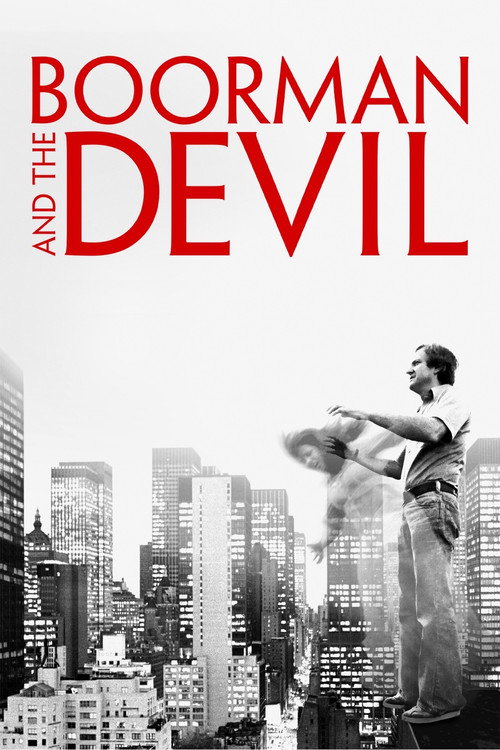
Boorman and the Devil (2026)
Directed by David Kittredge
David Kittredge's documentary about John Boorman and the production of Exorcist II: The Heretic is, by any measure, a film about failure.
Consciousness Markers
The film's core tension, auteur ambition versus corporate franchise safety, carries a mild anti-corporate undercurrent. This is an aesthetic argument about filmmaking rather than an anti-capitalist polemic, but it registers faintly.
The film argues for the value of risk-taking in art, a thesis it makes earnestly. This is a mild aesthetic sermon, but it is aimed at the film industry rather than the audience's moral conscience.
This is a documentary assembling filmmakers and critics relevant to the subject matter. There is no evidence of identity-conscious casting or deliberate demographic engineering in the interview selection.
No LGBTQ+ themes are present in the film. The director's prior work on Queer for Fear is biographical context, not content evidence.
No feminist framing or agenda is present. The film's female participants, Louise Fletcher and Linda Blair, are interviewed as principals in the production history of Exorcist II, full stop.
There is no racial consciousness framing anywhere in the film's documented content or critical reception.
No climate themes are present. The film is about a 1977 horror sequel, not the planet.
No body positivity themes are present or documented.
No neurodivergence themes are present or documented.
The documentary explicitly declines to rehabilitate Exorcist II as a misunderstood masterpiece, treating it as a genuine failure. This is the opposite of revisionism.
Why it received this score
David Kittredge's documentary about John Boorman and the production of Exorcist II: The Heretic is, by any measure, a film about failure. Not the redemptive kind, not the secretly-correct-all-along kind, but the plain, unvarnished kind that leaves a crater in a director's career and a sequel that audiences actively booed at its premiere. This is a subject with essentially no progressive social justice content whatsoever, and Kittredge has the discipline to keep it that way. The film is an autopsy, and autopsies do not pause to address systemic inequality.
The documentary's central argument, that the slow corporate homogenization of Hollywood following the New Hollywood era was, on balance, a loss for cinema, is an aesthetic position held by film critics since roughly 1978. It is not a manifesto. The assembled talking heads, including Mike Flanagan, Karyn Kusama, and Joe Dante, speak as cinephiles mourning a particular kind of studio risk-taking, not as activists. The late Louise Fletcher appears in archival footage, and Linda Blair is interviewed, and at no point does the film pivot toward their personal causes or identities. It is, in the most clinically neutral sense of the phrase, about movies.
We are therefore left with a documentary that scores as close to zero on our cultural awareness index as any film released in 2026 is likely to achieve. This is not a criticism. A film can be genuinely interesting, critically acclaimed, and entirely free of the markers we are here to measure. Boorman and the Devil is, in the taxonomy of this endeavor, a glass of water. Perfectly clear. Nothing to detect.
Analysis generated by our Consciousness Algorithm


Synopsis
Featuring commentary from surviving participants, as well as other filmmakers and critics, this documentary chronicles the career of director John Boorman and the tumultuous production of his film Exorcist II: The Heretic, exploring its critical and commercial failure, how it changed the industry, and the importance of risk-taking in art.