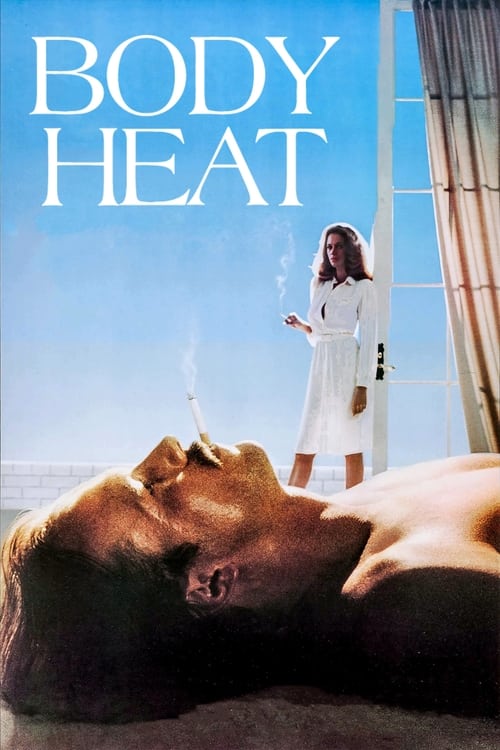
Body Heat (1981)
Directed by Lawrence Kasdan
No — Body Heat is not woke, scoring 2 out of 100 on our wokeness meter.
Lawrence Kasdan's 1981 debut arrives drenched in Florida humidity and moral rot, a neo-noir assembled from parts scavenged off Double Indemnity and left to bake in the sun.
Consciousness Markers
The cast is predominantly white, with J.A. Preston as a detective. His presence is natural and uncommented upon, so it does not register as modern representation casting.
No LGBTQ+ characters or themes are present.
The film features a classic femme fatale, but her manipulation is a noir trope rather than a feminist statement.
Race is not a theme; the Black detective's role is incidental.
The heatwave is a plot device for atmosphere, not a climate change allegory.
The wealthy husband is corrupt, but the film is a crime thriller, not a critique of capitalism.
The film centers on conventional beauty and eroticism, with no body positivity themes.
No neurodivergent characters or themes are present.
The film is a contemporary neo-noir, not a historical revision.
The film is a stylish thriller with no preachy or lecture-like elements.
Why it received this score
Lawrence Kasdan's 1981 debut arrives drenched in Florida humidity and moral rot, a neo-noir assembled from parts scavenged off Double Indemnity and left to bake in the sun. William Hurt plays Ned Racine, a lawyer of limited competence and unlimited appetite, who falls into an affair with Kathleen Turner's Matty Walker and from there into a murder plot so transparently rigged that the audience spots the trap a full hour before he does. The heat is relentless, the sweat is constant, the air conditioning never works. It is a mood, not a message. Anyone hoping the weather signals something larger about the planet will leave disappointed. The temperature exists to make everyone look damp and desperate, and it performs that task admirably.
The film's politics are those of 1944, transplanted without apology. Matty is a femme fatale in the classical mold, a woman who weaponizes desire to escape a prenuptial agreement, and her scheming reads as genre mechanics, not as commentary on the patriarchy. The cast is white and comfortable, with J.A. Preston's dogged detective the lone exception, a presence so unremarked that the film never asks us to notice him. Edmund Walker, the doomed husband, is a corrupt businessman, but his corruption serves the plot instead of any argument about capital. Nobody in this movie is lectured to. Nobody lectures. The screenplay trusts us to keep up, which is a courtesy increasingly rare in the current climate.
The result is craftsmanship without sermon. Kasdan stages the murder with patience, John Barry supplies a score of genuine melancholy, and Turner walks through the whole proceeding with her chin high and her voice flat, a performance that has aged into something close to iconic. Decades on, the film asks nothing of its audience beyond attention. It offers no lessons about identity, no ecological warnings, no solidarity with the working class, no reassurance that anyone's inner life has been properly diagnosed. It is a story about two attractive people doing something terrible, and one of them getting away with it. The heat, in the end, is just heat. We score it accordingly, with the weary respect owed to a vintage that refuses to pretend it was bottled last week. Zero across the board, and not a drop of shame about it. A clean, honest, thoroughly unimproving piece of work, and the thermometer never lies. It simply registers the temperature and lets the guilty sweat through their linen suits in peace. The film is a machine for generating dread, and dread, unlike virtue, never requires a disclaimer.
A note on the closing image: the real Mary Ann lounging on a tropical beach, rich and unpunished, is the most honest ending the genre ever produced. No moral is drawn. No lesson is offered. Crime pays, provided the criminal is patient, and the audience is left to sit with that uncomfortable arithmetic. It is a bracing thing to encounter in a major studio release, and a reminder that not every film from 1981 was built to flatter its viewers. The credits roll. The humidity lingers. Somebody should check on the air conditioning.
Analysis generated by our Consciousness Algorithm


Synopsis
During an extreme heatwave, a beautiful Florida woman and a seedy lawyer engage in an affair while plotting the murder of her rich husband.
Questions about Body Heat
Is Body Heat woke?
No — Body Heat is not woke, scoring 2 out of 100 on our wokeness meter. That earns it a verdict of Ultra Based.
Does Body Heat have any woke elements?
No. All 10 markers score zero.
How does Body Heat compare to other 1981 movies?
It ranks #27 of the 43 films from 1981 we've scored; their average is 5. The wokest is The Fox and the Hound (18).
How is the Woke Score calculated?
An AI-assisted process researches the film and its reception, scores it 0–100 on ten markers, then combines those into one 0–100 Woke Score. It measures a specific set of 2020s cultural themes, not film quality.