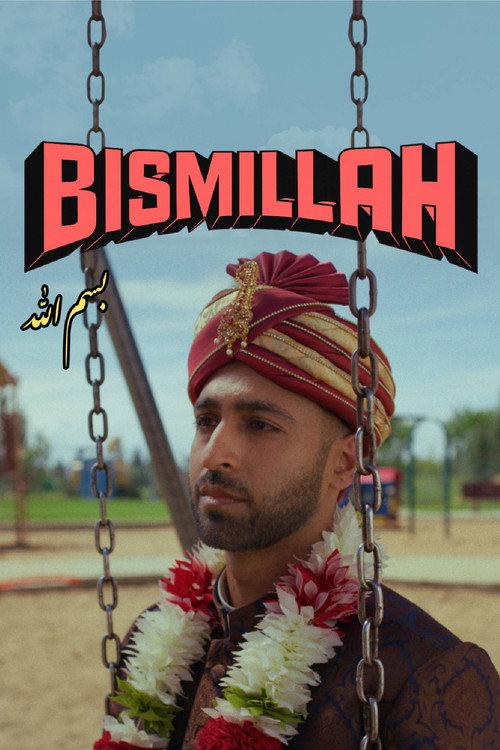
Bismillah (2026)
Directed by Asif Quraishi
Bismillah arrives from Edmonton, Alberta, bearing the modest credentials of a TELUS STORYHIVE grant and the quiet ambition of a filmmaker who cast his actors based on their fluency in Hyderabadi Urdu.
Consciousness Markers
The director explicitly sought IBPOC collaborators and cast actors fluent in Hyderabadi Urdu, making authentic South Asian Muslim representation a deliberate production priority rather than an incidental outcome. The film was then submitted to identity-focused festival circuits to reach those communities specifically.
The film is situated squarely within Hyderabadi Muslim diaspora experience in Western Canada, and reception coverage explicitly framed it as Muslim representation in Canadian media. However, the story itself focuses on personal perfectionism and family dynamics, not systemic racial grievance.
Receptive coverage specifically described the film's themes as touching on 'gifted kid burnout' and adult perfectionism, which sits adjacent to neurodivergence discourse without the film making that framing explicit. It is a mild ambient signal, not a narrative focus.
Critics noted the film provides cultural literacy about Islamic milestones for broader audiences, which carries a mild educational orientation. The same critics were careful to call it non-preachy, and the slice-of-life approach keeps any such energy low.
No LGBTQ+ themes, characters, or subtext appear in the research or the film's premise. The score is 0.
The central character and emotional journey are male-coded, and no feminist framing is evident in the narrative or reception. The score is 0.
No climate, environmental, or ecological themes are present anywhere in the film's premise or reception. The score is 0.
No anti-capitalist or class-critique framing is present. The film concerns a religious ceremony, not economic systems. The score is 0.
Body image, size, or physical appearance play no role in this narrative. The score is 0.
The film presents its cultural and religious traditions straightforwardly and with reverence, not as a subject for deconstruction or reframing. The score is 0.
Why it received this score
Bismillah arrives from Edmonton, Alberta, bearing the modest credentials of a TELUS STORYHIVE grant and the quiet ambition of a filmmaker who cast his actors based on their fluency in Hyderabadi Urdu. This is, by the standards of contemporary Canadian independent cinema, an act of ethnographic precision. The film's premise, a 34-year-old man emotionally undone by a religious recitation ceremony he botched at age four, is so specific and so earnest that it largely sidesteps the usual machinery of cultural-awareness filmmaking. It is too busy being about something to pause and explain why it matters.
The representation markers here are real but modest. The director made deliberate IBPOC casting choices and submitted the film to Muslim and South Asian diaspora festival circuits, which registers on our instruments as genuine intent. The film also attracted coverage framing it as Muslim representation in Canadian media, a framing the film itself appears not to have solicited. Peripheral reception notes on "gifted kid burnout" and adult perfectionism nudge the needle on our neurodivergence gauge without quite justifying a firm reading. The film seems, in the end, more interested in the weight of a father's expectations and the strange persistence of childhood shame than in any broader social taxonomy.
The comparisons to Minari and The Farewell are doing considerable critical work in the press materials, as such comparisons always do. Those are films about diaspora families told from the inside, without the apologetic explanatory text that diaspora films sometimes affix to themselves for the comfort of outside audiences. Bismillah appears to be operating in that tradition: specific, quiet, and largely uninterested in making itself legible as a statement. For a film released in 2026 with active festival positioning in identity-focused circuits, that restraint is its most notable quality.
Analysis generated by our Consciousness Algorithm
Synopsis
Haunted by his failure at his Bismillah as a 4 year old, Azhar (Adolyn H. Dar) seeks redemption by re-doing the ceremony - 30 years later as an adult.