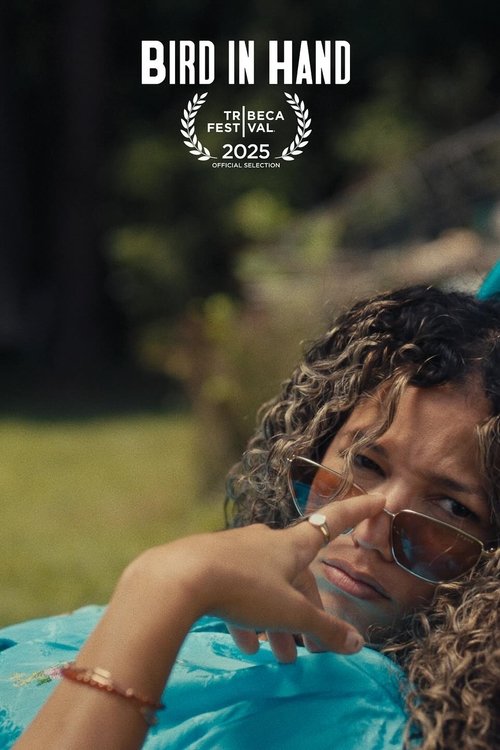
Bird in Hand (2026)
Directed by Melody C. Roscher
Bird in Hand arrives at Tribeca with the quiet confidence of a film that knows exactly what it is doing and would like you to know that it knows.
Consciousness Markers
Racial consciousness is the film's primary operating system. Biracial identity, microaggressions in the rural South, a satirical plantation-rebranding subplot, and the protagonist's search for her Black father all run on the same fuel. This is not background texture; it is the foreground.
The film is built around a biracial Black woman protagonist whose racial identity is not incidental but the engine of the entire narrative. The casting of Alisha Wainwright in a role drawn from the director's own biracial experience signals deliberate, autobiographical representation.
The plantation-rebranding subplot is a direct and pointed engagement with how America narrates its own racial history. The film does not rewrite history so much as it satirizes those who try to, which is a form of historical consciousness that earns a meaningful score here.
The film is directed by a woman, distributed by an organization literally named The Future of Film Is Female, and centers a female protagonist navigating her own identity on her own terms. The feminist infrastructure is considerable, even if the film itself does not appear to sermonize about it.
Critics specifically praised the film for avoiding easy moralizing and heavy-handed resolution, which keeps the lecture energy lower than the subject matter might suggest. The satire does the arguing; the film keeps its hands mostly clean.
The subplot involving white neighbors purchasing a plantation and attempting to rebrand it carries an implicit critique of liberal gentrification and the commodification of painful history. It is satire of a specific class behavior, though the film is not mounting a broad anti-capitalist argument.
No LGBTQ themes are documented in the research or apparent in the premise. Esco Jouléy appears in the cast, and their presence may carry ambient awareness, but no specific content has been identified.
No climate themes, environmental messaging, or ecological content of any kind appears in the research or the premise.
No body positivity themes or content are present in the research or apparent in the film's premise.
No neurodivergence themes or content are identified anywhere in the available material.
Why it received this score
Bird in Hand arrives at Tribeca with the quiet confidence of a film that knows exactly what it is doing and would like you to know that it knows. Director Melody C. Roscher, working from her own biography as a biracial child in rural Virginia, has constructed a dramedy in which a woman named Bird returns home ostensibly to scout wedding venues and actually to excavate her own racial identity. The wedding premise is, in this context, a delivery mechanism. The venue she is really looking for is herself.
The film's most instructive element is its plantation subplot, in which a pair of white neighbors have purchased a historic Southern plantation and are engaged in the project of updating its narrative. This is the film's sharpest satirical instrument, and Roscher wields it with the precision of someone who has spent considerable time watching well-meaning people renovate atrocities into amenities. The microaggressions Bird encounters in rural Virginia are rendered without melodrama, which is the correct choice. Melodrama would let the audience off the hook. Understatement keeps them on it.
What keeps the film from fully drowning in its own racial consciousness is the mother-daughter relationship at its center, which critics describe as genuinely messy and unresolved in the way actual families tend to be. Christine Lahti's hippie white mother is not a villain and not a saint, which is the most honest position the film could take. The distributor, an organization whose name is a manifesto, and the film's autobiographical scaffolding ensure that its progressive sensibilities are structural rather than decorative. This is not a film that stumbled into awareness. It was built there, from the foundation up.
Analysis generated by our Consciousness Algorithm
Synopsis
Bird returns home to visit her mom in search of the perfect wedding venue after a surprise engagement to her longtime boyfriend, but much to everyone's surprise, she is actually on the hunt for something else.