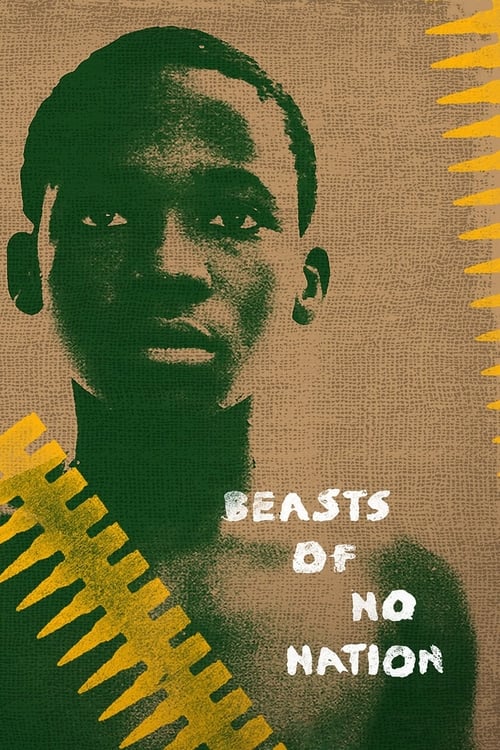
Beasts of No Nation (2015)
Directed by Cary Joji Fukunaga
No — Beasts of No Nation is not woke, scoring 0 out of 100 on our wokeness meter.
Beasts of No Nation carries a moral weight that a careless classifier might confuse with ideology.
Consciousness Markers
The cast is authentically West African, reflecting the film's setting, but this is not a deliberate modern representation-casting choice.
No LGBTQ+ themes or characters.
No feminist agenda; female characters are present but not framed through gender politics.
The film depicts a West African civil war but does not engage with modern racial consciousness or racial justice themes.
No climate themes.
No anti-capitalist critique; the conflict is driven by power and resources but not framed as a capitalist critique.
No body positivity themes.
Strika's mutism is trauma-induced, not a portrayal of neurodivergence.
Based on a fictional novel, not a revisionist historical account.
The film is a sober war drama that shows rather than lectures on progressive social issues.
Why it received this score
Beasts of No Nation carries a moral weight that a careless classifier might confuse with ideology. It is a war drama about a child soldier in an unnamed West African country, adapted from Uzodinma Iweala's novel, and it prefers observation to argument. Agu's passage from a boy reciting scripture to a machete-carrying member of the Native Defense Forces unfolds with a patience that borders on the clinical. The camera watches. It does not scold. Fukunaga's screenplay, seven years in the making, keeps its eyes on the boy and lets the politics of the conflict blur into jungle and gunfire.
The casting is authentically West African, drawn largely from Ghanaian and Nigerian performers, though this reflects sensible production practice for a film shot in Ghana instead of a modern representational gesture. The women in Agu's village exist as mothers and neighbors, not as vehicles for gender politics. There is no queer subtext, no climate anxiety, no celebration of bodies, no diagnosis of the mind. Strika's mutism is the residue of atrocity, not a condition to be framed with sensitivity. The war is fed by gold and ambition, yet nobody pauses to deliver a thesis on capital. Greed simply arrives with a machete and a supply line.
What surprises is the restraint. Participant Media co-financed the picture, a company that usually arrives bearing a pamphlet, and Fukunaga declines to hand one out. The Commandant's sermons are the ravings of a warlord, not the film's own voice. When Agu finally tells the school counselor he has done terrible things, the scene refuses to instruct us on how to feel about him. He is a boy in the ocean by the end. The film lets that be enough, and it is. A sober vintage, unadorned, and ideologically quiet.
Analysis generated by our Consciousness Algorithm


Synopsis
Based on the experiences of Agu, a child fighting in the civil war of a West African country. Follows Agu's journey as he's forced to join a group of soldiers. While he fears his commander and many of the men around him, his fledgling childhood has been brutally shattered by the war raging through his country, and he is at first torn between conflicting revulsion and fascination.
Questions about Beasts of No Nation
Is Beasts of No Nation woke?
No — Beasts of No Nation is not woke, scoring 0 out of 100 on our wokeness meter. That earns it a verdict of Ultra Based.
Does Beasts of No Nation have any woke elements?
No. All 10 markers score zero.
How does Beasts of No Nation compare to other 2015 movies?
It ranks #258 of the 289 films from 2015 we've scored; their average is 15. The wokest is Chi-Raq (78).
How is the Woke Score calculated?
An AI-assisted process researches the film and its reception, scores it 0–100 on ten markers, then combines those into one 0–100 Woke Score. It measures a specific set of 2020s cultural themes, not film quality.