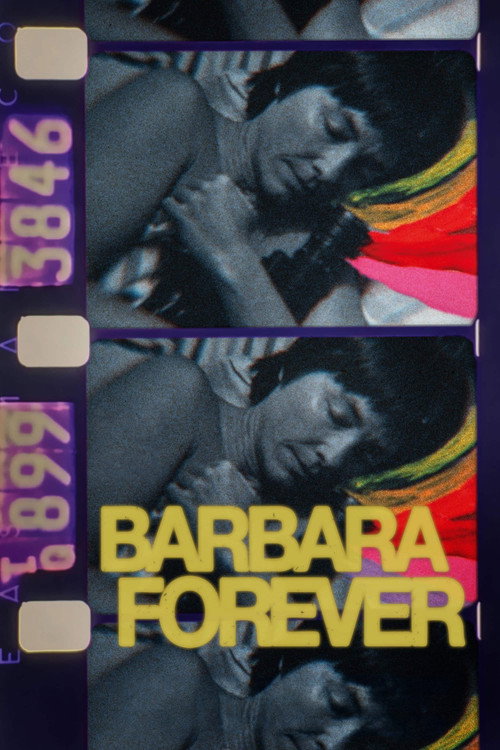
Barbara Forever (2026)
Directed by Brydie O'Connor
Some documentaries arrive with a thesis.
Consciousness Markers
A documentary about a pioneering lesbian filmmaker's 50-year career, her decades-long lesbian partnership, her films centering frank lesbian sexuality, and her mission to prevent lesbian artists from being erased from history. This marker has found its natural habitat.
Hammer's entire artistic project is framed as a deliberate subversion of the male gaze, centering female bodies and lesbian eroticism as acts of political resistance. The film honors and perpetuates this framing without reservation.
The film is constructed entirely around lesbian and queer subjects, not as background texture but as its explicit architectural purpose. Representation is not a feature here; it is the load-bearing wall.
The documentary's frank engagement with Hammer's aging body, her battle with ovarian cancer, and her decision to make art from her own dying constitutes a sustained and serious engagement with bodies outside conventional representation. It is not a feel-good celebration; it is something more unsettling and more interesting.
Recovering a deliberately marginalized lesbian artistic history and installing it into the canonical record is the film's stated mission. Hammer herself described her archival work as resistance to erasure. This is revisionist history as explicit intent, not as byproduct.
Critics praised the film for letting Hammer's own voice lead and avoiding sanitized hagiography, which tempers what could have been a relentlessly sermonizing experience. The advocacy impulse is present throughout, but the unsentimental approach reportedly keeps it from crossing into full homily.
Hammer is positioned as a radical independent artist in deliberate opposition to mainstream commercial culture, and commentators frame the film as an antidote to corporate Pride. The anti-establishment current is present but never becomes an explicit argument.
The documentary's core concern with historical erasure carries a faint structural awareness of whose stories get preserved and whose do not. However, Hammer's anti-colonial work is reportedly absent from the film itself, leaving this marker largely unactivated.
No evidence of climate themes in the film's content, framing, or subjects.
No evidence of neurodivergence themes in the film's content or framing.
Why it received this score
Some documentaries arrive with a thesis. Barbara Forever arrives with a mission statement, a 50-year archive, and the quiet conviction that if it does not make this argument loudly enough, the argument will simply cease to exist. Director Brydie O'Connor trains her camera on the life and work of Barbara Hammer, experimental filmmaker and lesbian cinema's foundational figure, and the result is a film that wears its purpose the way Hammer wore her camera: openly, deliberately, and with no apparent interest in your comfort. The decision to let Hammer narrate her own legacy through archival audio and personal footage is both the film's structural gambit and its most honest acknowledgment that Hammer, who spent decades recording her own history precisely because she did not trust anyone else to do it, would have had notes.
The markers here are not subtle. We have a lesbian filmmaker's 50-year career centered on frank lesbian sexuality and the subversion of the male gaze. We have a decades-long partnership with Florrie Burke documented with the same unflinching gaze Hammer turned on everything else. We have the frank representation of aging, illness, and a body being slowly dismantled by ovarian cancer, all of which Hammer transformed into art because she had no interest in dying quietly off-screen. The body positivity score reflects not a corporate affirmation campaign but something stranger: a woman insisting that her disintegrating body was still a valid artistic subject, which is either radical or simply true, and possibly both.
What saves Barbara Forever from full lecture energy is the thing critics kept noting: it portrays a difficult, funny, and genuinely complicated person rather than a monument. Monuments do not argue back. Hammer, apparently, argued constantly. The film's reported omission of her anti-colonial work, her films about Palestine and South Africa, is a curatorial choice that reveals its own priorities, centering the lesbian feminist project at the expense of the broader political one. That is a choice, and choices are data. Executive producer Kristen Stewart's name in the credits will ensure the film reaches audiences who have never heard of Dyketactics, which is presumably the point, and which Hammer, one suspects, would have found both useful and mildly irritating.
Analysis generated by our Consciousness Algorithm
Synopsis
An archive-driven exploration of the life, work, and legacy of iconic, pioneering lesbian filmmaker Barbara Hammer.