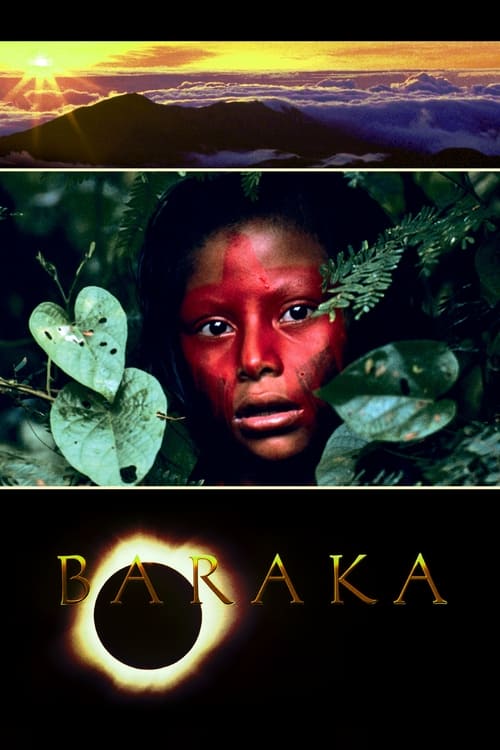
Baraka (1992)
Directed by Ron Fricke
No — Baraka is not woke, scoring 0 out of 100 on our wokeness meter.
Baraka arrives from 1992, a year when a documentary could still be trusted to say nothing at all.
Consciousness Markers
The film is a non-narrative documentary featuring real people from various cultures, but it does not engage in modern representation casting or diversity commentary.
No LGBTQ+ themes, characters, or content are present.
The film does not advance a feminist agenda or explore gender politics.
While it depicts diverse global cultures, it does so without racial justice commentary or consciousness-raising intent.
The film includes natural landscapes and some industrial imagery, but it lacks any explicit climate change activism or crusade.
It shows factories and modernization, but offers no explicit anti-capitalist or eat-the-rich message.
No body positivity themes or messaging are present.
No neurodivergence themes or representation are present.
The film includes historical sites like Auschwitz and Tuol Sleng, but it does not revise or reinterpret history in a woke manner.
The film is non-verbal and observational, with no lecturing or didactic narration.
Why it received this score
Baraka arrives from 1992, a year when a documentary could still be trusted to say nothing at all. Ron Fricke's camera travels through twenty-four countries, sixty-five millimeters of film, and fourteen months of patience, and it never once offers a thesis statement. We get Maasai celebrations, the Ryoan temple, burning oil fields in Kuwait, a Tokyo subway at rush hour, and chanting monks, assembled without narration, interviews, or a soothing voice explaining what any of it means. The film takes its name from an Islamic concept of blessing. That is the extent of its editorializing.
Certain images would tempt a lesser production into sermonizing: the tracking shots through Auschwitz and Tuol Sleng, the skulls stacked in a room, the aircraft boneyard at Davis-Monthan, the coal mine at Black Mesa. Baraka shows them and moves on. There is no narrator to supply the moral, no text card to assign blame, no closing montage instructing us how to feel about capital, empire, or the planet's temperature. A yakuza's tattoo is cut against tribal body paint, gesturing at human commonality without filing a report on it. Diversity here is the simple census of the planet, presented without commentary, which is to say without an argument to make.
The result has aged into something rare: a global survey with no agenda to sell. It observes, it lingers, it departs. Ebert proposed it as the single film to send to the stars, a reasonable choice precisely because it never tells the recipient what to think. For those of us who spend our days cataloguing the ideological freight of the moving image, this is a dry vintage. Smooth, elegant, and containing almost nothing to classify.
Analysis generated by our Consciousness Algorithm


Synopsis
A paralysingly beautiful documentary with a global vision—an odyssey through landscape and time—that attempts to capture the essence of life.
Questions about Baraka
Is Baraka woke?
No — Baraka is not woke, scoring 0 out of 100 on our wokeness meter. That earns it a verdict of Ultra Based.
Does Baraka have any woke elements?
No. All 10 markers score zero.
How does Baraka compare to other 1992 movies?
It ranks #65 of the 74 films from 1992 we've scored; their average is 12. The wokest is The Crying Game (62).
How is the Woke Score calculated?
An AI-assisted process researches the film and its reception, scores it 0–100 on ten markers, then combines those into one 0–100 Woke Score. It measures a specific set of 2020s cultural themes, not film quality.