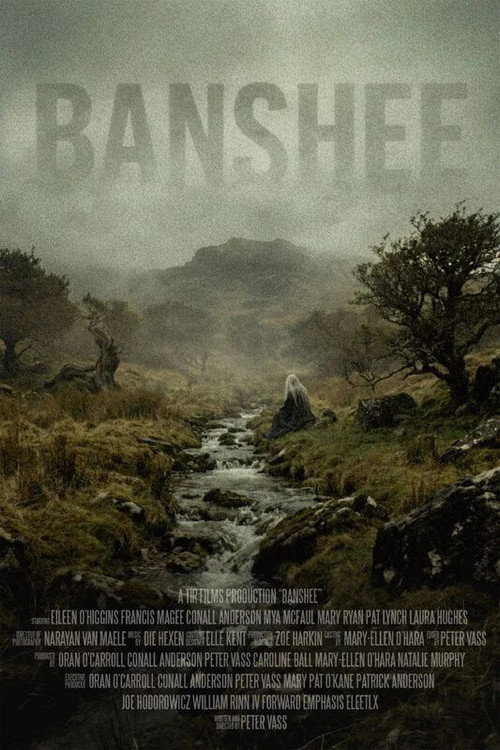
Banshee (2026)
Directed by Peter Vass
Banshee arrives from the bogs of Donegal carrying 35mm grain, a mysterious comb, and the weight of a director who has decided that Irish folklore needs a contemporary conscience.
Consciousness Markers
The director explicitly described the heroine as 'ahead of her time' and 'pushing back against Irish tradition,' and festival coverage echoes this framing. The film's feminist energy is genre-organic rather than sermonizing, but the intentionality is on the record.
The cast is authentically Irish and drawn from the locale of the story, which is appropriate rather than agenda-driven. A modest score reflects the all-female lead pairing in a genre historically dominated by male protagonists, though this reads as organic casting rather than a corrective gesture.
The 1880s setting is used to project a modern sensibility onto a historical heroine, which is a mild form of revisionism. It is incidental to the horror rather than the film's driving thesis.
Festival framing carries a faint whiff of messaging, with critics noting 'a period piece with a modern pulse.' As a short film without room for sustained moralizing, the lecture energy remains a trace element rather than a sustained presence.
No LGBTQ+ themes, characters, or subtext are present in the film. The story is a period folk horror centered on family and folklore.
The film is set in 1880s rural Donegal and engages exclusively with Irish cultural identity and folklore. There is no racial consciousness framing in any reviewed material.
No climate or environmental messaging is present. The natural landscape of Donegal serves atmosphere, not allegory.
No anti-capitalist themes are evident. The story operates within the domestic and supernatural registers of folk horror.
No body positivity themes or messaging appear in any available material about the film.
No neurodivergence themes or characters are present or referenced in any coverage of the film.
Why it received this score
Banshee arrives from the bogs of Donegal carrying 35mm grain, a mysterious comb, and the weight of a director who has decided that Irish folklore needs a contemporary conscience. Peter Vass, transitioning from comedy to folk horror with apparent sincerity, has crafted a short film set in the 1880s in which the heroine, Róise, is described in press materials as a woman who is "ahead of her time in terms of her way of thinking." This is the foundational move: take a historical setting, populate it with a protagonist whose interiority belongs to a later century, and allow festival programmers to write the rest. The banshee, that ancient harbinger of death from Irish tradition, is thus recruited into a story about female agency. The banshee herself has not been consulted on this arrangement.
To be fair to the film, its progressive sensibilities are worn lightly. There is no speech. No one turns to camera. The horror atmosphere and the 35mm photography have received the bulk of critical attention, which suggests Vass had the discipline to let the craft do most of the talking. The feminist framing is present but not aggressive, more a directorial posture than a structural argument. A woman protagonist in folk horror is not, by itself, a political act, and Banshee seems to understand this at least some of the time.
The result is a film that sits at the very shallow end of the social consciousness spectrum, which, for a short folk horror shot in rural Ireland, is perhaps exactly where it should be. The tradition it is most visibly engaging with is the tradition of the atmospheric Irish short, a form that has never required a manifesto. The comb is mysterious. The banshee wails. The heroine thinks modern thoughts in a nineteenth-century landscape. We have seen this before, and we will see it again, and each time the 35mm grain will make it feel more legitimate than it perhaps is.
Analysis generated by our Consciousness Algorithm
Synopsis
An Irish folk horror short filmed in Donegal, Ireland.