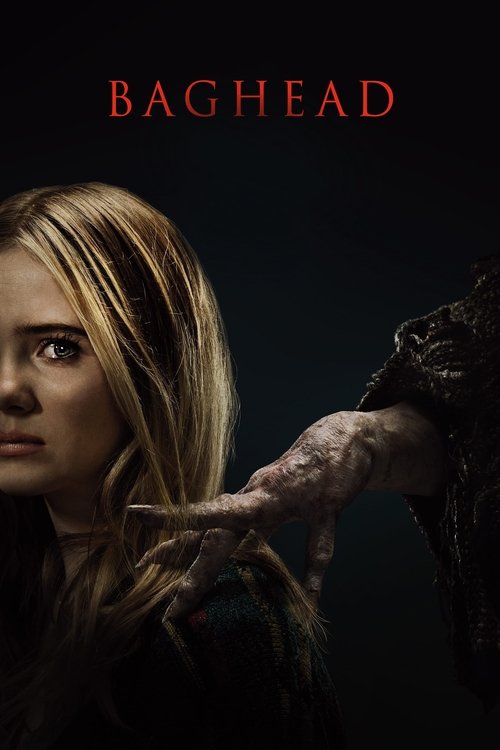
Baghead (2023)
Directed by Alberto Corredor
No — Baghead is not woke, scoring 2 out of 100 on our wokeness meter.
Baghead arrives with the confidence of a film that believes its monster is enough.
Consciousness Markers
The female protagonist, Iris, gains power over the entity through ownership, but this is framed within a supernatural power dynamic rather than a social critique.
The film relies on standard genre casting and makes no attempt to push diverse representation or critique casting choices.
There is no discernible focus on LGBTQ+ themes or characters within the provided plot summary.
The film makes no commentary on race or racial identity.
The supernatural horror setting offers no environmental or climate-focused messaging.
The plot revolves around inheritance and property law, which is a standard horror trope, not a critique of modern capitalism.
There is no focus on body image or body acceptance in the narrative.
No characters exhibit traits related to neurodivergence or mental health commentary is present.
The plot deals with ancient folklore and fictional curses, not the revision of established historical facts.
The film's focus is on convoluted supernatural mechanics and scares, not didactic social commentary.
Why it received this score
Baghead arrives with the confidence of a film that believes its monster is enough. A young woman named Iris inherits a centuries-old Berlin pub from a father she barely knew, signs the deed, and promptly becomes the legal custodian of a shape-shifting creature sealed behind a basement wall. The creature speaks for the dead. The dead, as ever, have complaints. There is a two-minute limit on conversations, a solicitor who cannot be located, a brotherhood that burned a conjurer four hundred years ago, and a great deal of running through rock corridors. The machinery is elaborate. The scares are not.
Assessed against the cultural markers of the current moment, the film is a near-total abstention. The cast is drawn from standard European genre stock, and no effort is made to interrogate that choice. Race goes unmentioned. So do queerness, climate, body image, neurodivergence, and the moral status of inherited property, which the film treats as a plot device instead of a thesis. The single faint signal is Iris herself, a woman who gains command over a malevolent force through the mere fact of ownership. That is a power dynamic dressed as folklore, not a social argument, and the film never develops it. The entity, after all, is the one orchestrating everything. Agency is the twist, not the theme.
The remainder is a lean supernatural thriller that critics found thin, and they were not wrong. The Berlin setting sits there unexplained, a Scottish publican tending an English-named pub in a city where almost nobody speaks German. Peter Bradshaw noted the resemblance to Talk to Me, and the comparison is unkind. Baghead has an intriguing premise, a committed lead, and no interest whatsoever in saying anything. On the evidence, it is a film about a hole in a wall. That is not a criticism. It is a classification.
Analysis generated by our Consciousness Algorithm


Synopsis
Following the death of her estranged father, Iris learns she has inherited a run-down, centuries-old pub. She travels to Berlin to identify her father’s body and meet with The Solicitor to discuss the estate. Little does she know, when the deed is signed she will become inextricably tied to an unspeakable entity that resides in the pub’s basement – Baghead – a shape-shifting creature that can transform into the dead.
Questions about Baghead
Is Baghead woke?
No — Baghead is not woke, scoring 2 out of 100 on our wokeness meter. That earns it a verdict of Ultra Based.
Does Baghead have any woke elements?
Very few. None of the 10 markers reaches 30, the level where a marker counts as present; the highest is Feminist Agenda at 5.
How does Baghead compare to other 2023 movies?
It ranks #192 of the 200 films from 2023 we've scored; their average is 24. The wokest is Origin (84).
How is the Woke Score calculated?
An AI-assisted process researches the film and its reception, scores it 0–100 on ten markers, then combines those into one 0–100 Woke Score. It measures a specific set of 2020s cultural themes, not film quality.