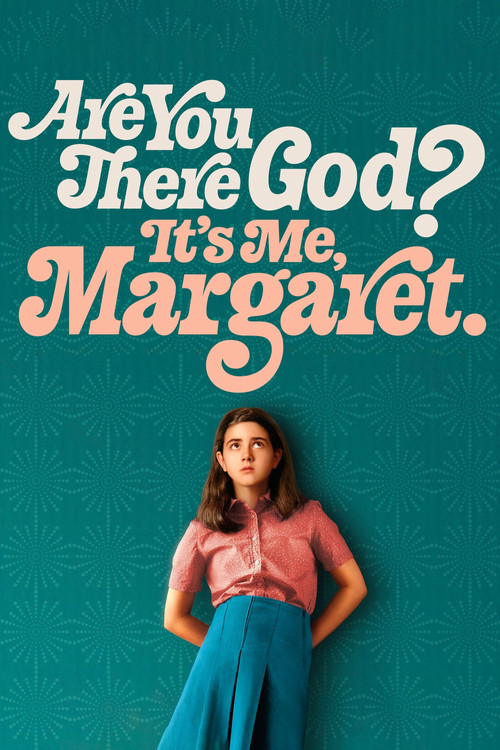
Are You There God? It's Me, Margaret. (2023)
Directed by Kelly Fremon Craig
No — Are You There God? It's Me, Margaret. is not especially woke, scoring 31 out of 100 on our wokeness meter.
Kelly Fremon Craig's adaptation of Judy Blume's 1970 novel arrives with the quiet confidence of a film that knows exactly what it is: a warm, well-made coming-of-age picture about an eleven-year-old girl in a New Jersey suburb, and the small agonies of bras, first kisses, and a God who never quite answers.
Consciousness Markers
A woman-directed film that centers girls' interior lives, menstruation, bras, and first kisses with unusual frankness, treating female adolescence as worthy of serious narrative attention.
The Laura Danker subplot explicitly critiques shaming a girl for developing early, and the film treats puberty and bodily change as natural and unshameful.
The friend group and supporting cast are modestly diverse, including Black actress Amari Alexis Price as Janie, though the 1970s New Jersey suburb setting keeps this naturalistic rather than programmatic.
The film is warm and humanistic rather than preachy, though its themes of religious tolerance and self-acceptance carry a gentle didactic undertone.
The film is set in a predominantly white 1970s suburb and engages no racial themes or commentary; diversity exists only in incidental casting.
No LGBTQ+ characters, themes, or subtext appear anywhere in the film.
No environmental or climate themes are present.
No economic critique or class-conscious messaging appears; the family's upward mobility via a promotion is treated neutrally.
No neurodivergent characters or themes are depicted.
The film is a faithful period adaptation set in 1970, with no historical revisionism.
Why it received this score
Kelly Fremon Craig's adaptation of Judy Blume's 1970 novel arrives with the quiet confidence of a film that knows exactly what it is: a warm, well-made coming-of-age picture about an eleven-year-old girl in a New Jersey suburb, and the small agonies of bras, first kisses, and a God who never quite answers. The period detail is meticulous without being nostalgic. The film keeps its characters in 1970 and lets them stay there. The family's move, prompted by a promotion, is handled with no economic commentary whatsoever, which is itself a choice.
The film's progressive sensibilities are genuine but modest. It is directed by a woman and takes girls' interior lives seriously, treating menstruation as a plot engine instead of a punchline. That is not nothing. The Laura Danker subplot, in which a classmate is ostracized for developing early, lands its critique of body shaming with a light hand, and the movie refuses to punish its heroine for her own cruelty, choosing reconciliation over sermon. The friend group includes a Black classmate in a manner incidental to the story, which is to say natural. Race is otherwise absent from this predominantly white suburb, and the film does not pretend otherwise or reach for a lesson.
Where the film tilts toward instruction, it does so gently. Margaret's mixed Christian and Jewish heritage, and the estranged grandparents who disowned her mother, generate the mildest finger-wagging about tolerance and self-acceptance. It is a soft touch, more hug than lecture. The result is a pleasant, sincere, largely untroubling piece of studio filmmaking. We have seen this vintage before, and it holds up.
Analysis generated by our Consciousness Algorithm
Part of


Synopsis
When her family moves from New York City to New Jersey, an 11-year-old girl navigates new friends, feelings, and the beginning of adolescence.
Questions about Are You There God? It's Me, Margaret.
Is Are You There God? It's Me, Margaret. woke?
No — Are You There God? It's Me, Margaret. is not especially woke, scoring 31 out of 100 on our wokeness meter. That earns it a verdict of Based.
Does Are You There God? It's Me, Margaret. have any woke elements?
3 of the 10 markers register at 30 or above, led by Feminist Agenda (55), Body Positivity (45) and Representation Casting (40). On Feminist Agenda: A woman-directed film that centers girls' interior lives, menstruation, bras, and first kisses with unusual frankness, treating female adolescence as worthy of serious narrative attention.
How does Are You There God? It's Me, Margaret. compare to other 2023 movies?
It ranks #52 of the 200 films from 2023 we've scored; their average is 24. The wokest is Origin (84).
How is the Woke Score calculated?
An AI-assisted process researches the film and its reception, scores it 0–100 on ten markers, then combines those into one 0–100 Woke Score. It measures a specific set of 2020s cultural themes, not film quality.