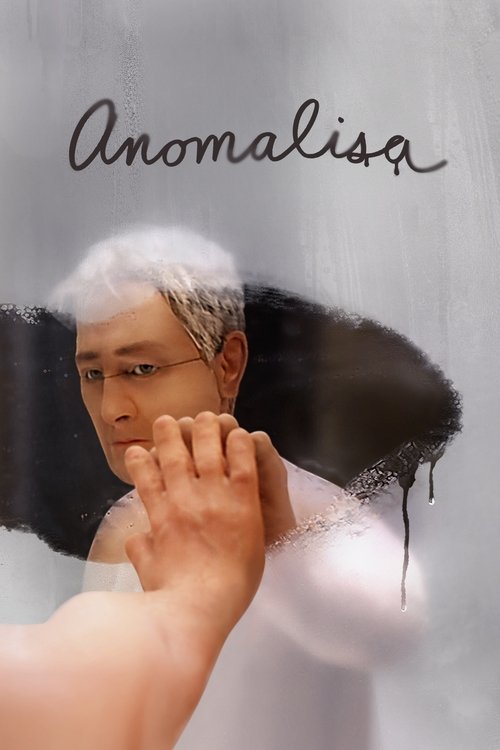
Anomalisa (2015)
Directed by Charlie Kaufman
No — Anomalisa is not woke, scoring 8 out of 100 on our wokeness meter.
Anomalisa is a stop-motion puppet drama about Michael Stone, a motivational speaker who perceives every human being as the same face and voice until he encounters Lisa, a woman with a different sound.
Consciousness Markers
The film is built on the Fregoli delusion, a genuine psychiatric condition in which Michael perceives everyone as a single identical person, and its keywords include depression and antidepressants, though the condition functions as a plot device rather than advocacy.
The film carries Kaufman's characteristic philosophical and existential introspection, and Michael delivers a deranged monologue at the convention, but it dramatizes rather than lectures the audience on social issues.
Lisa's facial scarring and her insecurity about her body during intimacy are acknowledged, with Michael reassuring her, but this is a minor beat rather than a body-positive message.
Lisa is given some interiority and a moment of self-assertion, but the film is squarely a study of a self-absorbed man's perception of women, not a feminist statement.
Michael's climactic breakdown includes a vague, incoherent rant against the American government, but there is no sustained critique of capitalism or wealth.
The voice cast consists of three white actors (Thewlis, Leigh, Noonan), and the stop-motion puppets are all modeled on the same generic appearance. No deliberate diverse casting or representation effort is present.
There are no LGBTQ+ characters, themes, or subtext anywhere in the film's narrative.
Race is entirely absent as a theme; the film's central conceit concerns perceptual uniformity, not racial identity or politics.
No environmental or climate themes appear in the film.
The film engages in no historical re-framing or revisionism.
Why it received this score
Anomalisa is a stop-motion puppet drama about Michael Stone, a motivational speaker who perceives every human being as the same face and voice until he encounters Lisa, a woman with a different sound. Charlie Kaufman and Duke Johnson approach this conceit with painstaking craft. The puppets are 3D printed, the Cincinnati hotel is a temple of beige, and the melancholy is thick enough to spread on toast. It is an accomplished film. It is also, by the standards of contemporary social signaling, a nearly empty room.
Representation casting is not a project here. Three white actors supply the voices, and Tom Noonan voices everyone who is not Michael or Lisa, which is a conceptual joke, not a diversity initiative. LGBTQ themes do not appear. Racial consciousness does not appear. Climate concerns do not appear. The film has no interest in revising history. Lisa receives a measure of interiority and one moment of self-assertion, but the camera remains fixed on a self-absorbed man's perception of women, so the feminist reading is a faint pulse. Her facial scarring and her insecurity during intimacy are acknowledged, and Michael offers reassurance, but this is a minor beat in a larger study of his disappointment.
The film's psychological architecture is more substantial. Michael's condition resembles the Fregoli delusion, and the keywords include depression and antidepressants, though the illness functions as a plot device instead of advocacy. A climactic rant against the American government gestures at anti-capitalist feeling, but it is incoherent and brief. Kaufman's characteristic existential introspection gives the convention monologue a philosophical texture, and the film dramatizes its ideas instead of lecturing the audience on social issues. The result is a precise, sad, occasionally horrifying puppet show about a man who cannot connect. Its cultural conscience is not absent. It is simply occupied elsewhere.
Analysis generated by our Consciousness Algorithm


Synopsis
An inspirational speaker becomes reinvigorated after meeting a lively woman who shakes up his mundane existence.
Questions about Anomalisa
Is Anomalisa woke?
No — Anomalisa is not woke, scoring 8 out of 100 on our wokeness meter. That earns it a verdict of Ultra Based.
Does Anomalisa have any woke elements?
Very few. None of the 10 markers reaches 30, the level where a marker counts as present; the highest is Neurodivergence at 20.
How does Anomalisa compare to other 2015 movies?
It ranks #158 of the 289 films from 2015 we've scored; their average is 15. The wokest is Chi-Raq (78).
How is the Woke Score calculated?
An AI-assisted process researches the film and its reception, scores it 0–100 on ten markers, then combines those into one 0–100 Woke Score. It measures a specific set of 2020s cultural themes, not film quality.