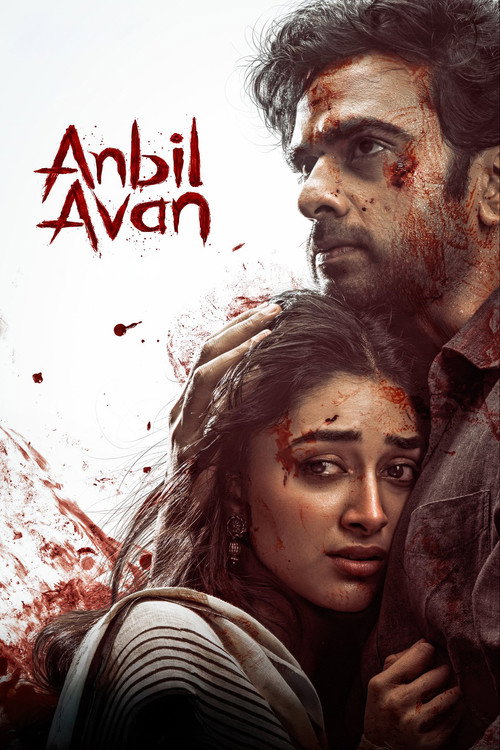
Anbil Avan (2026)
Directed by R. Kaarthikeyan
Anbil Avan arrives with the structural confidence of a film that knows exactly what it wants to say in its first half and considerably less certainty about the second.
Consciousness Markers
The first half establishes an egalitarian modern marriage with a financially independent female lead who co-drives the couple's entrepreneurial pivot. The second half largely dismantles this by reverting to a male-protector survival thriller, with the wife's agency shrinking as her husband's body count rises.
The inciting premise is the couple's deliberate escape from soul-crushing corporate employment and EMI debt into self-sufficient entrepreneurship. The film frames the corporate life as a trap, though the critique is wistful and aspirational rather than ideologically hostile.
The corrupt MLA antagonist is deployed as a mouthpiece for explicit patriarchal ideology, instructing the protagonist to keep his wife subordinate, which the film then proceeds to punish at length. The corporate-burnout framing also carries a mild prescriptive quality about how modern people should really be living.
The film is a Tamil regional production with a Tamil cast, assembled for story and industry reasons rather than as a statement about diversity. No deliberate diversity-as-casting-philosophy is evident.
No LGBTQ+ characters, themes, or subtext are present in any documented aspect of the film.
The film operates entirely within a Tamil cultural context without engaging in the modern Western framework of racial consciousness or systemic racism discourse.
No climate, environmental, or ecological messaging is present. The hill-station setting is backdrop, not sermon.
No body positivity themes, messaging, or character arcs are documented anywhere in the film.
No neurodivergent characters or related thematic content are present in the film.
The film is an original contemporary thriller with no historical setting or revisionist historical framing.
Why it received this score
Anbil Avan arrives with the structural confidence of a film that knows exactly what it wants to say in its first half and considerably less certainty about the second. Director R. Kaarthikeyan establishes a modern Tamil marriage with notable care: two corporate professionals who share chores, share doubts, and share a dream of escaping the EMI-and-fluorescent-lighting existence the film regards with visible distaste. It is a portrait of middle-class aspiration that is warm, specific, and genuinely earned. The couple's pivot to a hill-station homestay registers as a life choice, not a lifestyle advertisement.
Then the corrupt MLA arrives, and the film makes its own pivot, from quiet domestic realism to a home-invasion thriller in which the female lead's earlier competence is quietly retired so the male lead can administer an extended education in physical consequences. The villain helpfully articulates the patriarchal worldview the film intends to refute, delivering his opinions about marital hierarchy with the measured tone of a man reading from a pamphlet he wrote himself. It is a functional narrative device. It is not a subtle one. The film's social consciousness, which in the first half felt like texture, is in the second half more of a target painted on the antagonist's forehead.
What Anbil Avan ultimately delivers is a film in productive argument with itself. The progressive domestic setup and the retrograde rescue thriller coexist without ever resolving into a coherent position, which makes it a curious artifact. Govind Vasantha's score and the chemistry of its leads carry the film further than its structural contradictions deserve. The corporate critique is real, if gentle. The gender commentary begins with something to say and ends by saying something else entirely.
Analysis generated by our Consciousness Algorithm
Synopsis
A married couple attempts to start a good life together, but unexpected trouble traps them in an unsettling situation that forces them to fight back for their survival.