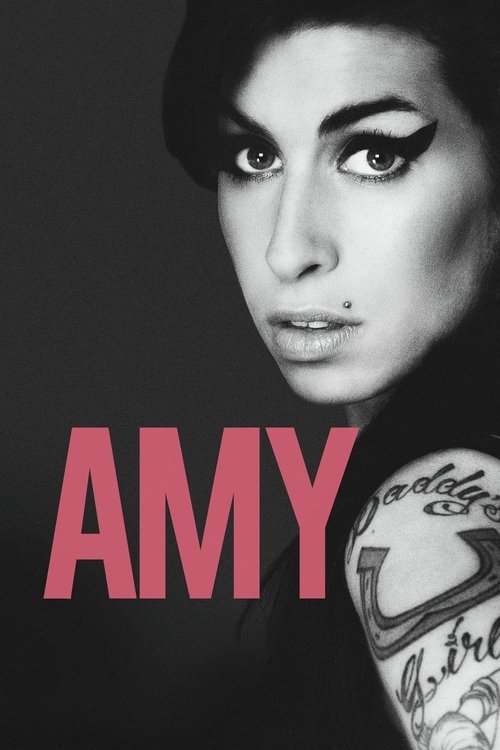
Amy (2015)
Directed by Asif Kapadia
No — Amy is not woke, scoring 16 out of 100 on our wokeness meter.
Asif Kapadia's Amy assembles a decade of home video, backstage footage, and answering machine messages into a portrait of Amy Winehouse that plays like an autopsy conducted with affection.
Consciousness Markers
The film carries a clear moral critique of media and fame, but it mostly lets archival footage and interviews speak rather than delivering direct lectures.
The film critiques the media and music industry's mistreatment of a young female artist, including body shaming and exploitative relationships, but it is not framed as an explicit feminist manifesto.
The film critiques the music industry, media, and celebrity machine as exploitative forces around Winehouse, but it does not advance a broader anti-capitalist argument.
The documentary addresses Winehouse's bulimia and media scrutiny of her body, but it does not promote a body-positivity agenda.
The documentary uses real archival subjects and interviewees rather than casting choices, so there is no deliberate representation-casting agenda.
No LGBTQ+ themes or storylines are present in the film.
While Winehouse's music draws from Black genres and collaborators appear, the documentary does not engage in racial-consciousness commentary.
There is no climate-related content or environmental messaging.
No neurodivergence themes or representation are present.
The film is a biographical documentary about real events and does not revise or reinterpret history in the relevant sense.
Why it received this score
Asif Kapadia's Amy assembles a decade of home video, backstage footage, and answering machine messages into a portrait of Amy Winehouse that plays like an autopsy conducted with affection. The director of Senna again trusts the archive over the talking head, letting his subject narrate her own decline through clips she never imagined would be arranged into an argument. It won the Academy Award for Best Documentary Feature, which tells you what the industry thought of its restraint. The film is a tragedy of a specific woman, not a case study in anything larger.
The progressive instincts here are present but muted. There is a critique of how the tabloid press and the record business chewed through a young singer, and the camera lingers on the body-shaming and the bulimia with a sympathy that stops short of advocacy. The villains are specific editors and specific managers, not the economic order itself, so the anger stays personal and small. Winehouse's debt to Black American soul and jazz is audible in every track without ever becoming a thesis. Nobody in this film is asked to represent a category.
What remains is grief, professionally organized. The last act, following the Belgrade performance, the phone calls, and the funeral, is as heavy as documentary gets, and Kapadia earns the weight honestly. If the movie carries a sermon, it is the mild and familiar one that fame is a machine which eats the sensitive, delivered mostly through the faces of people who loved her. That is a moral, not a manifesto. The result is sad, exact, and largely unpolemical, which in the current climate counts as a quiet achievement. It never lectures. It just watches, and then it stops.
Analysis generated by our Consciousness Algorithm


Synopsis
A documentary on the life of Amy Winehouse, the immensely talented yet doomed songstress. We see her from her teen years, where she already showed her singing abilities, to her finding success and then her downward spiral into alcoholism and drugs.
Questions about Amy
Is Amy woke?
No — Amy is not woke, scoring 16 out of 100 on our wokeness meter. That earns it a verdict of Ultra Based.
Does Amy have any woke elements?
1 of the 10 markers register at 30 or above, led by Lecture Energy (30). On Lecture Energy: The film carries a clear moral critique of media and fame, but it mostly lets archival footage and interviews speak rather than delivering direct lectures.
How does Amy compare to other 2015 movies?
It ranks #100 of the 289 films from 2015 we've scored; their average is 15. The wokest is Chi-Raq (78).
How is the Woke Score calculated?
An AI-assisted process researches the film and its reception, scores it 0–100 on ten markers, then combines those into one 0–100 Woke Score. It measures a specific set of 2020s cultural themes, not film quality.