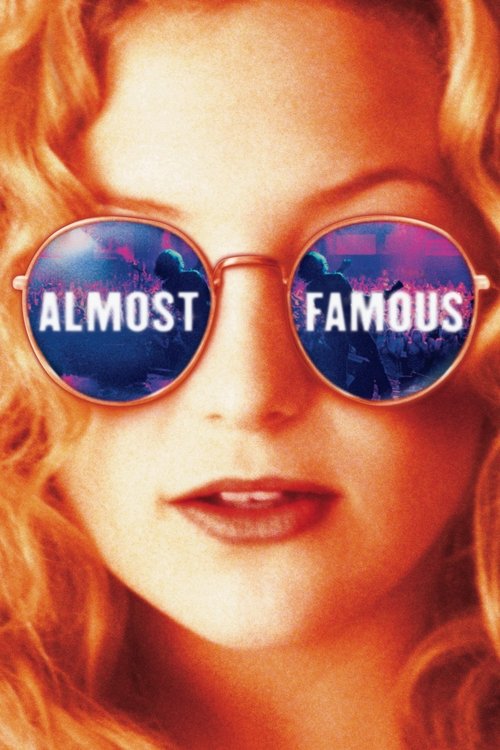
Almost Famous (2000)
Directed by Cameron Crowe
No — Almost Famous is not woke, scoring 12 out of 100 on our wokeness meter.
Almost Famous arrives in 2000 as a semi-autobiographical memory piece from Cameron Crowe, and it belongs to a pre-2010 cultural moment when a film could be warm, humane, and largely untroubled by the modern social checklist.
Consciousness Markers
Penny Lane and the 'Band-Aids' offer a mild critique of how women are treated as commodities in rock culture (gambled away in a poker game), and Elaine is a formidable single mother, but the film is nostalgic rather than polemical about gender.
The ensemble is overwhelmingly white, though the real-life Rolling Stone editor Ben Fong-Torres is portrayed on screen and the film reflects a period-accurate milieu. No casting choices appear driven by modern representation imperatives.
The film gestures at the tension between artistic integrity and the corporate music machine (managers, promoters, Rolling Stone's fact-checking), but it is affectionate toward the industry rather than a class-warfare screed.
Elaine's moral warnings about rock culture and Lester Bangs' 'be honest and unmerciful' counsel carry some didactic weight, but the film wears its lessons lightly and warmly.
Ben Fong-Torres exists as a real historical figure in the story, but race is never a subject of commentary or consciousness in the film.
No LGBTQ+ characters, themes, or subtext of any kind appear in the film.
No environmental or climate themes whatsoever.
No body-positivity themes or messaging present.
William is a precocious child prodigy who skipped grades and struggles socially, but this is framed as giftedness and awkward adolescence, not neurodivergence.
The film is semi-autobiographical and period-set, but it does not revise or reinterpret historical events for ideological purposes.
Why it received this score
Almost Famous arrives in 2000 as a semi-autobiographical memory piece from Cameron Crowe, and it belongs to a pre-2010 cultural moment when a film could be warm, humane, and largely untroubled by the modern social checklist. The ensemble is white by period default, and while the real Rolling Stone editor Ben Fong-Torres appears on screen, race is never a subject of commentary or consciousness. There are no LGBTQ threads, no environmental crusade, no body-positivity messaging, and no neurodivergence framing for William's precocious awkwardness. His giftedness is treated as adolescence, not diagnosis. The film does not revise history for ideological ends. It simply remembers 1973 with a fondness for denim and feedback.
Where mild progressive notes surface, they remain soft and nostalgic. Penny Lane and the Band-Aids receive a gentle critique of women treated as commodities, most memorably in the poker-game scene, but the film observes this sadness without mounting an argument. Elaine is a formidable single mother, yet the gender politics are wistful, not programmatic. The tension between artistic integrity and the corporate music machine is present in managers, promoters, and Rolling Stone's fact-checking apparatus, but Crowe is affectionate toward the industry. He is not calling for its dismantling. The moral instruction that does exist comes from Elaine's warnings and Lester Bangs' counsel to be honest and unmerciful. It lands lightly, as warm advice from flawed adults, not as a sermon.
The result is a well-acted, canonized coming-of-age picture that won an Academy Award for its screenplay and remains a critical favorite. It is not a vessel for contemporary ideological instruction. Its concerns are autobiographical, musical, and broadly humanist. The film asks us to remember a boy, a band, a girl, and a song. It does not ask us to audit our politics. On the modern social-consciousness meter, it registers barely at all, and that is precisely the point of its enduring charm.
Analysis generated by our Consciousness Algorithm


Synopsis
In 1973, a precocious 15-year-old aspiring rock journalist lands a dream assignment from Rolling Stone to tour with a rising rock band, embarking on a coming-of-age journey as he discovers the exhilarating and heartbreaking realities behind rock stardom.
Questions about Almost Famous
Is Almost Famous woke?
No — Almost Famous is not woke, scoring 12 out of 100 on our wokeness meter. That earns it a verdict of Ultra Based.
Does Almost Famous have any woke elements?
Very few. None of the 10 markers reaches 30, the level where a marker counts as present; the highest is Feminist Agenda at 22.
How does Almost Famous compare to other 2000 movies?
It ranks #48 of the 125 films from 2000 we've scored; their average is 13. The wokest is But I'm a Cheerleader (72).
How is the Woke Score calculated?
An AI-assisted process researches the film and its reception, scores it 0–100 on ten markers, then combines those into one 0–100 Woke Score. It measures a specific set of 2020s cultural themes, not film quality.