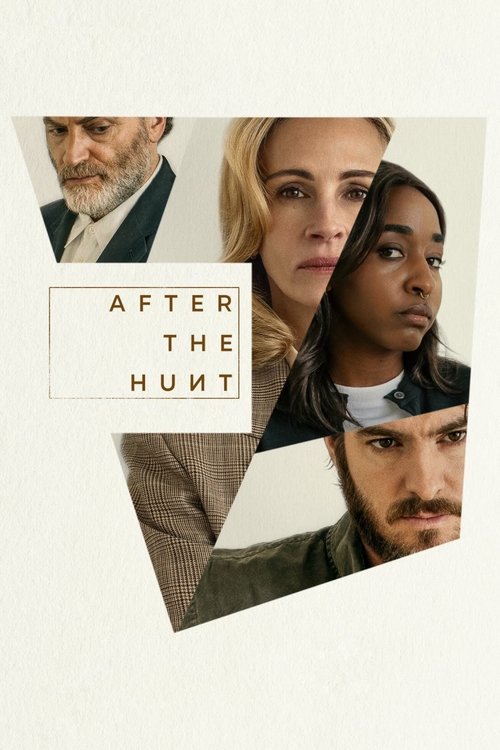
After the Hunt (2025)
Directed by Luca Guadagnino
Partly — After the Hunt is somewhat woke, scoring 50 out of 100 on our wokeness meter.
Luca Guadagnino's After the Hunt arrives as a campus accusation drama set at Yale in 2019, which is to say it arrives pre-loaded with every anxiety the prestige film industry has been nursing since the hashtag era began.
Consciousness Markers
Guadagnino deliberately changed the character of Maggie Resnick from white to Black to inject racial subtext, and the cast includes Ayo Edebiri and non-binary performer Lío Mehiel in prominent roles.
The film is built around a #MeToo campus accusation, a female protagonist navigating belief and betrayal, and the institutional treatment of women who come forward — though it deliberately refuses a clean feminist verdict.
The screenplay was rewritten to add racial subtext to the accuser, and the film gestures at how race inflects who is believed on an elite campus, though it never fully develops the thread.
Maggie's partner Alex is explicitly non-binary, played by trans/non-binary actor Lío Mehiel, and Alma weaponizes the relationship as 'performative' during a confrontation.
It is explicitly a 'conversation piece' about sexual assault, belief, and campus politics, but critics widely noted its coy, ambiguous follow-through that refuses to preach a clear moral.
There is glancing critique of academic privilege and the wealthy donor class (Maggie's parents), and Hank's cynical pivot to a lucrative political consultancy, but no sustained anti-capitalist argument.
No environmental or climate themes appear in the film.
No body positivity themes are present.
No neurodivergence themes are present.
The film is a fictional campus drama with no historical revisionism.
Why it received this score
Luca Guadagnino's After the Hunt arrives as a campus accusation drama set at Yale in 2019, which is to say it arrives pre-loaded with every anxiety the prestige film industry has been nursing since the hashtag era began. Julia Roberts plays Alma, a philosophy professor whose star doctoral student Maggie, played by Ayo Edebiri, accuses a colleague of sexual assault. The screenplay, by Nora Garrett, was voted onto the Black List, and Guadagnino rewrote the accuser's race, changing Maggie from white to Black to add a layer of subtext the first draft lacked. The film then declines to do much with it. The accusation is believed by some, doubted by others, and the question of who gets credence on an elite campus hovers at the edge of the frame without ever being brought into focus.
The progressive furniture is arranged with care. Maggie has a non-binary partner named Alex, played by Lío Mehiel, and Alma hurls the relationship back at her as performative during a confrontation, which is the film's way of acknowledging that it knows the vocabulary and intends to use it as a weapon. The #MeToo machinery is the engine of the plot, and the institutional handling of a woman who comes forward is examined at length. There is a glancing swipe at academic privilege and the wealthy donor class, and Hank's late pivot to a lucrative political consultancy gets a raised eyebrow. But the film refuses verdicts. It is a conversation piece that will not finish the conversation, and critics found the follow-through coy.
Roberts is superb, and the film around her is muddled, overlong, and finally toothless in a way that feels almost studied. It gestures at race, gender, and power, then retreats into ambiguity as though ambiguity were a virtue and not a hiding place. The result is a provocation that declines to provoke. One leaves the theater admiring the craftsmanship and wondering what, exactly, was being hunted. The answer appears to be nothing in particular.
Analysis generated by our Consciousness Algorithm

Synopsis
A college professor finds herself at a personal and professional crossroads when a star pupil levels an accusation against one of her colleagues, and a dark secret from her own past threatens to come to light.
Questions about After the Hunt
Is After the Hunt woke?
Partly — After the Hunt is somewhat woke, scoring 50 out of 100 on our wokeness meter. That earns it a verdict of Woke-Adjacent.
What makes After the Hunt woke?
5 of the 10 markers register at 30 or above, led by Representation Casting (68), Feminist Agenda (55) and Racial Consciousness (50). On Representation Casting: Guadagnino deliberately changed the character of Maggie Resnick from white to Black to inject racial subtext, and the cast includes Ayo Edebiri and non-binary performer Lío Mehiel in prominent roles.
How does After the Hunt compare to other 2025 movies?
It ranks #37 of the 217 films from 2025 we've scored; their average is 26. The wokest is STRAW (92).
How is the Woke Score calculated?
An AI-assisted process researches the film and its reception, scores it 0–100 on ten markers, then combines those into one 0–100 Woke Score. It measures a specific set of 2020s cultural themes, not film quality.