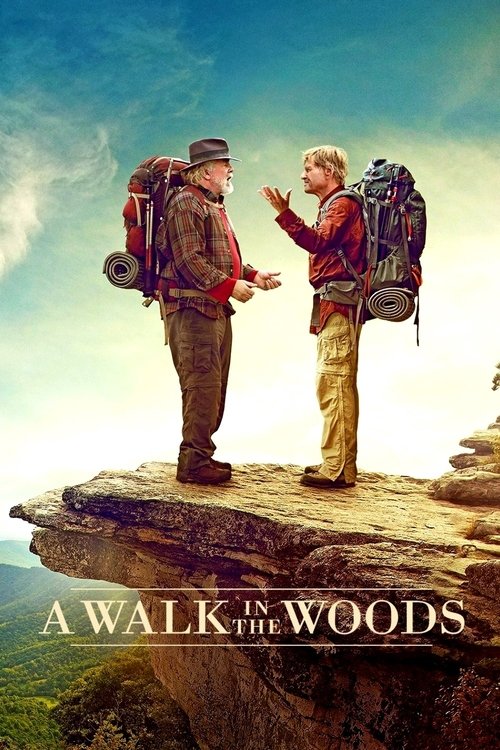
A Walk in the Woods (2015)
Directed by Ken Kwapis
No — A Walk in the Woods is not woke, scoring 5 out of 100 on our wokeness meter.
A Walk in the Woods is a 2015 adaptation of Bill Bryson's memoir, directed by Ken Kwapis, in which Robert Redford and Nick Nolte amble along the Appalachian Trail.
Consciousness Markers
The cast is overwhelmingly white and older, led by Robert Redford, Nick Nolte, and Emma Thompson, with only minor peripheral minority roles and no deliberate diversity-driven casting.
Emma Thompson's Catherine is a supportive but conventional worried-wife figure; the film offers no feminist critique or gender-forward messaging.
The film celebrates the natural beauty of the Appalachian Trail and the outdoors, but frames this as personal contemplation rather than environmental activism or climate messaging.
The tone is amiable and reflective rather than preachy; the only mild thematic lessons concern aging, friendship, and finishing what you start.
There are no LGBTQ+ characters, themes, or subtext anywhere in the film.
Race is entirely absent as a theme; the film is a story of two aging white men hiking and reminiscing with no racial commentary.
No critique of wealth, capitalism, or class structures appears; the story is a gentle personal memoir about aging and friendship.
Nick Nolte's out-of-shape Katz is played for comedic contrast rather than any body-positivity or self-acceptance messaging.
No neurodivergent characters or themes are present; Katz's struggles are framed around alcoholism and fitness, not neurodiversity.
The film is a faithful, apolitical adaptation of a memoir and does not reframe or reinterpret history.
Why it received this score
A Walk in the Woods is a 2015 adaptation of Bill Bryson's memoir, directed by Ken Kwapis, in which Robert Redford and Nick Nolte amble along the Appalachian Trail. The cast is old, white, and comfortable. Diversity is not the project here. Emma Thompson appears as Catherine, the worried wife who extracts a promise that Bill will not hike alone. She is supportive, conventional, and given no feminist counterweight. The film contains no LGBTQ characters, themes, or subtext. It has no racial consciousness to speak of. Race does not enter the frame. Two aging white men walk, bicker, and remember. The woods are simply woods.
The natural world gets loving attention. Mountains, rain, shelter logs, and the occasional vista are photographed with affection. This is personal contemplation, not environmental activism. There is no climate crusade in the backpack. Nor is there an anti-capitalist one. Wealth and class are not interrogated. Katz's out-of-shape body is played for comedy, not body positivity. His struggles with alcohol and fitness are not framed as neurodivergence. The film has no interest in diagnosis or self-acceptance messaging. It treats Bryson's memoir faithfully. History is not revised, reframed, or recruited for a cause.
The lecture energy is low. The lessons are mild: friendship endures, aging is strange, and finishing half a trail still counts. Kwapis keeps things amiable. The film is pedestrian in the most literal sense. It is not preachy, not angry, and not invested in social reform. Its radical proposition is that old men can walk and complain. The cultural inventory is modest. No manifesto is carried up the mountain. The film leaves a pleasant hike, a few jokes about gear, and the quiet sense that a sequel might be typed at the end. This is cinema as a comfortable pair of boots.
Analysis generated by our Consciousness Algorithm


Synopsis
After spending two decades in England, Bill Bryson returns to the U.S., where he decides the best way to connect with his homeland is to hike the Appalachian Trail with one of his oldest friends.
Questions about A Walk in the Woods
Is A Walk in the Woods woke?
No — A Walk in the Woods is not woke, scoring 5 out of 100 on our wokeness meter. That earns it a verdict of Ultra Based.
Does A Walk in the Woods have any woke elements?
Very few. None of the 10 markers reaches 30, the level where a marker counts as present; the highest is Representation Casting at 10.
How does A Walk in the Woods compare to other 2015 movies?
It ranks #217 of the 289 films from 2015 we've scored; their average is 15. The wokest is Chi-Raq (78).
How is the Woke Score calculated?
An AI-assisted process researches the film and its reception, scores it 0–100 on ten markers, then combines those into one 0–100 Woke Score. It measures a specific set of 2020s cultural themes, not film quality.