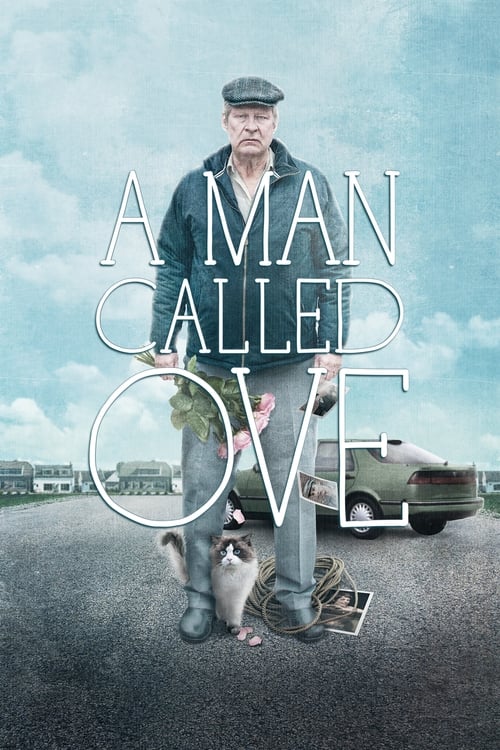
A Man Called Ove (2015)
Directed by Hannes Holm
No — A Man Called Ove is not especially woke, scoring 26 out of 100 on our wokeness meter.
A Man Called Ove arrives as a Swedish comedy-drama adapted from Fredrik Backman's novel, directed with a steady hand by Hannes Holm.
Consciousness Markers
The film features a prominent Iranian immigrant lead (Bahar Pars as Parvaneh) and a Middle Eastern gay character, giving it meaningful diversity, though the casting is organic to the story rather than a modern representational statement.
Mirsad is disowned by his family for coming out as gay and is taken in by Ove, a genuine and sympathetically handled LGBTQ+ subplot, though treated with warmth rather than activism.
Parvaneh's immigrant status and the community's integration are present, but the film does not foreground racial consciousness or systemic racial commentary.
The 'Whiteshirts' bureaucrats and developers seeking to demolish homes and institutionalize Rune are portrayed as cold antagonists, offering a mild anti-establishment critique but not a class-warfare message.
Sonja and Parvaneh are strong, capable women who shape Ove's life, but the film has no explicit feminist thesis or agenda.
The film carries gentle humanist messages about community and acceptance, but delivers them through sentiment and character rather than preachy lecturing.
No environmental or climate themes appear in the film.
No body positivity themes are present.
Ove's rigidity and routine are framed as grief and grumpiness, not as neurodivergence; no explicit neurodivergent themes appear.
No historical revisionism is present; the film is a contemporary character drama.
Why it received this score
A Man Called Ove arrives as a Swedish comedy-drama adapted from Fredrik Backman's novel, directed with a steady hand by Hannes Holm. Rolf Lassgård plays the title curmudgeon, a widower who polices parking regulations and attempts, repeatedly, to join his late wife in the hereafter. Each attempt is interrupted, usually by a pregnant Iranian immigrant named Parvaneh, and the film builds its emotional architecture from this repeated deflection. The machinery is visible at all times. It works anyway.
The film's social conscience is present but understated. Parvaneh, played by Bahar Pars, is an Iranian immigrant whose persistence wears down Ove's defenses; her foreignness is a fact of the story, not a thesis about it. A gay character named Mirsad is disowned by his family and taken in by Ove, a subplot handled with warmth and a touch of narrative convenience. The villains, bureaucrats known only as the Whiteshirts, want to demolish homes and institutionalize the inconvenient, which supplies a mild anti-establishment flavor without approaching class warfare.
Where the film declines to push is everywhere else. There is no climate anxiety, no body-positive messaging, no framework of neurodivergence applied to Ove's rigidity; his routines are grief, plainly. The women around him are capable and formative, though the film never argues a feminist case on their behalf. Sentiment is the only tool on offer, delivered through character and small gestures: a repaired bicycle, a stray cat, a driving lesson. It lectures nobody. That restraint is the source of its modest power and its modest cultural footprint. A gentle film, then, about a difficult man. The tears it produces are earned honestly, which is more than most of its American counterparts can claim.
Analysis generated by our Consciousness Algorithm


Synopsis
Despite being deposed as president of his condominium association, grumpy 59-year-old Ove continues to watch over his neighbourhood with an iron fist. When pregnant Parvaneh and her family move into the terraced house opposite Ove and she accidentally backs into Ove’s mailbox, it sets off a series of unexpected changes in his life.
Questions about A Man Called Ove
Is A Man Called Ove woke?
No — A Man Called Ove is not especially woke, scoring 26 out of 100 on our wokeness meter. That earns it a verdict of Based.
Does A Man Called Ove have any woke elements?
2 of the 10 markers register at 30 or above, led by LGBTQ+ Themes (45) and Representation Casting (45). On LGBTQ+ Themes: Mirsad is disowned by his family for coming out as gay and is taken in by Ove, a genuine and sympathetically handled LGBTQ+ subplot, though treated with warmth rather than activism.
How does A Man Called Ove compare to other 2015 movies?
It ranks #51 of the 289 films from 2015 we've scored; their average is 15. The wokest is Chi-Raq (78).
How is the Woke Score calculated?
An AI-assisted process researches the film and its reception, scores it 0–100 on ten markers, then combines those into one 0–100 Woke Score. It measures a specific set of 2020s cultural themes, not film quality.