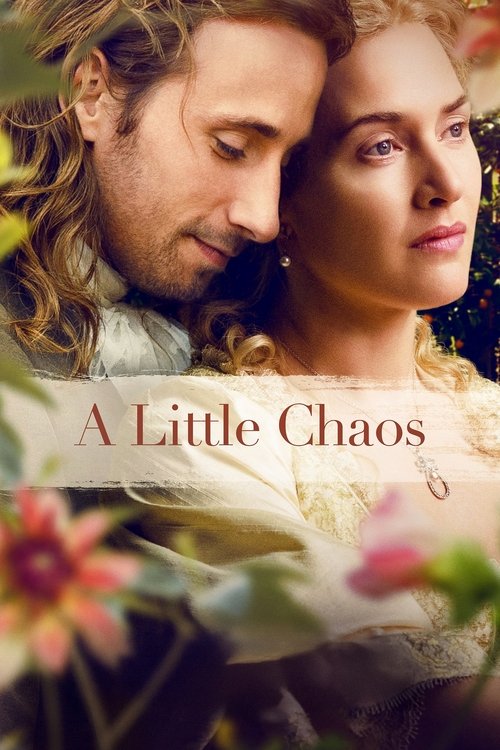
A Little Chaos (2015)
Directed by Alan Rickman
No — A Little Chaos is not especially woke, scoring 30 out of 100 on our wokeness meter.
The film concerns the construction of the bosquet ballroom at Versailles, and the fictional Sabine de Barra, a woman inserted into a historical enterprise that had no place for her.
Consciousness Markers
The film is built around Sabine de Barra, an invented woman who breaks into the male-dominated world of 17th-century landscape architecture, and it foregrounds female solidarity at court as widowed women share their losses. Rickman himself framed the story as being about worlds maintained 'often at the cost of women,' giving it a genuine, if gentle, feminist spine.
The film inserts a wholly fictional woman into the historically male construction of Versailles and reshapes real figures like Le Nôtre and Louis XIV for a modern romantic sensibility, which critics flagged as an anachronistic 'pat modern' reading of the period.
The film gestures at themes of female agency and the cost of serving the court, but it delivers them through period-drama dialogue and romance rather than direct sermonizing. The messaging is embedded rather than preached.
Stanley Tucci appears as Philippe, Duc d'Orléans, a historically queer figure, but the film treats his sexuality only in passing as court texture rather than as a theme. There is no substantive LGBTQ+ narrative content.
The cast is almost entirely white British, led by Kate Winslet, with no meaningful racial or ethnic diversity in the ensemble. The only notable casting choice is a woman in the lead, which is better accounted for under the feminist marker.
There is no engagement with race, colonialism, or racial hierarchy anywhere in the plot or research. The Versailles court is depicted as a uniformly white aristocratic milieu without comment.
Gardening and water management appear only as craft and plot mechanics, not as environmental advocacy. No climate or ecological messaging is present.
The film concerns royal patronage and aristocratic ambition, with no critique of capitalism, class economics, or wealth extraction. The 'eat the rich' register is entirely absent.
No body-positivity themes or body-diversity messaging appear in the story or research.
Sabine's trauma manifests as flashbacks of grief, not as a neurodivergence narrative. No neurodivergent representation or framing is present.
Why it received this score
The film concerns the construction of the bosquet ballroom at Versailles, and the fictional Sabine de Barra, a woman inserted into a historical enterprise that had no place for her. Kate Winslet plays her with the customary fortitude. Alan Rickman directs and also takes the role of Louis XIV, an arrangement that permits him to sit very still and observe, which he does to fine effect. Stanley Tucci arrives as the Duc d'Orléans to dispense wit and a faint suggestion of courtly appetite. The gardening is competent. The romance runs alongside the gardening, occasionally overlapping it.
A social consciousness is present, though of the drawing-room variety. Sabine breaches a profession closed to her sex, and the film takes quiet pleasure in her competence. The widowed women of the court gather to trade their losses, a moment of female solidarity that lands more softly than it might. Rickman described the project as concerning worlds maintained at the cost of women, and that sentiment does thread through the fabric. Nothing is shouted. The sermon stays in its pulpit, and the pulpit is upholstered.
The trouble is the history. Sabine never existed. Le Nôtre was nearly seventy in 1682 and is played here by a man in his forties. The court behaves with a modern candor no French aristocrat of the period would have recognized. Reviewers called it a pat modern sensibility draped over an unconvincing recreation, which is fair. The film means well, and means it gently. It is a costume drama that would like to say something about women and power, and settles for saying it politely, at moderate volume, in good light. We leave the garden mildly improved and not much else.
Analysis generated by our Consciousness Algorithm


Synopsis
A landscape gardener is hired by famous architect Le Nôtre to construct the grand gardens at the palace of Versailles. As the two work on the palace, they find themselves drawn to each other and are thrown into rivalries within the court of King Louis XIV.
Questions about A Little Chaos
Is A Little Chaos woke?
No — A Little Chaos is not especially woke, scoring 30 out of 100 on our wokeness meter. That earns it a verdict of Based.
Does A Little Chaos have any woke elements?
2 of the 10 markers register at 30 or above, led by Feminist Agenda (60) and Revisionist History (35). On Feminist Agenda: The film is built around Sabine de Barra, an invented woman who breaks into the male-dominated world of 17th-century landscape architecture, and it foregrounds female solidarity at court as widowed women share their losses.
How does A Little Chaos compare to other 2015 movies?
It ranks #36 of the 289 films from 2015 we've scored; their average is 15. The wokest is Chi-Raq (78).
How is the Woke Score calculated?
An AI-assisted process researches the film and its reception, scores it 0–100 on ten markers, then combines those into one 0–100 Woke Score. It measures a specific set of 2020s cultural themes, not film quality.