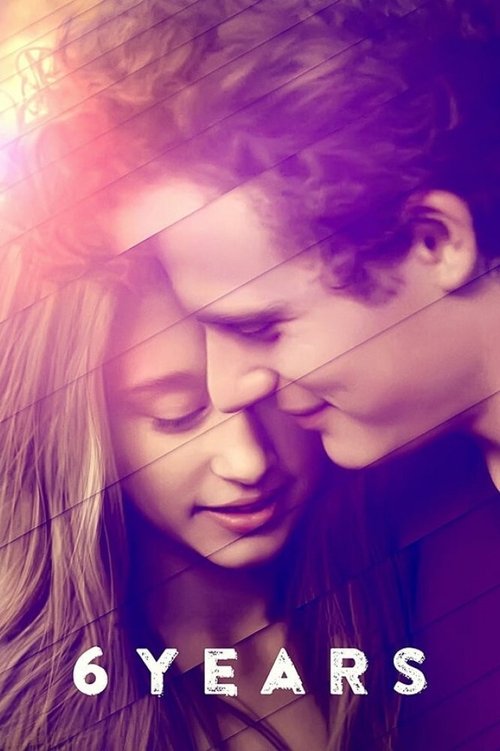
6 Years (2015)
Directed by Hannah Fidell
No — 6 Years is not woke, scoring 18 out of 100 on our wokeness meter.
Hannah Fidell's 6 Years arrives with the Duplass brothers' imprimatur and a running time that feels longer than the six years it describes, which is a compliment of a specific and limited kind.
Consciousness Markers
The film is directed by a woman and centers on a young woman's experience in a volatile relationship, including a scene that explicitly notes a gender double standard regarding domestic violence.
The film is largely a naturalistic relationship drama, though one scene briefly lectures on a gender double standard regarding domestic violence.
The cast is predominantly white, and there is no deliberate inclusive or color-conscious casting evident in the film.
No LGBTQ+ characters, relationships, or themes appear in the film.
The film does not engage with racial identity, racism, or racial consciousness as themes.
There is no environmental or climate-related content in the film.
The film contains no critique of capitalism, wealth inequality, or corporate power.
The film does not address body image, body acceptance, or body positivity themes.
No neurodivergent characters or themes are present in the film.
The film is a contemporary fictional drama and does not revise or reinterpret historical events.
Why it received this score
Hannah Fidell's 6 Years arrives with the Duplass brothers' imprimatur and a running time that feels longer than the six years it describes, which is a compliment of a specific and limited kind. The film follows Melanie and Dan, college students in Austin, through two weeks of a relationship that has already outlived its usefulness. Fidell shot from a forty-page treatment and let her actors improvise, and the result has the texture of something observed through a window instead of constructed for our approval. Taissa Farmiga and Ben Rosenfield are very good. The camera stays close. Nobody learns anything.
Violence enters early and stays. Mel, drunk, pushes Dan into a dresser, and he lies to the emergency room staff about the cause. Later, a coworker named Amanda observes that the situation would read very differently if the injury had landed on Mel instead. This is the film's one moment of explicit argument, and it passes quickly, more observation than sermon. The final act escalates into thrown glass and a diverted punch, and the film resists the tidy moral that such stories usually demand. It is a portrait, not a case study.
On the ledger of contemporary social consciousness, this is a modest entry. The cast is white, the concerns are romantic, and no institution is indicted. The film's progressive credential is structural: a woman wrote and directed it, and it takes a young woman's interior life seriously without asking her to be likable. That is worth something. It is also, in 2015, not especially remarkable. A quiet, bruising little picture that will not change anyone's politics and was never trying to.
Analysis generated by our Consciousness Algorithm


Synopsis
A young couple bound by a seemingly ideal love, begins to unravel as unexpected opportunities spin them down a volatile and violent path and threaten the future they had always imagined.
Questions about 6 Years
Is 6 Years woke?
No — 6 Years is not woke, scoring 18 out of 100 on our wokeness meter. That earns it a verdict of Ultra Based.
Does 6 Years have any woke elements?
Very few. None of the 10 markers reaches 30, the level where a marker counts as present; the highest is Feminist Agenda at 25.
How does 6 Years compare to other 2015 movies?
It ranks #81 of the 289 films from 2015 we've scored; their average is 15. The wokest is Chi-Raq (78).
How is the Woke Score calculated?
An AI-assisted process researches the film and its reception, scores it 0–100 on ten markers, then combines those into one 0–100 Woke Score. It measures a specific set of 2020s cultural themes, not film quality.