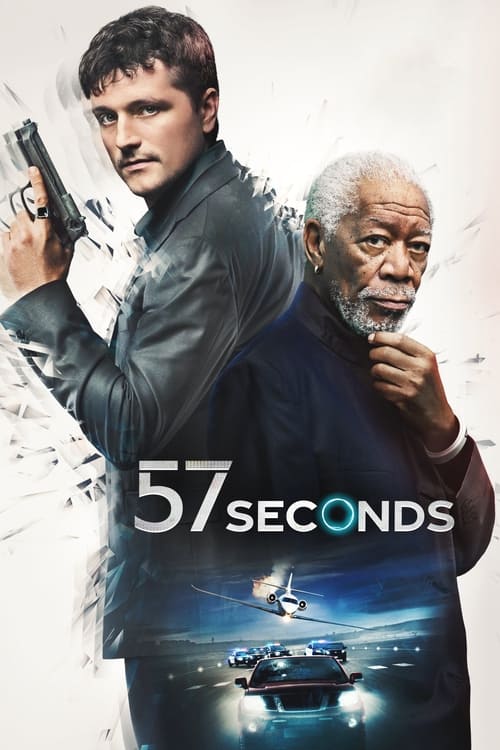
57 Seconds (2023)
Directed by Rusty Cundieff
No — 57 Seconds is not woke, scoring 15 out of 100 on our wokeness meter.
The premise of 57 Seconds is a familiar exercise in contemporary anxieties: a man with a magic ring and a mission to expose the sins of the modern pharmaceutical conglomerate.
Consciousness Markers
The plot centers on exposing a corrupt pharmaceutical company that knowingly sold an addictive, deadly painkiller, echoing opioid-crisis critiques of corporate greed, though it is framed as a personal vendetta rather than systemic indictment.
The cast includes Black performers (Morgan Freeman, Lovie Simone, Sammi Rotibi) in prominent roles, but this is conventional ensemble diversity rather than identity-forward casting.
The protagonist delivers some moralizing about the ethical dangers of time manipulation and corporate malfeasance, but the messaging is light and genre-driven.
Jala is a competent colleague and romantic interest, but the film advances no feminist argument or gendered critique.
The film features a diverse cast but engages in no commentary on race, racism, or racial justice.
No LGBTQ+ characters, relationships, or themes appear anywhere in the story.
Environmental themes are entirely absent from this time-travel revenge thriller.
No body-image or body-positivity themes are present.
No neurodivergent characters or themes are depicted.
The film is a contemporary sci-fi story with no historical revisionism.
Why it received this score
The premise of 57 Seconds is a familiar exercise in contemporary anxieties: a man with a magic ring and a mission to expose the sins of the modern pharmaceutical conglomerate. We find ourselves in a high-stakes environment where a tech blogger uses a temporal anomaly to settle a score against a company peddling a dangerous painkiller. The film leans into a certain cultural awareness, providing a decent ensemble cast that includes several Black performers in prominent, if conventional, roles. It is a competent piece of genre work, though it does not push the boundaries of progressive sensibilities. It is merely a standard, well-packaged exploration of corporate malfeasance.
The protagonist, while morally driven, delivers several lines of light moralizing regarding the ethical pitfalls of time manipulation. This messaging is effective enough to justify its inclusion, preventing the piece from becoming merely a mindless action flick. The critique of corporate greed, focusing on the death and addiction caused by a corrupt drug, serves as the film’s primary engine for social consciousness. However, it lacks the depth or fervor to be truly groundbreaking. The characters exist to advance the central conflict, and the social commentary remains firmly rooted in the individual quest for revenge.
Ultimately, 57 Seconds is a passable piece of modern science fiction. It offers a surface-level engagement with issues of corporate power and ethical responsibility without becoming overly concerned with systemic indictments. It is a polished thriller that does not stray into the extreme territory of cultural agitation. We are left with a film that is competent, if unremarkable, in its handling of our progressive sensibilities.
Analysis generated by our Consciousness Algorithm


Synopsis
When a tech blogger lands an interview with a tech guru and stops an attack on him, he finds a mysterious ring that takes him back 57 seconds into the past.
Questions about 57 Seconds
Is 57 Seconds woke?
No — 57 Seconds is not woke, scoring 15 out of 100 on our wokeness meter. That earns it a verdict of Ultra Based.
Does 57 Seconds have any woke elements?
2 of the 10 markers register at 30 or above, led by Eat the Rich (35) and Representation Casting (30). On Eat the Rich: The plot centers on exposing a corrupt pharmaceutical company that knowingly sold an addictive, deadly painkiller, echoing opioid-crisis critiques of corporate greed, though it is framed as a personal vendetta rather than systemic indictment.
How does 57 Seconds compare to other 2023 movies?
It ranks #105 of the 200 films from 2023 we've scored; their average is 24. The wokest is Origin (84).
How is the Woke Score calculated?
An AI-assisted process researches the film and its reception, scores it 0–100 on ten markers, then combines those into one 0–100 Woke Score. It measures a specific set of 2020s cultural themes, not film quality.