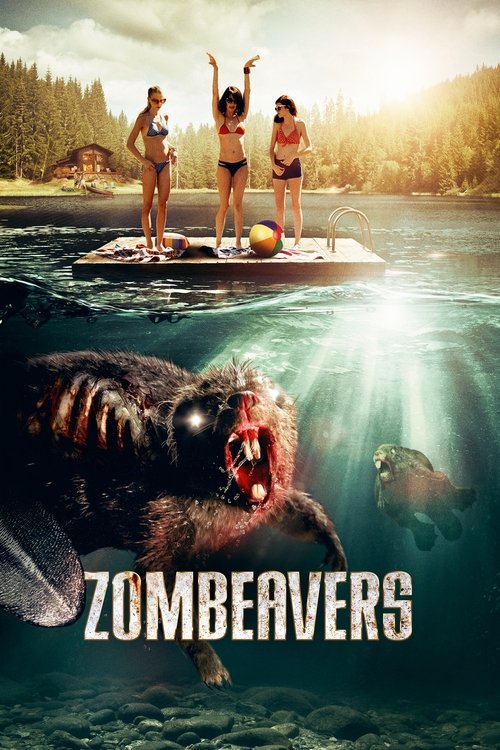
Zombeavers (2014)
Directed by Jordan Rubin
No — Zombeavers is not woke, scoring 0 out of 100 on our wokeness meter.
Zombeavers arrives with a title that announces its intentions and then honors them without deviation.
Consciousness Markers
The cast is overwhelmingly white and the film makes no effort toward inclusive or diverse representation.
There are no LGBTQ+ characters, relationships, or themes in the film.
Although three women are central, they are presented through an exploitation-horror lens with nudity and objectification rather than any feminist agenda.
The film contains no exploration of race, racism, or racial identity.
Toxic waste is used only as a horror plot device to create zombie beavers, not as an environmentalist or climate-crisis message.
There is no critique of capitalism, wealth inequality, or corporate power.
The film leans on conventional horror-comedy objectification rather than body-positive themes.
No neurodivergent characters or themes are present.
The film is a fictional creature feature with no historical revisionism.
Zombeavers is a campy, gory horror comedy with no preachy or lecture-like messaging.
Why it received this score
Zombeavers arrives with a title that announces its intentions and then honors them without deviation. A canister of toxic waste rolls into a river, beavers bite it, college students arrive at a riverside cabin for a weekend of poor decisions, and the beavers eat them. Jordan Rubin directs with the economy of a man who knows exactly what he has and refuses to apologize for it. The animatronic rodents are practical, the gore is generous, and the running time is a brisk seventy-six minutes. This is a creature feature that knows its audience and serves them directly.
For the purposes of classification, the film is a barren field. The cast is uniformly white and the screenplay never pauses to consider the matter. There are no LGBTQ characters, no engagement with race, and no environmental argument attached to the toxic waste, which functions purely as a mechanism for producing undead beavers. Three women anchor the story, but they are framed within the exploitation tradition, frequently unclothed and dispatched in ways designed to amuse rather than to argue. Any critique of corporate negligence implicit in the chemical spill is left undeveloped, so no economic sermon materializes. There is no body-positive messaging, no neurodivergent character, no revisionist history, and no lecture. The film has no interest in instructing anyone about anything.
What remains is a modest, self-aware exercise in splatter comedy that earned a warmer reception than its premise deserved. It is crude, brief, and entirely without ambition beyond the next gag. We record it here as a specimen of pure entertainment, untouched by the social currents of its decade. A clean slate. Rare, and almost restful.
Analysis generated by our Consciousness Algorithm


Synopsis
College friends find their weekend of sex and debauchery ruined when deadly zombie beavers swarm their riverside cabin.
Questions about Zombeavers
Is Zombeavers woke?
No — Zombeavers is not woke, scoring 0 out of 100 on our wokeness meter. That earns it a verdict of Ultra Based.
Does Zombeavers have any woke elements?
No. All 10 markers score zero.
How does Zombeavers compare to other 2014 movies?
It ranks #271 of the 303 films from 2014 we've scored; their average is 13. The wokest is Selma (68).
How is the Woke Score calculated?
An AI-assisted process researches the film and its reception, scores it 0–100 on ten markers, then combines those into one 0–100 Woke Score. It measures a specific set of 2020s cultural themes, not film quality.