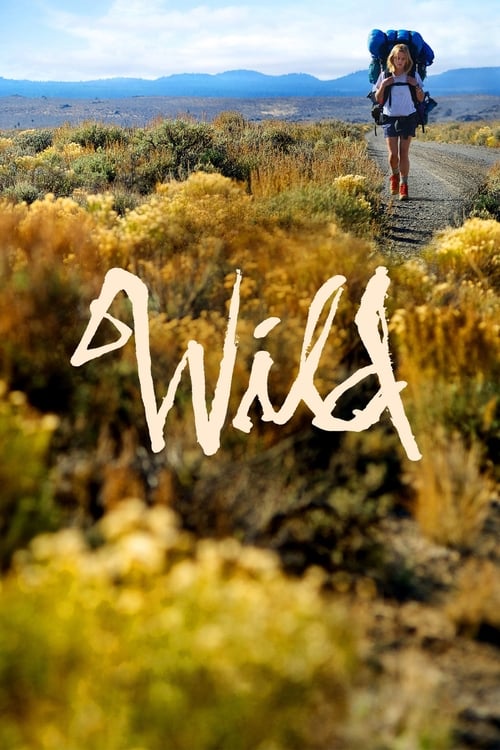
Wild (2014)
Directed by Jean-Marc Vallée
No — Wild is not woke, scoring 16 out of 100 on our wokeness meter.
Wild arrives as an adaptation of a memoir, which is to say it comes pre-loaded with the solemnity of real grief, and it earns most of that solemnity.
Consciousness Markers
A woman-centered story of self-reclamation after trauma, produced by and starring Reese Witherspoon, with a complex, unidealized female protagonist; feminist in substance but not in lecturing form.
A female-led production with a predominantly white cast; supporting players offer modest diversity but no deliberate representational casting agenda.
The film is an intimate, memory-driven character study rather than a preachy message vehicle.
No LGBTQ+ characters or themes appear anywhere in the narrative.
Race is not a thematic concern; the story is a personal memoir of grief and recovery with no racial commentary.
The wilderness is a setting for personal healing, not an environmentalist or climate-crisis statement.
No economic critique or anti-capitalist themes are present.
The body is treated as a site of physical endurance and hardship, not a body-positivity message.
No neurodivergent characters or themes are depicted.
Faithful adaptation of a memoir; no historical revisionism involved.
Why it received this score
Wild arrives as an adaptation of a memoir, which is to say it comes pre-loaded with the solemnity of real grief, and it earns most of that solemnity. Jean-Marc Vallée keeps the memory-driven structure of Cheryl Strayed's book, cutting between a woman hauling an absurdly heavy pack across the Pacific Crest Trail and the wreckage she left behind: her mother's death, heroin, a marriage she torched. The film observes this ruin without stopping to explain it to us. There is no narrator wagging a finger, no scene constructed to deliver a thesis. The sermonizing is essentially absent, a rare and welcome thing in an era of cinema that treats audiences as slow pupils.
The story is woman-centered and was willed into being by its star, whose production company bought the memoir before a studio was involved. Cheryl is not a saint. She is selfish, careless, and occasionally unlikable, and the film never flinches from that. This is a progressive sensibility expressed through casting and characterization instead of speeches. The supporting cast is largely white, with a few minor players adding texture, which reads as ordinary Hollywood practice instead of any deliberate representational campaign.
The rest of the ledger is clean. No LGBTQ+ characters appear. Race is not a concern of the story, and the film offers no commentary on it. The wilderness functions as a site of penance and recovery, not a climate crisis. Nobody delivers an economic critique. Cheryl's body is a machine that blisters and bleeds and keeps walking, which is a statement about endurance, not about self-love.
Analysis generated by our Consciousness Algorithm
Part of


Synopsis
A woman with a tragic past decides to start her new life by hiking for one thousand miles on the Pacific Crest Trail.
Questions about Wild
Is Wild woke?
No — Wild is not woke, scoring 16 out of 100 on our wokeness meter. That earns it a verdict of Ultra Based.
Does Wild have any woke elements?
1 of the 10 markers register at 30 or above, led by Feminist Agenda (40). On Feminist Agenda: A woman-centered story of self-reclamation after trauma, produced by and starring Reese Witherspoon, with a complex, unidealized female protagonist; feminist in substance but not in lecturing form.
How does Wild compare to other 2014 movies?
It ranks #80 of the 303 films from 2014 we've scored; their average is 13. The wokest is Selma (68).
How is the Woke Score calculated?
An AI-assisted process researches the film and its reception, scores it 0–100 on ten markers, then combines those into one 0–100 Woke Score. It measures a specific set of 2020s cultural themes, not film quality.