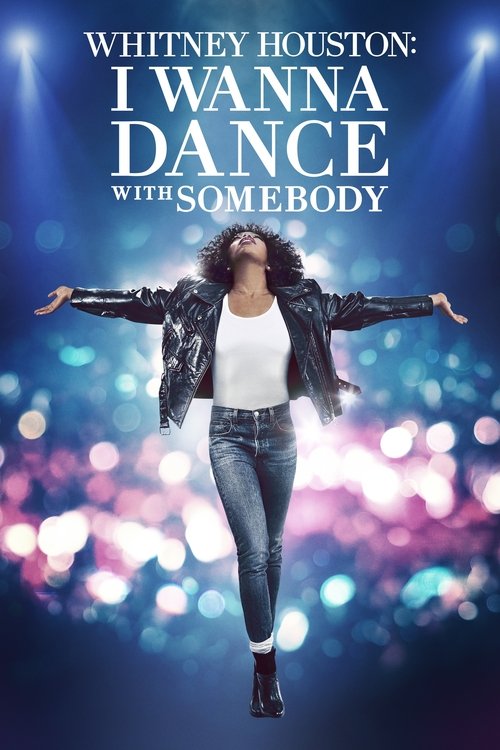
Whitney Houston: I Wanna Dance with Somebody (2022)
Directed by Kasi Lemmons
Yes — Whitney Houston: I Wanna Dance with Somebody is woke, scoring 60 out of 100 on our wokeness meter.
Kasi Lemmons approaches the Whitney Houston story as a grand, authorized pageant, which is both its limitation and its method.
Consciousness Markers
As a biopic of a Black pop icon, the film inherently addresses racial dynamics within the American music industry and the pressures placed upon her as a Black artist.
The film depicts a powerful female artist navigating a male-dominated industry, resisting controlling figures like her father and husband, and asserting her own identity.
The film centers on a Black icon, Whitney Houston, portrayed by a Black actress, Naomi Ackie, ensuring high visibility for the subject matter.
The narrative explicitly explores the romantic relationship between Whitney and her close friend, Robyn Crawford, and is noted for featuring a 'sexually fluid' superstar.
The film critiques the exploitative nature of the music industry, focusing on the financial manipulation and contractual pressures exerted by producers and management.
As an authorized biopic, it aims to tell the established story, though its focus on her pre-fame life offers a specific, curated perspective rather than a radical historical revision.
The film focuses on Houston's artistic and personal journey rather than making explicit commentary on body image or celebrating diverse body types.
The film is a musical drama, and while it contains thematic weight, it does not rely on didactic speeches or heavy, expository lecturing to convey its message.
There is no thematic engagement with environmentalism or climate change within the film's narrative or setting.
There is no evidence of the film exploring or referencing neurodivergent experiences or conditions.
Why it received this score
Kasi Lemmons approaches the Whitney Houston story as a grand, authorized pageant, which is both its limitation and its method. Naomi Ackie gives the performance a pulse, and the film grants Houston the dignity of a Black superstar whose talent was both celebrated and policed. The Robyn Crawford relationship is treated as a real romance, not a footnote, and the film lets Houston's sexually fluid identity complicate the familiar rise-and-fall template. This is progressive storytelling with a velvet glove: the politics are present, but they arrive through casting, intimacy, and the ordinary fact of a woman negotiating a room full of men who believe they own her voice.
The film's racial awareness is its sturdiest beam. Houston's crossover success is shadowed by accusations that she was not Black enough, and the Soul Train sequence makes the contradiction visible without turning it into a seminar. The music industry comes off as a machine for extracting money and obedience, with Clive Davis and John Houston as polite predators in different suits. That critique of management and contracts is sharp enough to count, though the film remains fond of the business that made its subject. The feminist current is similarly clear: Whitney pushes back against her father, her husband, and the men who schedule her exhaustion.
Where the film holds back is in the smaller cultural ledgers. It does not linger on body image, and no character is diagnosed for narrative convenience. The climate remains weather. As an authorized portrait, it curates Houston's life into a respectful arc, which makes it less a revision of history than a smoothing of it. The sermonizing is kept low; the film prefers montage, hit songs, and the occasional tearful confrontation. The result is a conventional biopic with a generous heart and a careful checklist. It respects its subject, explains her, and never quite lets her be messy without a lesson attached.
Analysis generated by our Consciousness Algorithm


Synopsis
The joyous, emotional, heartbreaking celebration of the life and music of Whitney Houston, the greatest female R&B pop vocalist of all time. Tracking her journey from obscurity to musical superstardom.
Questions about Whitney Houston: I Wanna Dance with Somebody
Is Whitney Houston: I Wanna Dance with Somebody woke?
Yes — Whitney Houston: I Wanna Dance with Somebody is woke, scoring 60 out of 100 on our wokeness meter. That earns it a verdict of Woke.
What makes Whitney Houston: I Wanna Dance with Somebody woke?
5 of the 10 markers register at 30 or above, led by Racial Consciousness (85), Feminist Agenda (75) and Representation Casting (70). On Racial Consciousness: As a biopic of a Black pop icon, the film inherently addresses racial dynamics within the American music industry and the pressures placed upon her as a Black artist.
How does Whitney Houston: I Wanna Dance with Somebody compare to other 2022 movies?
It ranks #12 of the 223 films from 2022 we've scored; their average is 22. The wokest is Bros (92).
How is the Woke Score calculated?
An AI-assisted process researches the film and its reception, scores it 0–100 on ten markers, then combines those into one 0–100 Woke Score. It measures a specific set of 2020s cultural themes, not film quality.