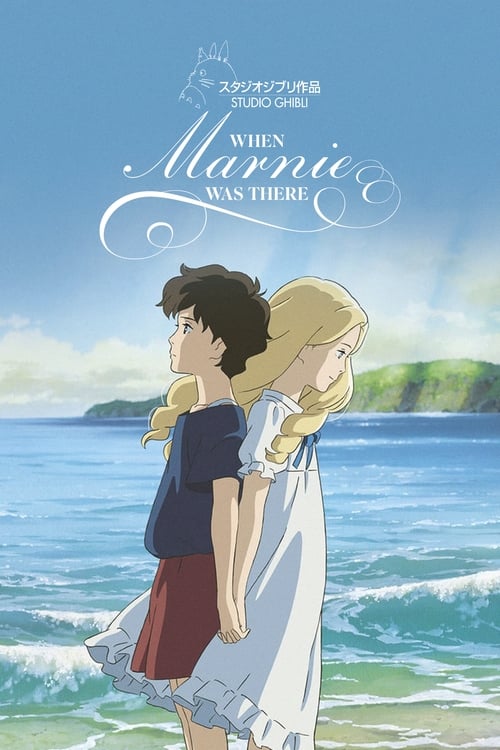
When Marnie Was There (2014)
Directed by Hiromasa Yonebayashi
No — When Marnie Was There is not woke, scoring 12 out of 100 on our wokeness meter.
Studio Ghibli released When Marnie Was There in 2014, a quiet adaptation of Joan G. Robinson's 1967 novel relocated from Norfolk to the wetlands of Hokkaido.
Consciousness Markers
The central relationship between Anna and Marnie carries strong romantic and intimate overtones, often read as queer subtext, though it is ultimately framed as a familial bond. This provides some LGBTQ+ thematic resonance.
The story centers on a young girl's emotional journey and her relationships with other female characters, but it does not advance a feminist agenda or critique patriarchal structures.
The film features an entirely Japanese voice cast and characters, which is natural for a Japanese production rather than a deliberate diversity casting choice. No evidence of modern representation casting.
The film is set in a homogeneous Japanese community and does not engage with racial or ethnic issues.
The protagonist is sent to the countryside for clean air due to asthma, but this is a personal health matter, not an environmentalist or climate-focused message.
The plot briefly mentions government payments to foster parents, but resolves this as an expression of love rather than a critique of capitalism or wealth inequality.
Anna has low self-esteem, but the film does not address body image or promote body positivity as a theme.
Anna's asthma and emotional struggles are not framed as neurodivergence, and the film does not explore neurodiverse conditions.
The film is a fictional story based on a novel and does not revise or reinterpret historical events.
The film is a gentle, emotional drama that shows rather than tells, with no preachy or didactic messaging.
Why it received this score
Studio Ghibli released When Marnie Was There in 2014, a quiet adaptation of Joan G. Robinson's 1967 novel relocated from Norfolk to the wetlands of Hokkaido. Anna Sasaki, twelve years old and burdened by asthma and a durable low opinion of herself, is packed off to relatives for the summer. She finds a mansion across the marsh, and in it a blonde girl named Marnie. The film was nominated for an Academy Award and then largely forgotten by the culture that nominates things. It asks for patience and returns it with interest.
The central friendship between Anna and Marnie carries an unmistakable intimacy, and a viewer so inclined can read the whole affair as queer longing. The film eventually resolves that tension into a family bond, a grandmother reaching across time, which tempers the reading without erasing it. Anna's emotional education is genuine, and her world is populated almost entirely by women, though the film has no interest in diagnosing patriarchy or prescribing anything. On the remaining indices the ledger is bare. Asthma sends her to the countryside, a medical errand and not an environmental parable. Foster payments surface briefly and are settled by a declaration of love, which is not an argument about money. There is no body-image discourse, no neurodivergent framework, no rewriting of history, and no lecture.
This is a film that shows rather than tells, and it trusts an audience to keep up. In an era of animated features that arrive with a thesis stapled to the poster, that restraint reads as almost antique. A restrained vintage, then. Dry, faintly melancholic, best served at room temperature to anyone who has ever been twelve and disliked themselves.
Analysis generated by our Consciousness Algorithm


Synopsis
Upon being sent to live with relatives in the countryside due to an illness, an emotionally distant adolescent girl becomes obsessed with an abandoned mansion and infatuated with a girl who lives there - a girl who may or may not be real.
Questions about When Marnie Was There
Is When Marnie Was There woke?
No — When Marnie Was There is not woke, scoring 12 out of 100 on our wokeness meter. That earns it a verdict of Ultra Based.
Does When Marnie Was There have any woke elements?
1 of the 10 markers register at 30 or above, led by LGBTQ+ Themes (30). On LGBTQ+ Themes: The central relationship between Anna and Marnie carries strong romantic and intimate overtones, often read as queer subtext, though it is ultimately framed as a familial bond.
How does When Marnie Was There compare to other 2014 movies?
It ranks #113 of the 303 films from 2014 we've scored; their average is 13. The wokest is Selma (68).
How is the Woke Score calculated?
An AI-assisted process researches the film and its reception, scores it 0–100 on ten markers, then combines those into one 0–100 Woke Score. It measures a specific set of 2020s cultural themes, not film quality.