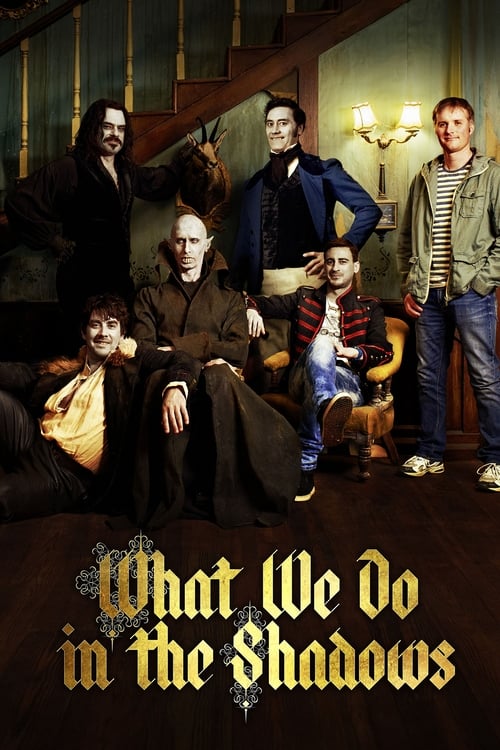
What We Do in the Shadows (2014)
Directed by Jemaine Clement
No — What We Do in the Shadows is not woke, scoring 5 out of 100 on our wokeness meter.
Some films arrive bearing the weight of a thesis.
Consciousness Markers
The cast is overwhelmingly white New Zealand talent, with only incidental diversity (Cori Gonzalez-Macuer as Nick). Casting was driven by comedy chemistry, not representational intent.
Jackie and Katherine are given some agency in their arcs, but the film offers no feminist thesis and treats them largely as comic devices.
The film is a pure comedy that never lectures its audience on social or political matters.
No LGBTQ+ characters or themes appear; the camp vampire aesthetic is genre homage, not identity content.
The film engages no racial themes whatsoever; it is a suburban vampire farce with no commentary on race.
No environmental or climate content of any kind.
Communal flat-sharing is played for laughs, not as economic critique; there is no eat-the-rich messaging.
No body-positivity themes; physical grotesquerie is used purely for horror-comedy.
No characters are coded or framed as neurodivergent; eccentricity is supernatural, not neurological.
Despite the mockumentary format, the subject is fictional undead, not a revisionist reframing of real history.
Why it received this score
Some films arrive bearing the weight of a thesis. What We Do in the Shadows arrives bearing a camera crew and four vampires who cannot agree on whose turn it is to do the dishes. The 2014 mockumentary from Jemaine Clement and Taika Waititi follows Viago, Vladislav, Deacon and the ancient, feral Petyr through the mundane indignities of flatting in Wellington, and it has no interest in instructing anyone about anything. Its ambitions are modest and its execution is precise. There are jokes about virgin blood, a werewolf pack that apologizes for its swearing, and a running gag about a human named Stu who is simply too pleasant to kill.
The cast is drawn almost entirely from New Zealand comedy circles, assembled for chemistry instead of representational arithmetic. Cori Gonzalez-Macuer turns up as Nick, but his presence registers as a performer being funny, not as a demographic box being ticked. The camp sensibility of the vampire tradition runs through the whole enterprise, from Deacon's erotic dancing to Vladislav's theatrical brooding, though this is genre homage, not identity content. Nobody in the flat discusses race, economics, the climate, or the politics of desire. The women in the story, Jackie and Katherine, get a few moments of their own momentum, and then the film moves on to the next sight gag.
The result is a comedy that trusts its audience to keep up, which is a rarer virtue than it sounds. It never stops to explain why a joke is acceptable. The grotesquerie is played for laughs, the communal living is played for laughs, and the mockumentary format exists to serve the deadpan, not to smuggle in a message. A viewer searching for contemporary social instruction will find none here. A viewer searching for a vampire being scolded about the dishes will be richly rewarded.
Analysis generated by our Consciousness Algorithm


Synopsis
Vampire housemates try to cope with the complexities of modern life and show a newly turned hipster some of the perks of being undead.
Questions about What We Do in the Shadows
Is What We Do in the Shadows woke?
No — What We Do in the Shadows is not woke, scoring 5 out of 100 on our wokeness meter. That earns it a verdict of Ultra Based.
Does What We Do in the Shadows have any woke elements?
Very few. None of the 10 markers reaches 30, the level where a marker counts as present; the highest is Representation Casting at 10.
How does What We Do in the Shadows compare to other 2014 movies?
It ranks #212 of the 303 films from 2014 we've scored; their average is 13. The wokest is Selma (68).
How is the Woke Score calculated?
An AI-assisted process researches the film and its reception, scores it 0–100 on ten markers, then combines those into one 0–100 Woke Score. It measures a specific set of 2020s cultural themes, not film quality.