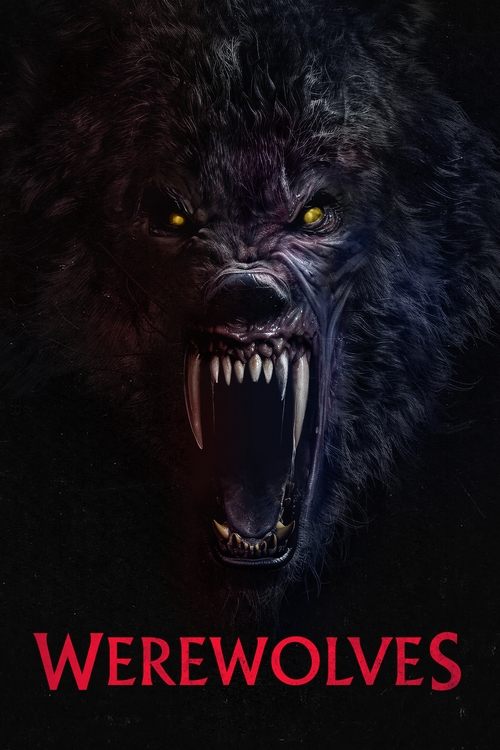
Werewolves (2024)
Directed by Steven C. Miller
No — Werewolves is not woke, scoring 11 out of 100 on our wokeness meter.
There is a moment in Werewolves, roughly when the supermoon rises and the molecular biologists begin barricading a Puerto Rico-shot suburb, when a viewer may sense the absence of a message.
Consciousness Markers
The cast is notably diverse for a low-budget genre picture, with Katrina Law, Ilfenesh Hadera, Lou Diamond Phillips, and James Kyson in prominent roles, but their presence is never framed as a statement.
Women are competent combatants and scientists (Amy Chen, Lucy Marshall), but this is standard action-horror competence rather than any articulated feminist thesis.
No LGBTQ+ characters, relationships, or themes appear anywhere in the film.
The film has no engagement with race as a theme; the diverse cast exists without commentary.
The threat is a lunar/supermoon phenomenon, not climate change; no environmental messaging is present.
No critique of capitalism, wealth, or class structures appears in the story.
No body-positive themes or messaging about body image are present.
No neurodivergent characters or themes are depicted.
The film is a wholly fictional genre premise with no historical revisionism.
The film is pure schlocky action-horror with no preachy or didactic messaging of any kind.
Why it received this score
There is a moment in Werewolves, roughly when the supermoon rises and the molecular biologists begin barricading a Puerto Rico-shot suburb, when a viewer may sense the absence of a message. The film has no message. It has werewolves. One year after a lunar event activated a dormant gene and killed nearly a billion people, the moon returns, and the survivors return to their traps and their cages. Frank Grillo plays Wesley Marshall, a former Marine turned scientist, who spends the runtime trying to get home. The screenplay treats this as sufficient. It is, more or less.
The cast is more textured than the budget would suggest. Katrina Law, Ilfenesh Hadera, Lou Diamond Phillips, and James Kyson fill roles that could have gone to anyone, and nothing in the script pauses to congratulate itself for the arrangement. The women fight, shoot, and survive with the same grim competence as the men, which is to say the film extends them the courtesy of not explaining them. Dr. Amy Chen wrestles a werewolf for dominance in a convenience store aisle. Lucy Marshall defends a fortified house with a shotgun. Nobody delivers a speech about any of it. This is a low bar, and the film clears it by simply not tripping.
What remains is a tight little time passer, to borrow Variety's phrasing, schlocky and unapologetic, with a Rotten Tomatoes score hovering near the midpoint of all human endeavor. The transformation effects are practical where it counts. The final confrontation, in which Wesley turns and then unturns with the sunrise, is resolved by astronomy instead of argument. In an era when even creature features arrive with a thesis stapled to the press kit, this one arrives with claws and very little else. We can classify it as harmless. We cannot classify it as much of anything.
Analysis generated by our Consciousness Algorithm


Synopsis
A year after a supermoon’s light activated a dormant gene, transforming humans into bloodthirsty werewolves and causing nearly a billion deaths, the nightmare resurfaces as the supermoon rises again. Two scientists attempt to stop the mutation but fail and must now struggle to reach one of their family homes.
Questions about Werewolves
Is Werewolves woke?
No — Werewolves is not woke, scoring 11 out of 100 on our wokeness meter. That earns it a verdict of Ultra Based.
Does Werewolves have any woke elements?
1 of the 10 markers register at 30 or above, led by Representation Casting (30). On Representation Casting: The cast is notably diverse for a low-budget genre picture, with Katrina Law, Ilfenesh Hadera, Lou Diamond Phillips, and James Kyson in prominent roles, but their presence is never framed as a statement.
How does Werewolves compare to other 2024 movies?
It ranks #128 of the 189 films from 2024 we've scored; their average is 22. The wokest is The Six Triple Eight (92).
How is the Woke Score calculated?
An AI-assisted process researches the film and its reception, scores it 0–100 on ten markers, then combines those into one 0–100 Woke Score. It measures a specific set of 2020s cultural themes, not film quality.