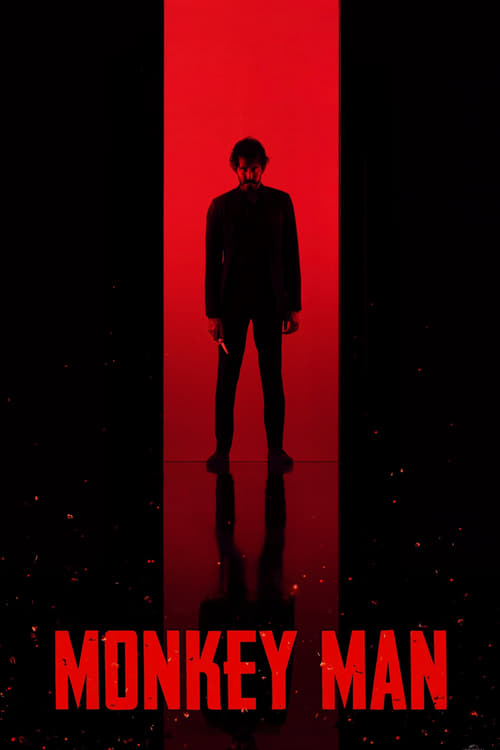
Monkey Man (2024)
Directed by Dev Patel
Yes — Monkey Man is woke, scoring 69 out of 100 on our wokeness meter.
Dev Patel directs and stars in Monkey Man, and the entire principal cast is South Asian.
Consciousness Markers
Dev Patel directs and stars in a film whose entire principal cast is South Asian, centering Indian characters and marginalized communities (hijra, slum dwellers) in a market historically dominated by white-led action cinema.
The film pointedly critiques India's caste system, the persecution of religious minorities, and Hindu nationalist violence, incorporating real protest and pogrom footage; critics noted its inequities are addressed 'more pointed than you would expect.'
The hijra (transgender) community is central to the narrative: Alpha is a hijra temple keeper whose sanctuary shelters Kid, and her warriors join him in the climactic assault against the nationalist movement targeting them.
The action is laced with explicit sociopolitical sermonizing about caste, corruption, and religio-fascism; the RT consensus credits it with dispensing 'action and sociopolitical commentary with equal aplomb,' though the message is delivered through genre rather than direct address.
The villains are corrupt elites, a luxury brothel/cocaine den, and a power broker profiting off the poor; exploitation and class predation are recurring motifs, though the framing is more anti-corruption than explicitly anti-capitalist.
Alpha leads a band of female warriors, and the prostitute Sita kills the madam Queenie, but the film remains a male-centric revenge narrative with limited foregrounding of women's agency.
Baba Shakti is a barely-veiled stand-in for contemporary Hindu nationalist leadership, and the film presses counter-narratives against that movement, though it is present-day political allegory rather than a rewriting of settled history.
The village massacre stems from land acquisition by corrupt elites rather than any environmental or climate theme; no ecological messaging is present.
No engagement with body image, size, or appearance politics beyond the functional scarred hands and combat scars.
No depiction of neurodivergence or related themes anywhere in the narrative.
Why it received this score
Dev Patel directs and stars in Monkey Man, and the entire principal cast is South Asian. That fact matters in a genre usually built around white men with guns and grudges. The film does not treat representation as decoration. The hijra community sits near its moral center: Alpha keeps a temple sanctuary, shelters Kid, and later joins the climactic assault with her warriors. The revenge plot gains a communal dimension. Still, this is a male-centered revenge machine. Alpha and Sita get sharp moments, including Sita's decisive killing of Queenie, but the engine runs on Kid's grief and fists.
The political texture is thick. Monkey Man names caste, religious persecution, and Hindu nationalist violence, and it folds in real protest and pogrom footage. Baba Shakti is a barely veiled stand-in for contemporary ultranationalist leadership. That is present-day allegory, not a rewrite of settled history. The villains are corrupt elites, a luxury brothel and cocaine den, and a power broker who feeds on the poor. Exploitation and class predation recur, though the critique lands closer to anti-corruption than to a systematic case against capital. The village land grab is political corruption, with no ecological argument attached. Body image and neurodivergence receive no engagement whatsoever.
The sermonizing arrives through genre. Characters explain the rot, the camera lingers on inequality, and the screenplay occasionally raises its voice. It is preachy in patches, but the anger feels earned. The action is bruising, sincere, and committed to the bit. We classify Monkey Man as a socially conscious revenge picture with a South Asian ensemble and a hijra sanctuary at its center. It is not subtle. It is not empty either.
Analysis generated by our Consciousness Algorithm


Synopsis
Kid is an anonymous young man who ekes out a meager living in an underground fight club where, night after night, wearing a gorilla mask, he is beaten bloody by more popular fighters for cash. After years of suppressed rage, Kid discovers a way to infiltrate the enclave of the city’s sinister elite. As his childhood trauma boils over, his mysteriously scarred hands unleash an explosive campaign of retribution to settle the score with the men who took everything from him.
Questions about Monkey Man
Is Monkey Man woke?
Yes — Monkey Man is woke, scoring 69 out of 100 on our wokeness meter. That earns it a verdict of Woke.
What makes Monkey Man woke?
7 of the 10 markers register at 30 or above, led by Representation Casting (85), Racial Consciousness (78) and LGBTQ+ Themes (62). On Representation Casting: Dev Patel directs and stars in a film whose entire principal cast is South Asian, centering Indian characters and marginalized communities (hijra, slum dwellers) in a market historically dominated by white-led action cinema.
How does Monkey Man compare to other 2024 movies?
It ranks #3 of the 189 films from 2024 we've scored; their average is 22. The wokest is The Six Triple Eight (92).
How is the Woke Score calculated?
An AI-assisted process researches the film and its reception, scores it 0–100 on ten markers, then combines those into one 0–100 Woke Score. It measures a specific set of 2020s cultural themes, not film quality.