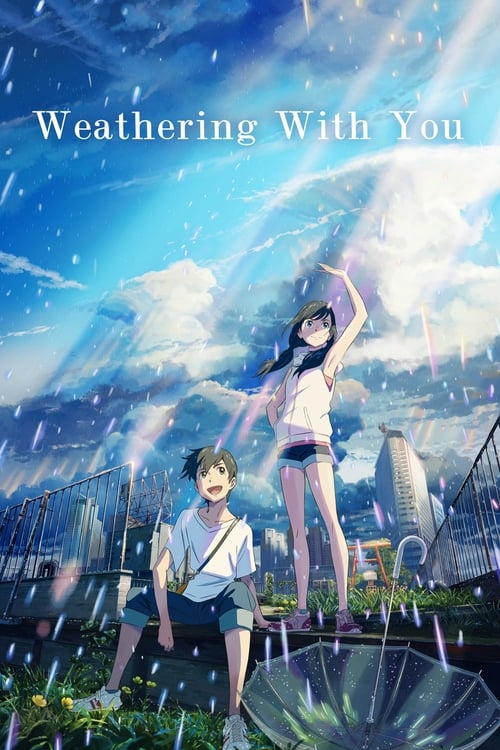
Weathering with You (2019)
Directed by Makoto Shinkai
No — Weathering with You is not woke, scoring 16 out of 100 on our wokeness meter.
Makoto Shinkai's Weathering with You arrives as a 2019 romantic fantasy, the kind of earnest weepie that Japanese animation has been producing for decades.
Consciousness Markers
Abnormal rainfall and a flooded Tokyo form the backdrop, and Shinkai cited climate change as an influence, but the weather is treated as supernatural romance rather than an activist climate parable.
Hina is a central figure with agency and a tragic sacrificial role, but the story is largely driven by Hodaka's romantic rescue and the film does not advance an explicit feminist thesis.
The film depicts financial precarity, exploitative work, and a small weather-clearing business, but it offers no systemic anti-capitalist critique.
The film has thematic material about sacrifice and living for oneself, but it remains emotionally driven rather than preachy or lecture-like.
The cast is entirely Japanese and appropriate to the setting; there is no modern diversity-casting agenda or commentary on representation.
No LGBTQ+ characters, themes, or subtext are present.
The film does not engage with racial identity, racism, or racial justice themes.
There is no body-positivity theme or related commentary.
No neurodivergence themes or characters are present.
The film draws on Japanese weather-maiden mythology but does not revise or reinterpret historical events.
Why it received this score
Makoto Shinkai's Weathering with You arrives as a 2019 romantic fantasy, the kind of earnest weepie that Japanese animation has been producing for decades. A teenage runaway named Hodaka washes up in Tokyo, meets a girl named Hina who can part the clouds with a prayer, and the two of them start a small business selling sunshine to strangers. It rains. It rains some more. The city eventually sinks beneath the water, and the film treats this less as catastrophe than as weather, which is roughly the correct emotional register for a story about two children in love.
The film's progressive content is real but thin. Hina is a working orphan with genuine agency, and her slow dissolution into light gives the story its tragic spine, though the plot still resolves through Hodaka's romantic rescue of her, so the gender politics remain conventional. Shinkai has acknowledged that Japan's changing rainfall informed the setting, and the flooded Tokyo of the final act carries an unmistakable environmental hum. Yet the weather functions as magic, not metaphor. There is also poverty on display: exploitative employers, a club owner, a boy sleeping rough. The film notices the precarity without diagnosing it.
No representation agenda animates the casting, which is entirely Japanese and appropriate to the setting. There are no queer characters, no engagement with racial identity, no body-positivity thread, no neurodivergent figures, and no revisionist tinkering with the historical record. The weather-maiden mythology is drawn from tradition, not rewritten to serve a contemporary argument. Most tellingly, the film refuses to sermonize. Its themes of sacrifice and self-preservation are delivered as feeling, not instruction. We are left with a handsome, sincere, slightly sodden romance that wants to move us and largely does. On the scale of contemporary social consciousness, it registers as a gentle ripple. The sommelier would call it a soft vintage, pleasant, uncomplicated, and unlikely to provoke anyone at dinner.
Analysis generated by our Consciousness Algorithm


Synopsis
The summer of his high school freshman year, Hodaka runs away from his remote island home to Tokyo, and quickly finds himself pushed to his financial and personal limits. The weather is unusually gloomy and rainy every day, as if taking its cue from his life. After many days of solitude, he finally finds work as a freelance writer for a mysterious occult magazine. Then, one day, Hodaka meets Hina on a busy street corner. This bright and strong-willed girl possesses a strange and wonderful ability: the power to stop the rain and clear the sky.
Questions about Weathering with You
Is Weathering with You woke?
No — Weathering with You is not woke, scoring 16 out of 100 on our wokeness meter. That earns it a verdict of Ultra Based.
Does Weathering with You have any woke elements?
1 of the 10 markers register at 30 or above, led by Climate Crusade (35). On Climate Crusade: Abnormal rainfall and a flooded Tokyo form the backdrop, and Shinkai cited climate change as an influence, but the weather is treated as supernatural romance rather than an activist climate parable.
How does Weathering with You compare to other 2019 movies?
It ranks #134 of the 284 films from 2019 we've scored; their average is 22. The wokest is Black Christmas (79).
How is the Woke Score calculated?
An AI-assisted process researches the film and its reception, scores it 0–100 on ten markers, then combines those into one 0–100 Woke Score. It measures a specific set of 2020s cultural themes, not film quality.