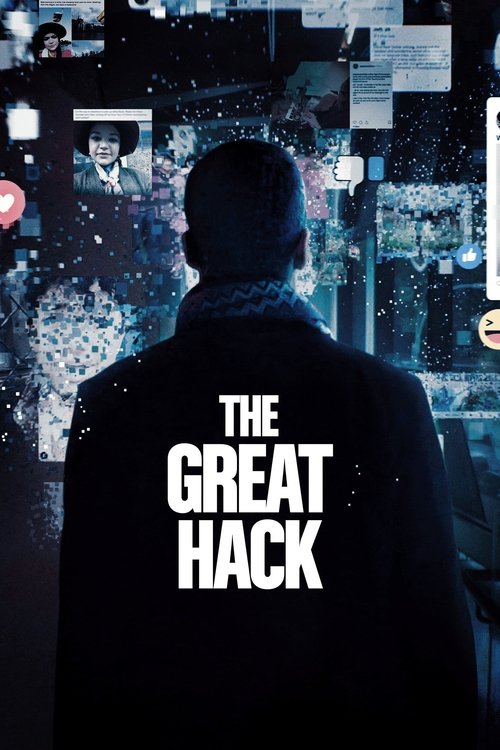
The Great Hack (2019)
Directed by Karim Amer
Yes — The Great Hack is woke, scoring 72 out of 100 on our wokeness meter.
The Great Hack arrives with the sober purpose of a legal deposition and roughly the pacing of one as well.
Consciousness Markers
As a complex documentary, it relies heavily on expert testimony, legal analysis, and detailed explanations of data science and political strategy.
The film is a direct and scathing critique of unchecked Big Tech power and the predatory nature of data capitalism.
The film fundamentally challenges the accepted public narrative of social media and political campaigning, exposing hidden mechanisms of digital influence.
Brittany Kaiser serves as a central, powerful whistleblower, challenging corporate and political power structures, which aligns with modern feminist narratives of resistance.
The film focuses on specific, high-profile whistleblowers and experts, prioritizing narrative function over broad demographic representation.
While the film deals with global politics, it does not center on specific racial dynamics or systemic racial injustice.
No LGBTQ+ themes or characters are present in the narrative or research summary.
The subject matter is digital surveillance and political data, not environmental policy or climate change.
This theme is entirely absent from the film's focus on data and politics.
There is no focus on neurodivergent experiences or representation within the film.
Why it received this score
The Great Hack arrives with the sober purpose of a legal deposition and roughly the pacing of one as well. It concerns Cambridge Analytica, the data firm that harvested the Facebook profiles of millions and sold the resulting psychographic portraits to campaigns on two continents. The directors, Jehane Noujaim and Karim Amer, assemble whistleblowers, journalists, and one very determined professor of media design, then let them explain, at length, how the machinery worked. The film has no interest in being subtle about its target. Big data is the villain, and the villain is very big indeed.
Much of the running time is given over to testimony. Experts walk us through data scraping, psychographic profiling, and the dark arts of microtargeting with the patience of people who have explained it many times before and expect to explain it again. The effect lands closer to an extended seminar than to cinema, though a well-produced seminar with a strong sense of grievance. The argument is that the accepted story of the 2016 election and the Brexit vote, the one about organic populist anger and a neutral social network, was a convenient fiction. The film proposes that a handful of well-funded firms quietly assembled the tools to nudge whole electorates, and that the nudging was for sale to anyone with a checkbook. The old narrative does not survive the encounter.
Brittany Kaiser, the former business development director who turns whistleblower, carries much of the emotional weight, a woman navigating rooms full of men who built the machine and now wish she would stop describing it. The cast is small and professional, chosen for what they know. There is no broader demographic project here, no side plot about identity, no detour into climate or the body or the brain. The film keeps its attention fixed on the ledger. It wants us angry about who owns our data and what they do with it, and it makes that case with a straight face and a great many slides.
Analysis generated by our Consciousness Algorithm


Synopsis
Explore how a data company named Cambridge Analytica came to symbolize the dark side of social media in the wake of the 2016 U.S. presidential election.
Questions about The Great Hack
Is The Great Hack woke?
Yes — The Great Hack is woke, scoring 72 out of 100 on our wokeness meter. That earns it a verdict of Woke.
What makes The Great Hack woke?
4 of the 10 markers register at 30 or above, led by Lecture Energy (90), Eat the Rich (85) and Revisionist History (75). On Lecture Energy: As a complex documentary, it relies heavily on expert testimony, legal analysis, and detailed explanations of data science and political strategy.
How does The Great Hack compare to other 2019 movies?
It ranks #3 of the 284 films from 2019 we've scored; their average is 22. The wokest is Black Christmas (79).
How is the Woke Score calculated?
An AI-assisted process researches the film and its reception, scores it 0–100 on ten markers, then combines those into one 0–100 Woke Score. It measures a specific set of 2020s cultural themes, not film quality.