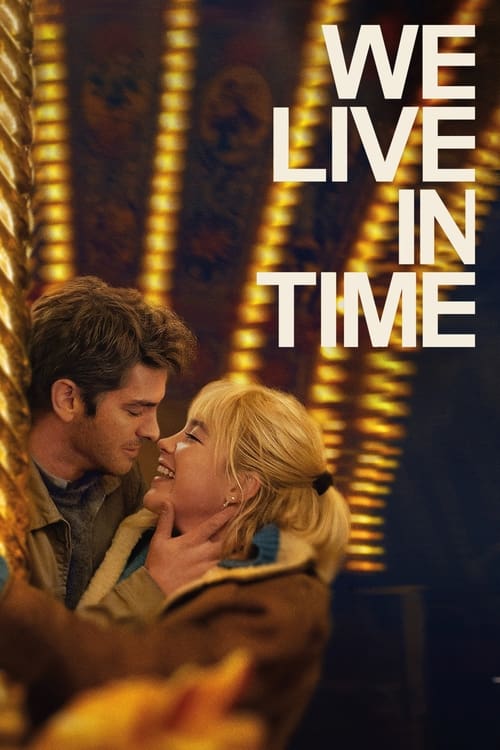
We Live in Time (2024)
Directed by John Crowley
No — We Live in Time is not woke, scoring 13 out of 100 on our wokeness meter.
We Live in Time arrives from A24, a studio whose name usually signals a certain set of cultural commitments, and proceeds to ignore nearly all of them.
Consciousness Markers
Almut is a driven chef who asserts autonomy over her body and career, choosing to compete for the Bocuse d'Or and define her own legacy rather than passively accept illness, but the film frames this as personal drama rather than a feminist thesis.
This is a sentimental tearjerker rather than a preachy message film; critics even called it 'regressive,' so it carries minimal didactic energy.
The cast is a predominantly white British ensemble led by Florence Pugh and Andrew Garfield, with no evident effort toward diverse or representative casting.
There are no LGBTQ+ characters, relationships, or themes anywhere in this heterosexual romance.
The film engages no racial themes or commentary whatsoever.
No environmental or climate content appears in the film.
There is no economic critique or anti-capitalist messaging; the story is a domestic melodrama about love, illness, and family.
The film deals with cancer and physical decline, but not with body-positivity themes or fat acceptance.
No neurodivergent characters or themes are present.
The film is a fictional original screenplay with no historical revisionism.
Why it received this score
We Live in Time arrives from A24, a studio whose name usually signals a certain set of cultural commitments, and proceeds to ignore nearly all of them. John Crowley's film follows Tobias and Almut across a decade of courtship, childbirth, and illness, shuffled into a nonlinear order that critics spent more column inches debating than the couple's actual fate. It is a romance of the old school, the kind where people weep in hospital corridors and crack eggs as a metaphor for instruction. The leads are charming. The carousel horse became a meme. That is the film.
On the matter of representation, the ensemble is white, British, and assembled without visible effort toward anything else. The romance is heterosexual and stays that way. No queer thread disturbs the proceedings. Almut does carry a modest charge of autonomy: she is a chef who refuses to let cancer dictate her final chapter, choosing a cooking competition over quiet decline and insisting her daughter remember her as accomplished. It reads as character, not catechism. The film advances no thesis about gender, only a woman with opinions about her own body and a deadline.
The remaining categories sit empty. Race goes unmentioned. The climate is whatever waits outside the cottage. Nobody eats a rich person. Bodies are discussed in terms of tumors, not acceptance. Neurodivergence does not appear. History is not revised because history is not consulted. As for sermonizing, the film is too busy being sad to lecture, and more than one reviewer dismissed it as regressive, which is its own kind of verdict. The result is a well-acted weepie with almost no interest in the cultural conversation of its own moment. A rare vintage, and a thin one. Decant carefully.
Analysis generated by our Consciousness Algorithm


Synopsis
An up-and-coming chef and a recent divorcée find their lives forever changed when a chance encounter brings them together, in a decade-spanning, deeply moving romance.
Questions about We Live in Time
Is We Live in Time woke?
No — We Live in Time is not woke, scoring 13 out of 100 on our wokeness meter. That earns it a verdict of Ultra Based.
Does We Live in Time have any woke elements?
1 of the 10 markers register at 30 or above, led by Feminist Agenda (30). On Feminist Agenda: Almut is a driven chef who asserts autonomy over her body and career, choosing to compete for the Bocuse d'Or and define her own legacy rather than passively accept illness, but the film frames this as personal drama rather than a feminist thesis.
How does We Live in Time compare to other 2024 movies?
It ranks #115 of the 189 films from 2024 we've scored; their average is 22. The wokest is The Six Triple Eight (92).
How is the Woke Score calculated?
An AI-assisted process researches the film and its reception, scores it 0–100 on ten markers, then combines those into one 0–100 Woke Score. It measures a specific set of 2020s cultural themes, not film quality.