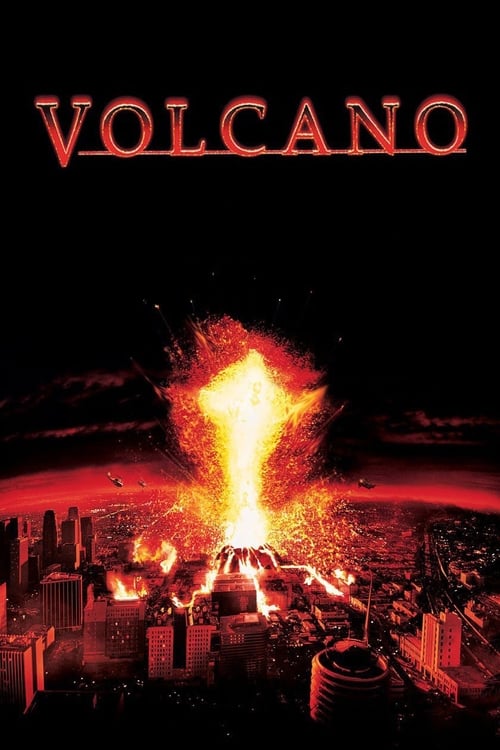
Volcano (1997)
Directed by Mick Jackson
No — Volcano is not woke, scoring 11 out of 100 on our wokeness meter.
Volcano arrives from 1997, a year when a studio could still spend ninety million dollars on the premise of molten rock oozing down Wilshire Boulevard and call it a summer tentpole.
Consciousness Markers
The cast includes Don Cheadle, Keith David, Jacqueline Kim, and Marcello Thedford in prominent roles, but they exist naturally within the disaster ensemble without any commentary on their presence.
Anne Heche plays a competent seismologist whose expertise drives the plot, but the film offers no feminist thesis and she is largely a supporting figure to Tommy Lee Jones' lead.
Don Cheadle's transit official gets a heroic sacrifice, but the film engages in no racial commentary or consciousness whatsoever.
The film is pure escapist spectacle with no preachy messaging or moralizing; any exposition is strictly scientific and plot-driven.
No LGBTQ+ characters, themes, or subtext appear anywhere in the film.
The volcano is a geological disaster with no climate-change framing or environmental messaging.
No critique of capitalism, wealth, or corporate power; the film is a straightforward municipal-crisis procedural.
No body-positivity themes or messaging present.
No neurodivergent characters or themes.
A wholly fictional disaster scenario; no historical revisionism involved.
Why it received this score
Volcano arrives from 1997, a year when a studio could still spend ninety million dollars on the premise of molten rock oozing down Wilshire Boulevard and call it a summer tentpole. Mick Jackson directs with the grim efficiency of a man who knows the lava is a visual effect and has decided to aim the fire hoses at it anyway. Tommy Lee Jones plays Mike Roark, the emergency management director, sneering at geology as though it had personally inconvenienced him. The film is cheese, and it knows it is cheese, which spares us the usual sermonizing.
The cast is more integrated than the era strictly demanded. Don Cheadle runs the transit authority and dies a hero. Keith David stands around with institutional authority. Jacqueline Kim and Marcello Thedford fill out the ensemble. None of them announce their presence or invite applause for it. Anne Heche plays a seismologist whose calculations drive the plot, a competent professional in a genre that often prefers its women screaming. She is also, by the final reel, the supporting act to a man in a hard hat. The film holds no thesis about any of this. It hired good actors and pointed a camera at them.
Nothing here will trouble the culture warriors. No lecture, no cause, no lesson about the planet or the market or the body. The volcano is a volcano, a geological inconvenience with no interest in carbon credits. The rich are not eaten. The marginalized are not centered. The past is not revised, because the past in question never happened. We are left with a municipal crisis procedural, a fleet of helicopters, and a condominium demolished to save a hospital. The dialogue is bad in a way that audiences in 1997 apparently enjoyed hooting at. It opened at number one, which tells you something about appetites. A relic of a simpler commercial moment, and there is a strange comfort in that.
Analysis generated by our Consciousness Algorithm


Synopsis
An earthquake shatters a peaceful Los Angeles morning and opens a fissure deep into the earth, causing lava to start bubbling up. As a volcano begins forming in the La Brea Tar Pits, the director of the city's emergency management service, working with a geologist, must then use every resource in the city to try and stop the volcano from consuming LA.
Questions about Volcano
Is Volcano woke?
No — Volcano is not woke, scoring 11 out of 100 on our wokeness meter. That earns it a verdict of Ultra Based.
Does Volcano have any woke elements?
Very few. None of the 10 markers reaches 30, the level where a marker counts as present; the highest is Representation Casting at 22.
How does Volcano compare to other 1997 movies?
It ranks #37 of the 109 films from 1997 we've scored; their average is 12. The wokest is Happy Together (65).
How is the Woke Score calculated?
An AI-assisted process researches the film and its reception, scores it 0–100 on ten markers, then combines those into one 0–100 Woke Score. It measures a specific set of 2020s cultural themes, not film quality.