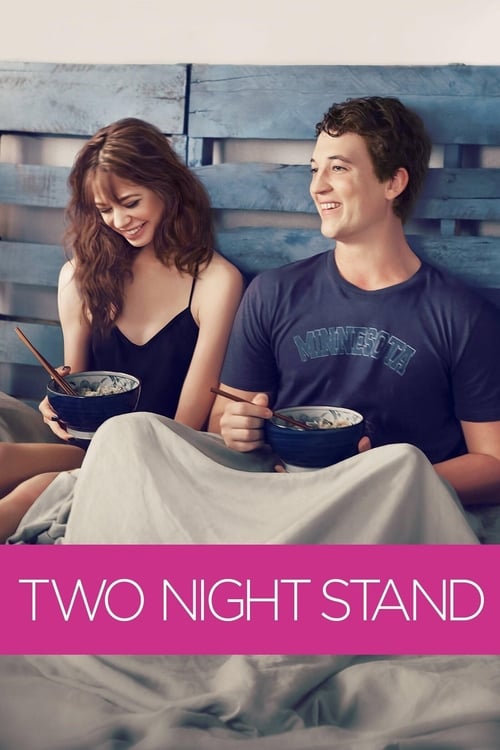
Two Night Stand (2014)
Directed by Max Nichols
No — Two Night Stand is not woke, scoring 11 out of 100 on our wokeness meter.
Two Night Stand arrives in the ledger as a 2014 romantic comedy, which places it in a transitional vintage.
Consciousness Markers
The cast includes a few non-white performers (Scott Mescudi/Kid Cudi, Berto Colon) and a lead who later came out as non-binary, but the film makes no comment on any of this and the ensemble is otherwise conventionally white.
Megan is a somewhat assertive, sexually forward lead, but the film is a conventional heterosexual rom-com with no feminist argument or critique of gender dynamics.
No LGBTQ+ characters, relationships, or themes appear anywhere in the plot.
A Black supporting character exists naturally in the story with no racial commentary, theme, or consciousness whatsoever.
The blizzard is a purely comedic plot device to trap the characters indoors, with no environmental or climate messaging.
No economic critique, class commentary, or anti-capitalist themes are present.
No body positivity themes or messaging about body image appear in the film.
No neurodivergent characters or themes are depicted.
The film is a contemporary original rom-com with no historical revisionism.
The film is a lightweight romantic comedy that never lectures or moralizes to its audience.
Why it received this score
Two Night Stand arrives in the ledger as a 2014 romantic comedy, which places it in a transitional vintage. Late enough that the culture's newer sensibilities were available to it. Early enough that nobody had yet demanded a romantic comedy account for itself. Megan is unemployed, single, and saddled with roommates who want her gone. She joins a dating website. She sleeps with a stranger. A blizzard seals the two of them inside a Manhattan apartment. That is the entire architecture, and it holds.
The cast includes Scott Mescudi and Berto Colon in supporting turns, plus Lio Tipton in the lead, an actor who would later come out as non-binary. The film remarks on none of this, which is either restraint or absence of interest. Megan is sexually forward and mildly caustic, qualities the film enjoys without ever constructing an argument from them. The gender politics stay those of the standard heterosexual courtship narrative. A Black character moves through the story unremarked. No economic critique surfaces. No character wrestles with body image. Nobody is neurodivergent, or if somebody is, the screenplay declines to say so. History goes unrevised, largely because history goes unconsulted.
The blizzard merits a moment of our attention. It exists to trap two people indoors. No ice sheet melts in protest. No sermon is delivered from any corner. The film's loftiest ambition is a gag involving an overflowing toilet and a balloon that reads "I'm sorry, I'm an asshole." Critics at the time were split, and the aggregate sits near 38 percent, which feels about right for a picture that wanted only to be a picture. We file it as a low-yield vintage: pleasant, forgettable, and entirely innocent of the cultural apparatus that would soon descend upon its genre. There is something almost restful about that.
Analysis generated by our Consciousness Algorithm


Synopsis
After an extremely regrettable one night stand, two strangers wake up to find themselves snowed in after sleeping through a blizzard that put all of Manhattan on ice. They're now trapped together in a tiny apartment, forced to get to know each other way more than any one night stand should.
Questions about Two Night Stand
Is Two Night Stand woke?
No — Two Night Stand is not woke, scoring 11 out of 100 on our wokeness meter. That earns it a verdict of Ultra Based.
Does Two Night Stand have any woke elements?
Very few. None of the 10 markers reaches 30, the level where a marker counts as present; the highest is Representation Casting at 20.
How does Two Night Stand compare to other 2014 movies?
It ranks #124 of the 303 films from 2014 we've scored; their average is 13. The wokest is Selma (68).
How is the Woke Score calculated?
An AI-assisted process researches the film and its reception, scores it 0–100 on ten markers, then combines those into one 0–100 Woke Score. It measures a specific set of 2020s cultural themes, not film quality.