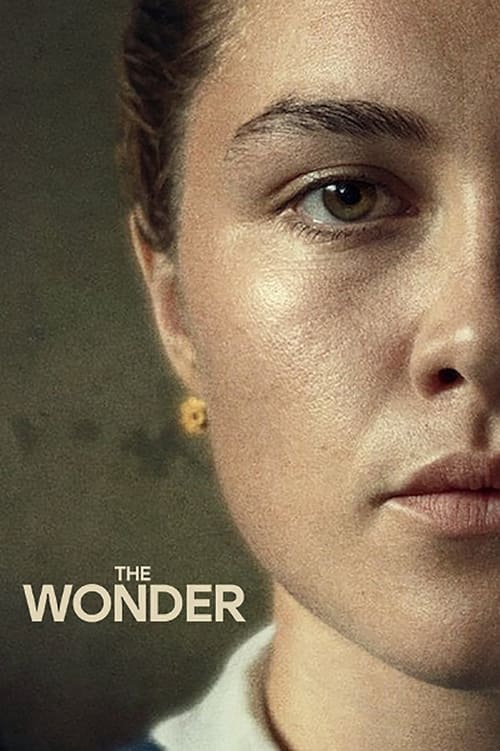
The Wonder (2022)
Directed by Sebastián Lelio
No — The Wonder is not woke, scoring 17 out of 100 on our wokeness meter.
Sebastián Lelio's The Wonder arrives dressed as a period psychological drama, all grey skies and peat smoke, and for long stretches it is exactly that.
Consciousness Markers
The story centers on a female nurse rescuing a girl from a patriarchal religious order willing to let her die for its own sanctity, and the abuse at the heart of the plot is a girl's violation by her brother.
The film's fourth-wall-breaking narration explicitly muses on storytelling, belief, and the ethics of the spectator, lending a mildly didactic framing, though it stops well short of preaching.
The film engages the English/Irish colonial wound and lingering Great Famine trauma, but frames it as national and historical grievance rather than modern racial consciousness.
The cast is a period-appropriate ensemble of Irish and English performers led by Florence Pugh; there is no deliberate diversity-driven casting agenda at work.
No LGBTQ+ characters, relationships, or themes appear anywhere in the narrative.
No environmental or climate themes are present in this 1862-set drama.
The film's conflict is religious and familial, not economic; there is no critique of capitalism or class-based wealth.
The film is about starvation and a fasting girl, the antithesis of body-positivity messaging; no such themes are present.
No neurodivergent characters or themes are depicted.
The film is a fictional period drama adapted from a novel, not a revisionist retelling of documented history.
Why it received this score
Sebastián Lelio's The Wonder arrives dressed as a period psychological drama, all grey skies and peat smoke, and for long stretches it is exactly that. An English nurse, Florence Pugh, is dispatched to a rural Irish village in 1862 to watch a girl who claims to have survived four months without food. The film treats the fasting as a medical and theological puzzle and declines to convert the material into a modern parable. On the matter of representation, the ensemble is period-appropriate and largely Irish, which is to say the casting serves the setting instead of an agenda. There are no LGBTQ themes, no climate anxieties, no economic critique, no body-positivity messaging, and no neurodivergent characters. The film is about starvation. It has other business on its mind.
Where the film does carry a social charge, it is the feminist kind, though the charge is delivered through plot instead of sermon. Anna's fast, we learn, is a response to repeated sexual violation by her brother, and her piety is a form of self-erasure dressed as devotion. Lib, the nurse, is the only figure willing to name the abuse and the only one who can pull the girl out of it, and the local council would let a child die to preserve a miracle. That is a sturdy indictment of patriarchal religious authority, and the film does not soften it. A secondary thread concerns the Great Famine and the lingering English contempt for the Irish, which registers as historical grievance more than modern racial consciousness.
The film's most conspicuous flourish is its narration. The camera pulls back, the frame becomes a stage, and a voice reminds us that we are watching a story about belief and about the ethics of the spectator. It is mild instruction, not a lecture, and it sits oddly beside the restraint elsewhere. The result is a handsome, somber film that mostly trusts its audience and occasionally does not. For the classification ledger, a clean, cold vintage, best served without commentary.
Analysis generated by our Consciousness Algorithm


Synopsis
Haunted by her past, a nurse travels from England to a remote Irish village in 1862 to investigate a young girl's supposedly miraculous fast.
Questions about The Wonder
Is The Wonder woke?
No — The Wonder is not woke, scoring 17 out of 100 on our wokeness meter. That earns it a verdict of Ultra Based.
Does The Wonder have any woke elements?
1 of the 10 markers register at 30 or above, led by Feminist Agenda (45). On Feminist Agenda: The story centers on a female nurse rescuing a girl from a patriarchal religious order willing to let her die for its own sanctity, and the abuse at the heart of the plot is a girl's violation by her brother.
How does The Wonder compare to other 2022 movies?
It ranks #102 of the 223 films from 2022 we've scored; their average is 22. The wokest is Bros (92).
How is the Woke Score calculated?
An AI-assisted process researches the film and its reception, scores it 0–100 on ten markers, then combines those into one 0–100 Woke Score. It measures a specific set of 2020s cultural themes, not film quality.