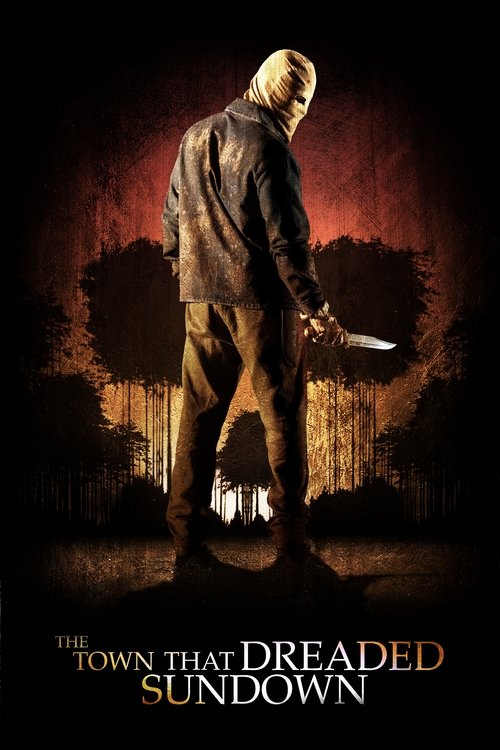
The Town that Dreaded Sundown (2014)
Directed by Alfonso Gomez-Rejon
No — The Town that Dreaded Sundown is not woke, scoring 13 out of 100 on our wokeness meter.
The Town That Dreaded Sundown arrives as a metafictional sequel to a 1976 drive-in relic, and it conducts itself with the grim self-awareness of a slasher that has read too many slasher screenplays.
Consciousness Markers
Jami functions as a capable final girl who investigates the killings, but this is standard slasher convention rather than an explicitly feminist agenda.
The cast includes several non-white performers in supporting roles, but the film makes no issue of their presence and treats them as ordinary genre casting.
A brief same-sex hookup between two band members occurs before they are attacked, but it is incidental slasher fodder rather than a thematic LGBTQ+ statement.
The metafictional plot revises the original film's history by inventing a forgotten sixth victim, but this is narrative revisionism rather than ideological historical revisionism.
The film is more interested in meta-slasher mechanics than in preaching any social message, so lecture energy is minimal.
There is no meaningful engagement with race, racism, or racial identity; characters of color exist without commentary.
The film contains no climate-related themes or imagery.
There is no critique of capitalism, wealth, or class structures.
The film does not engage with body positivity or related themes.
No neurodivergence themes or representation are present.
Why it received this score
The Town That Dreaded Sundown arrives as a metafictional sequel to a 1976 drive-in relic, and it conducts itself with the grim self-awareness of a slasher that has read too many slasher screenplays. Alfonso Gomez-Rejon directs with real style, all long tracking shots and ominous Texarkana dusk, while Ryan Murphy and Jason Blum hover in the production credits like two producers who found a weird old movie and decided to try something. The premise, a copycat Phantom stalking a town that already made a movie about its own murders, is clever enough. The execution is a Scream derivative in a ten-gallon hat.
On the matter of social consciousness, the ledger is thin. Jami, our final girl, investigates the killings with competence, which is standard genre furniture and not a manifesto. Supporting performers of color appear and are simply absorbed into the genre machinery, no comment offered, no comment required. A brief same-sex encounter between two band members precedes their dispatch, an inclusion that registers as slasher fodder instead of statement. The film's one genuine act of revisionism is narrative: it invents a forgotten sixth victim, a metafictional flourish about who gets remembered, not an argument about history. There is no climate anxiety here, no class war, no sermon on bodies or brains. The Phantom kills for remembrance, not for ideology.
Which leaves us with a tidy, low-yield specimen. The film wants to be about memory and small-town suffocation, and it says so aloud in a third-act monologue, but it never mounts a podium. It is too busy arranging its own twist. A pleasant, stylish, faintly hollow exercise, and a reminder that a movie can be meta without being preachy. The classification is straightforward. The town dreaded sundown. The culture wars did not come up.
{"thematic_tags": ["sequel"]}
Analysis generated by our Consciousness Algorithm
Part of


Synopsis
A masked maniac terrorizes the same small community where a murderer known as the Phantom Killer struck decades earlier.
Questions about The Town that Dreaded Sundown
Is The Town that Dreaded Sundown woke?
No — The Town that Dreaded Sundown is not woke, scoring 13 out of 100 on our wokeness meter. That earns it a verdict of Ultra Based.
Does The Town that Dreaded Sundown have any woke elements?
Very few. None of the 10 markers reaches 30, the level where a marker counts as present; the highest is Feminist Agenda at 20.
How does The Town that Dreaded Sundown compare to other 2014 movies?
It ranks #106 of the 303 films from 2014 we've scored; their average is 13. The wokest is Selma (68).
How is the Woke Score calculated?
An AI-assisted process researches the film and its reception, scores it 0–100 on ten markers, then combines those into one 0–100 Woke Score. It measures a specific set of 2020s cultural themes, not film quality.