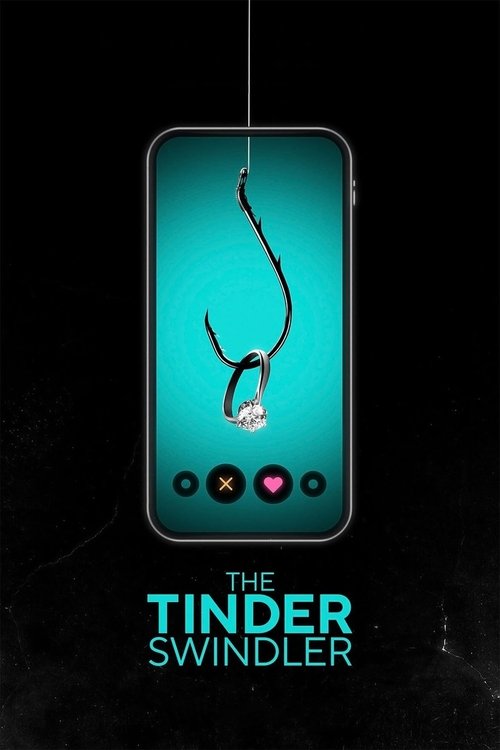
The Tinder Swindler (2022)
Directed by Felicity Morris
No — The Tinder Swindler is not woke, scoring 11 out of 100 on our wokeness meter.
Felicity Morris has assembled a documentary about Shimon Hayut, a man who presented himself as the heir to a diamond fortune and used Tinder to borrow money from a succession of women, money he had no intention of returning.
Consciousness Markers
The film foregrounds the stories of women who were defrauded and shows them organizing to expose their conman, giving them a reclaiming-the-narrative arc, though it is framed as true-crime journalism rather than an explicit feminist thesis.
There is a mild cautionary tone warning viewers about online dating scams and emotional manipulation, but the film prioritizes propulsive true-crime storytelling over moral instruction.
The film gestures at the emptiness of the jet-setting luxury lifestyle and the exploitative mechanics of the dating-app economy, but it is a con-artist exposé rather than a critique of capitalism itself.
As a documentary, the cast consists of the real subjects themselves, so no deliberate diverse casting occurred; the film does center the perspectives of several women of varying nationalities.
No LGBTQ+ themes, characters, or relationships appear anywhere in the documentary.
The conman's Israeli background is noted factually, but the film engages no racial or systemic-justice themes.
No environmental or climate content whatsoever.
No body-positivity themes are present.
No neurodivergence themes or representation appear.
The film recounts recent true events straightforwardly; it does not reinterpret or revise established history.
Why it received this score
Felicity Morris has assembled a documentary about Shimon Hayut, a man who presented himself as the heir to a diamond fortune and used Tinder to borrow money from a succession of women, money he had no intention of returning. The film is slick and propulsive. Shadowy reconstructions, a plaintive score, and a structure that withholds the collapse until the final act. It plays like a thriller, which is the point, and it works.
The consciousness ledger here is thinner than the runtime suggests. The subjects are the real women, Cecilie, Pernilla, and Ayleen, drawn from Norway, Sweden, and the Netherlands, so the international spread reflects geography instead of casting policy. The film hands them a satisfying arc of exposure and mutual aid, and it lets them speak at length about what was taken from them. That is a form of narrative restitution. It is not a thesis about gender, and the film never pauses to build one. Its interest in the luxury Hayut performed is glancing: the private jets and hotel suites register as hollow, and the dating-app economy comes off as a machine for matching marks with predators, but the camera keeps moving. A critique of wealth is implied and then abandoned.
The film settles into a cautionary tale with excellent pacing. The closing passages carry a mild warning about emotional manipulation and the hazards of meeting strangers online, delivered as an epilogue instead of a sermon. There is no environmental content, no body politics, no engagement with neurodivergence, and no reworking of the historical record, which is appropriate for a story this recent. Hayut's Israeli background is noted and then left alone. The result is a true-crime yarn with a memorable title and a clean conscience.
Analysis generated by our Consciousness Algorithm


Synopsis
Posing as a wealthy, jet-setting diamond mogul, an Israeli conman wooed women online then conned them out of millions of dollars. Now, some victims plan for payback.
Questions about The Tinder Swindler
Is The Tinder Swindler woke?
No — The Tinder Swindler is not woke, scoring 11 out of 100 on our wokeness meter. That earns it a verdict of Ultra Based.
Does The Tinder Swindler have any woke elements?
Very few. None of the 10 markers reaches 30, the level where a marker counts as present; the highest is Feminist Agenda at 25.
How does The Tinder Swindler compare to other 2022 movies?
It ranks #146 of the 223 films from 2022 we've scored; their average is 22. The wokest is Bros (92).
How is the Woke Score calculated?
An AI-assisted process researches the film and its reception, scores it 0–100 on ten markers, then combines those into one 0–100 Woke Score. It measures a specific set of 2020s cultural themes, not film quality.