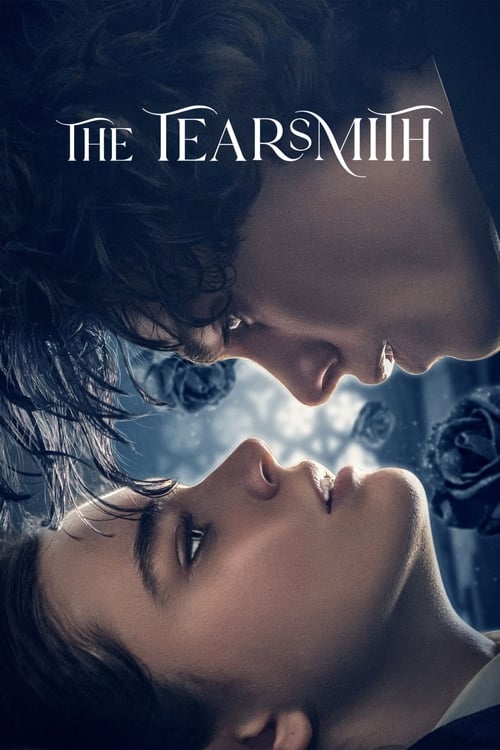
The Tearsmith (2024)
Directed by Alessandro Genovesi
No — The Tearsmith is not woke, scoring 0 out of 100 on our wokeness meter.
The Tearsmith is a 2024 Italian teen romance adapted from Erin Doom's bestselling novel, and it arrives with the soft-focus solemnity of a Netflix literary adaptation.
Consciousness Markers
The cast is predominantly white Italian actors, with no evident emphasis on diverse or inclusive casting as a thematic marker.
The film contains no LGBTQ+ characters, relationships, or themes.
While the protagonist is female and eventually testifies against her abuser, the film does not advance a feminist agenda or critique patriarchal structures.
Race and racial identity are not addressed or explored in the narrative.
There is no environmental or climate-related content in the film.
The story focuses on personal trauma and romance, with no critique of capitalism or wealth inequality.
Body image, size diversity, or body-positive themes are absent.
Rigel's seizures and brain neuromas are treated as medical conditions, not as neurodivergence or neurodiversity advocacy.
The film is a contemporary fictional romance and does not revise or reinterpret historical events.
The film delivers its melodrama and abuse-survivor plot without overt preachy or didactic messaging.
Why it received this score
The Tearsmith is a 2024 Italian teen romance adapted from Erin Doom's bestselling novel, and it arrives with the soft-focus solemnity of a Netflix literary adaptation. The plot concerns Nica and Rigel, two orphans adopted into the same household, who circle each other with the usual mix of hostility, trauma, and irresistible attraction. There is an abusive headmistress, a black rose, a school dance, a near-fatal assault, a coma, and a courtroom reckoning. It is all very serious and very familiar. The film wants us to feel the weight of wounded childhoods and forbidden love. It does not want to instruct us on contemporary social matters, and it does not.
On the evidence of the screen, the casting remains a predominantly white Italian affair, with no attempt to make representation a theme. There are no LGBTQ characters or relationships, no racial consciousness, and no environmental crusade. The story is not interested in capitalism, wealth inequality, or the redistribution of anything except roses. Body positivity is absent. Rigel's seizures and brain neuromas function as medical obstacles to romance, not as a platform for neurodiversity. The narrative is contemporary and fictional, so history is left unrevised. Nica is a female protagonist who eventually testifies against her abuser, but the film frames this as personal catharsis, not a feminist indictment of patriarchal systems. Her defiance is real, yet it remains inside the machinery of young adult melodrama.
The film also declines to lecture. Its messages arrive through longing glances, rain-soaked embraces, and the occasional fistfight. There is no sermon on how we should live, no preachy aside about society's failures, no heavy-handed moral beyond the vague notion that love can survive damage. That restraint is not a virtue or a flaw here. It is simply the film's operating system. The Tearsmith is a moody, cliché-ridden romance that knows its audience and asks nothing more of them than a willingness to swoon. As cultural analysis, it offers little friction. As a vehicle for progressive sensibilities, it is a closed book.
Analysis generated by our Consciousness Algorithm


Synopsis
Adopted together after a tough childhood in an orphanage, Nica and Rigel realize that unexpected but irresistible feelings pull them together.
Questions about The Tearsmith
Is The Tearsmith woke?
No — The Tearsmith is not woke, scoring 0 out of 100 on our wokeness meter. That earns it a verdict of Ultra Based.
Does The Tearsmith have any woke elements?
No. All 10 markers score zero.
How does The Tearsmith compare to other 2024 movies?
It ranks #183 of the 189 films from 2024 we've scored; their average is 22. The wokest is The Six Triple Eight (92).
How is the Woke Score calculated?
An AI-assisted process researches the film and its reception, scores it 0–100 on ten markers, then combines those into one 0–100 Woke Score. It measures a specific set of 2020s cultural themes, not film quality.