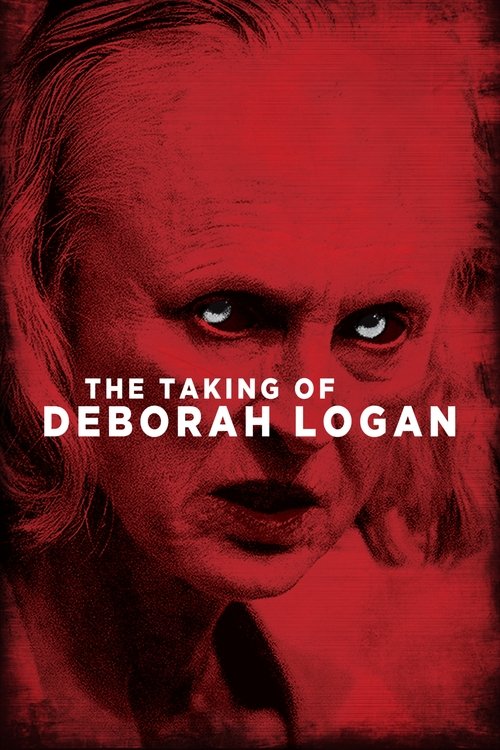
The Taking of Deborah Logan (2014)
Directed by Adam Robitel
No — The Taking of Deborah Logan is not woke, scoring 15 out of 100 on our wokeness meter.
The Taking of Deborah Logan arrives in 2014 with a documentary crew, a declining matriarch, and the promise of something worse than memory loss.
Consciousness Markers
The cast includes Michelle Ang as a lead documentarian and other non-white actors in supporting roles, but the film does not foreground identity or diversity as a theme.
Several women drive the narrative—Deborah, Sarah, Mia, and Sheriff Tweed—but the film is a possession horror, not a feminist statement.
No LGBTQ+ characters, themes, or subtext are present.
No engagement with race, racism, or racial identity.
No environmental or climate themes.
No critique of capitalism, wealth, or class.
No body-positive themes or messaging.
Alzheimer's is central to the plot, but it is treated as a horror affliction rather than neurodivergent identity or advocacy.
No historical revisionism; the Monacan ritual is fictional genre material.
The film does not pause to deliver social or political lectures.
Why it received this score
The Taking of Deborah Logan arrives in 2014 with a documentary crew, a declining matriarch, and the promise of something worse than memory loss. Deborah Logan, her daughter Sarah, the student filmmaker Mia Hu, and Sheriff Linda Tweed all carry the narrative forward, which gives the proceedings a matriarchal spine that some viewers may mistake for a statement. It is not a statement. It is a possession film that happens to have women in the driver's seat, and it never pauses to explain what that arrangement means. The camera rolls, the woman deteriorates, and the audience is left to supply its own meaning.
Once the switchboard line for a vanished physician begins ringing and the French muttering turns to snakes and sacrifice, the film commits to its genre obligations with admirable economy. A Monacan immortality ritual, five girls, a buried body, a mine shaft. The horror is efficient and largely free of editorializing. Nobody stands before a whiteboard to explain the sins of the world. The villain is a dead cannibal, not a system.
The cultural ledger here is thin. Michelle Ang anchors the cast as the lead documentarian, and a few non-white performers appear in support, though the film never asks us to think about what that casting signifies. Deborah's Alzheimer's functions as a horror affliction, not as an invitation to reconsider cognitive difference. There is no queer subtext, no engagement with race, no environmental lament, no critique of wealth, no body-positive messaging. The film wants only to unsettle you, and on that modest errand it succeeds. Classify it as a well-executed fright with no agenda beyond the fright. Refreshing, in its way.
Analysis generated by our Consciousness Algorithm


Synopsis
What starts as a poignant medical documentary about Deborah Logan's descent into Alzheimer's disease and her daughter's struggles as caregiver degenerates into a maddening portrayal of dementia at its most frightening, as hair-raising events begin to plague the family and crew and an unspeakable malevolence threatens to tear the very fabric of sanity from them all.
Questions about The Taking of Deborah Logan
Is The Taking of Deborah Logan woke?
No — The Taking of Deborah Logan is not woke, scoring 15 out of 100 on our wokeness meter. That earns it a verdict of Ultra Based.
Does The Taking of Deborah Logan have any woke elements?
1 of the 10 markers register at 30 or above, led by Representation Casting (30). On Representation Casting: The cast includes Michelle Ang as a lead documentarian and other non-white actors in supporting roles, but the film does not foreground identity or diversity as a theme.
How does The Taking of Deborah Logan compare to other 2014 movies?
It ranks #88 of the 303 films from 2014 we've scored; their average is 13. The wokest is Selma (68).
How is the Woke Score calculated?
An AI-assisted process researches the film and its reception, scores it 0–100 on ten markers, then combines those into one 0–100 Woke Score. It measures a specific set of 2020s cultural themes, not film quality.